Japanese Prime Minister Sanae Takaichi stood before the Tomb of the Unknown Soldier at Arlington National Cemetery on the morning of March 20, 2026, laying a wreath wrapped in the twin melodies of the Japanese and American national anthems. Welcomed by a trident of senior U.S. officials—Major General Antoinette Gant, Ms. Karen Durham-Aguilera, and Ambassador Monica Crowley the Prime Minister paid solemn tribute to America’s unidentified fallen, her gesture a silent but resounding reaffirmation of the enduring alliance between the two nations. Surrounded by a corridor of service members from each branch of the U.S. Armed Forces, the visit transcended diplomatic ritual, etching a moment of shared sacrifice and mutual respect into the hallowed grounds where history itself stands guard.
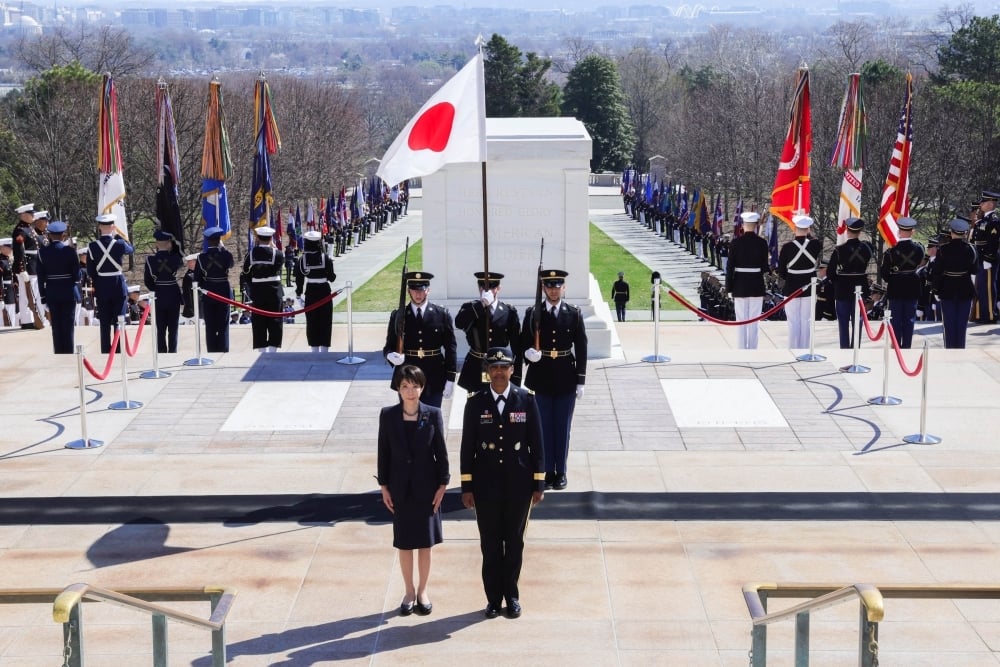
JAPAN – In a moment of profound solemnity that bridged history and alliance, Prime Minister Sanae Takaichi of Japan paid homage to America’s fallen at Arlington National Cemetery on the morning of March 20, 2026. Standing on the hallowed grounds where the United States buries its heroes, the Prime Minister conducted a wreath-laying ceremony that resonated with the quiet thunder of shared sacrifice and unbreakable partnership.
Under a crisp spring sky, the weight of history was palpable as Prime Minister Sanae Takaichi, accompanied by a high-level delegation of U.S. military and ceremonial leaders, approached the iconic Tomb of the Unknown Soldier. The ritual unfolded with the precision of a symphony a testament to the deep military-to-military respect forged over decades.
READ MORE ARTCILES:
- Pakistani Farmers Sue German Firms Over 2022 Floods
- Iran Allows Select Ships Safe Passage Through Strait of Hormuz
- Iran Intel Chief Esmail Khatib Killed
- UAE Air Defences Intercept Iranian Missile and Drone Threats
- Israel says it kills Iran security chief Larijani, Basij commander
- Iran–Philippines Ties to Become ‘Even Brighter,’ Says Ambassador
- Vladimir Putin Welcomes Mojtaba Khamenei as Iran’s New Leader
- Oil Prices Surge as Mojtaba Khamenei Takes Power Amid Middle East Tensions
- LIST: Emergency Hotlines for Filipinos in Middle East
The Prime Minister was received with full military honors by a distinguished cohort of guardians of American tradition. Major General Antoinette Gant, the Commanding General of the Joint Task Force–National Capital Region and the U.S. Army Military District of Washington; Ms. Karen Durham-Aguilera, Executive Director of the Office of Army Cemeteries and Army National Military Cemeteries; and Ambassador Monica Crowley, Chief of Protocol for the U.S. Department of State.
As she laid a wreath of white lilies and verdant laurels against the marble sarcophagus, the air filled with the dual anthems of Japan and the United States. Members of each branch of the U.S. Armed Forces stood at silent attention, forming a corridor of honor that symbolized not just a ceremony, but a solemn dialogue between allies.
The visit, which occurred during Prime Minister Sanae Takaichi official working trip to Washington D.C., served as a powerful visual reaffirmation of the Japan-U.S. alliance. By honoring the unidentified American service members who made the ultimate sacrifice, the Prime Minister underscored the enduring commitment of both nations to the ideals of freedom and peace a commitment paid for in the currency of courage.
For the dignitaries and service members present, the scene was more than a protocol event; it was a moving reminder that the alliance between Japan and the United States is etched not only in treaties, but in the shared soil of remembrance.
The ceremony concluded with a quiet moment of reflection, as Prime Minister Sanae Takaichi offered a deep bow before departing the hallowed grounds, leaving the wreath as a silent vow between nations.
A Historic Visit to Arlington National Cemetery
Prime Minister Sanae Takaichi visit to Arlington National Cemetery marks a significant moment in the realm of U.S.-Japan diplomatic relations. This historic site is not only a resting place for many American heroes but also a symbol of the sacrifices made throughout the history of the United States. The cemetery, encompassing over 624 acres, serves as a powerful reminder of the country’s commitment to honoring those who have served in the military.
The choice of Arlington as a venue for this visit reflects the deep-rooted ties and respect that have developed between Japan and the United States since the end of World War II. Both nations have navigated a journey from adversaries to close allies, fostering relationships built on mutual respect and understanding. This visit underscores the significance of remembrance in reconciling historical narratives and enhancing diplomatic discourse.
During her time at the cemetery, Prime Minister Sanae Takaichi participated in a traditional wreath-laying ceremony. This act serves as an expression of respect and acknowledgment of the sacrifices made by service members, transcending national boundaries. The act is particularly poignant, given the shared history between the two countries, evolving from conflict to collaboration in various forms, including security, trade, and cultural exchange.
Arlington National Cemetery itself holds a storied place in American history and culture. Established during the Civil War, it has come to represent the reverence afforded to individuals who have dedicated their lives to protecting their nation. Prime Minister Takaichi’s tribute symbolizes a commitment to honoring the past while also looking towards the future of U.S.-Japan relations a future defined by peace, cooperation, and shared values. This visit is a testament to the enduring bond between the two nations and an acknowledgment of their collaborative journey forward.
The Role of Arlington National Cemetery
Arlington National Cemetery, established during the American Civil War in 1864, serves as a poignant burial site for members of the armed forces. This expansive 624-acre cemetery is located in Arlington, Virginia, directly across the Potomac River from Washington, D.C. It symbolizes the nation’s gratitude toward those who sacrificed their lives for the country. Over 400,000 service members, veterans, and their eligible family members are interred here, making it one of the largest cemeteries in the United States.
The cemetery’s genesis can be traced back to its original owner, George Washington Parke Custis, who was the step-grandson of George Washington. After the estate became a military cemetery, the first soldier buried there was Pvt. William Christman, marking the beginning of a hallowed tradition of honoring American heroes. Now, Arlington is not only a final resting place but also a site of reflection and remembrance, attracting millions of visitors each year who come to pay their respects.
Central to Arlington National Cemetery’s significance is the Tomb of the Unknown Soldier, which stands as a powerful tribute to unidentified soldiers who have died in service. Established in 1921, the Tomb honors the sacrifices of those whose identities remain unknown, thus representing all service members lost in conflict. This sacred site draws numerous visitors and is guarded by the 3rd U.S. Infantry Regiment, also known as the Old Guard. Their vigilance exemplifies the commitment to honoring fallen heroes, reinforcing the tomb’s status as a symbol of respect and remembrance.
The role of Arlington National Cemetery extends beyond mere burial; it serves as a living monument to the enduring sacrifices made by military personnel throughout American history. The cemetery provides a place for families to connect with their loved ones, and for the public to acknowledge and honor the courage that these men and women have displayed in defense of freedom.
Prime Minister Takaichi’s Arrival and Ceremony Overview
On March 20, 2023, Prime Minister Fumio Takaichi of Japan arrived at Arlington National Cemetery, marking a significant moment in diplomatic relations and honoring the sacrifices made by fallen soldiers. This solemn visit was attended by a welcoming committee that included various dignitaries and veterans, reflecting the high regard in which this event was held. Takaichi’s arrival was met with a display of respect, underscoring the importance of the cemetery as a symbol of military valor and commitment to peace.
The official proceedings commenced with a detailed protocol that epitomized the reverence associated with Arlington National Cemetery. Following a formal greeting from U.S. officials, Prime Minister Takaichi participated in a ceremonial wreath-laying, a tradition symbolic of mourning and gratitude. The wreath itself, crafted with care, served not only as a tribute to those who have served but also as a gesture of friendship between Japan and the United States.
During the ceremony, attendees observed a moment of silence to reflect on the sacrifices of soldiers who gave their lives in service. Takaichi’s expression of condolences resonated with the audience, illustrating the profound respect held by Japan for American servicemen and the shared history of the two nations. As the Prime Minister placed the wreath at the Tomb of the Unknown Soldier, the occasion highlighted a commitment to ongoing dialogue and collaboration in remembrance of those who served.
This ceremonial event not only marked an important diplomatic engagement but also emphasized the enduring relationship between the two nations, rooted in mutual respect and shared values. The significance of this visit lies in its role as a bridge between Japan and the United States, reinforcing the bonds formed through past experiences while looking forward to a collaborative future.
Present at the Ceremony
Several distinguished individuals played significant roles during Prime Minister Takaichi’s visit to Arlington National Cemetery, each contributing uniquely to the occasion.
Major General Antoinette Gant, the commanding general of the U.S. Army Military District of Washington, welcomed Prime Minister Takaichi with deep respect and gratitude. In her position, she oversees military operations in the nation’s capital and has substantial experience in managing ceremonial events. General Gant’s role at the ceremony underscored her commitment to honoring both American and allied service members, providing a warm and respectful atmosphere for the dignitary’s visit.
Alongside General Gant was Karen Durham-Aguilera, the executive director of Arlington National Cemetery. With a strong background in heritage preservation and a dedicated commitment to upholding the cemetery’s mission, Durham-Aguilera plays a critical role in ensuring that Arlington remains a place of reverence. Her presence at the ceremony was vital for fostering a meaningful dialogue about shared values between Japan and the United States, emphasizing the importance of remembrance and respect for those who served their nations.
Ambassador Monica Crowley, who represents Japan in the United States, also attended the ceremony, further highlighting the significance of the visit. With her extensive diplomatic experience, Crowley has significantly contributed to strengthening U.S.-Japan relations. Her participation in this solemn occasion served to reaffirm the enduring friendship between the two nations, honoring both the past and future collaboration and camaraderie.
In essence, the combined presence of these key figures enriched Prime Minister Takaichi’s visit, symbolizing a collective gesture of respect and shared history that transcends borders.
Wreath Laying at the Tomb of the Unknown Soldier: A Symbol of Honor
The ceremonial act of laying a wreath at the Tomb of the Unknown Soldier holds profound significance, serving as a powerful tribute to all fallen soldiers. This hallowed site, located at Arlington National Cemetery, is a monument dedicated to those who made the ultimate sacrifice for their nation and remains a steadfast reminder of the cost of freedom. The wreath itself is typically adorned with red, white, and blue flowers, symbolizing valor, purity, and justice, and represents the vibrant spirit of those who served.
Each wreath-laying ceremony is steeped in traditions that underscore the reverence surrounding the Tomb. When dignitaries, such as Prime Minister Takaichi, partake in this act, it is an acknowledgment of the sacrifices made by military personnel across generations. The solemnity of the moment emphasizes respect not only for those lost in battle but also for all veterans and active duty service members who continue to uphold the values of honor and duty.
Moreover, the laying of a wreath transcends individual recognition, symbolizing the collective grief and gratitude of a nation. The Tomb of the Unknown Soldier itself serves as a poignant reminder that many soldiers remain unrecognized and unnamed, representing countless lives that were lost in service to their country. In this context, the act of laying the wreath becomes more than just a ceremonial gesture; it transforms into a powerful symbol of remembrance and solemn commitment to those who have served selflessly. This ceremony generates a deeper understanding of the sacrifices made and inspires ongoing appreciation for the profound impact of military service on the fabric of society.
The Role of Military Honors During the Ceremony
The participation of the armed forces during Prime Minister Takaichi’s visit to Arlington National Cemetery exemplified the profound respect and solemnity associated with military honors. These ceremonies serve as a poignant reminder of the sacrifices made by service members, while also acknowledging the international bonds forged in the spirit of unity and peace.
Military contingents from various branches formed precise lines across the ceremonial grounds, signifying the disciplined nature of the armed services. The visible presence of uniformed personnel not only added to the gravity of the event but also highlighted the importance of military tradition in honoring those who have served. Each salute and each step executed by the soldiers carried with it a weight of history, ensuring that the memories of fallen heroes are held in the highest regard.
The deliberate choreography, including the presentation of colors and the execution of ceremonial drills, imbued the ceremony with a formal atmosphere that underscored the reverence of the occasion. Such military honors are integral to memorial events; they embody a respectful acknowledgment of sacrifices made not only by American troops but also by allied forces. The presence of these honorary guards serves a dual purpose: it pays tribute to the fallen, while also reinforcing the commitment to uphold the values of freedom and democracy that these heroes fought to protect.
Ultimately, the involvement of military personnel during this tribute reflected a deep commitment to ensuring that those who have served are not forgotten. The relentless dedication of the armed forces plays a pivotal role in preserving the memory of individuals lost to conflict, and ceremony serves as a powerful testament to their enduring legacy.
Performance of the National Anthems: A Moment of Unity
The solemn ceremony at Arlington National Cemetery featured a poignant performance of both the Japanese and U.S. national anthems, underscoring the enduring friendship and unity between the two nations. This significant event provided an opportunity for the attendees to reflect on the shared values and mutual respect that characterize the relationship between Japan and the United States.
As the first notes of the American anthem, “The Star-Spangled Banner,” filled the air, participants stood in reverence, displaying their respect for not only the fallen heroes commemorated at the cemetery but also for the liberty and peace that these heroes fought to uphold. The rendition was both powerful and emotional, evoking a sense of patriotism among the audience.
Following this, the Japanese national anthem, “Kimigayo,” was performed with equal dignity and admiration. The song’s deep-rooted cultural significance resonated with the guests, enshrining the values of harmony and shared history between the two countries. The harmonious blending of these anthems celebrated not just the respective national identities, but also the commitment to a future marked by cooperation and mutual understanding.
In this moment of unity, the performance represented more than just musical notes; it was a tribute to the robust alliance and friendship that have developed over the decades. The shared melodies symbolized a commitment to peace and partnership, fostering a sense of community across borders. As Prime Minister Takaichi stood alongside U.S. officials, the performance of the national anthems served as a reminder of the importance of solidarity in these challenging times, forever engraving the moment in the memory of all who attended.
Reflections on U.S.-Japan Relations
The visit of Prime Minister Takaichi to Arlington National Cemetery serves as a powerful reminder of the enduring relationship between the United States and Japan. This relationship, shaped by a complex history and numerous shared experiences, has evolved significantly since its inception. Over time, the partnership has transformed from one rooted in conflict during World War II to a cooperative alliance focused on mutual respect and shared democratic values.
Historically, the U.S.-Japan alliance was formalized in the aftermath of the war, with the signing of the Treaty of Mutual Cooperation and Security in 1960. This agreement established a foundation for security cooperation and paved the way for economic collaboration, which has been a cornerstone of the relationship. Today, both nations are not only allies but also key partners in promoting stability in the Asia-Pacific region.
Recent developments highlight this evolution. The two countries have worked closely together in addressing common challenges such as regional security issues, economic instability, and global health crises. Prime Minister Takaichi’s visit to Arlington National Cemetery symbolizes this ongoing commitment to honoring the sacrifices made by both nations in their respective military histories, fostering goodwill, and promoting peace.
Furthermore, as both nations face contemporary challenges, including climate change and the rise of new economic powers, the importance of their alliance cannot be overstated. Collaborative efforts in technology, innovation, and defense are now more vital than ever before. Takaichi’s visit reinforces the notion that the U.S.-Japan relationship is not only based on historical ties but also on a shared vision for future challenges.
The Legacy of the Visit
The visit of Prime Minister Takaichi to Arlington National Cemetery marks a significant milestone in the diplomatic relationship between Japan and the United States. By paying tribute at this hallowed ground, Prime Minister Takaichi not only honored the sacrifices made by American servicemen and women but also reinforced the importance of mutual respect and remembrance between the two nations. This gesture serves as a powerful symbol of reconciliation, displaying a commitment to nurturing peace and understanding that transcends historical conflicts.
The implications of this visit resonate far beyond the immediate moment. It fosters a meaningful dialogue about shared values and the importance of honoring national memories. Such acts of respect contribute to a growing narrative that emphasizes how nations can move past their differences and recognize the common humanity that binds them together. By engaging in such commemorative acts, leaders can pave the way for future cooperation and shared initiatives.
Moreover, this visit by Prime Minister Takaichi sends a compelling message to both nations’ citizens, reminding them of the importance of remembrance in building a united future. It encourages progressive thinking among the younger generations regarding international relations and the need for ongoing dialogue about peace and mutual respect.
Prime Minister Takaichi’s visit to Arlington symbolizes a shared journey towards healing and renewal. It stands as a testament to the notion that through remembrance, nations can learn from the past and aspire towards a more harmonious future. The legacy of this visit will undoubtedly inspire further cooperation and a commitment to uphold the values that underpin the enduring alliance between Japan and the United States.
- House Prosecutors: Cayetano’s Objection Will Not Stop Subpoenas for VP Sara Duterte’s Financial Records
- AMLC Findings Link Alleged $5-Million Cornell Donation to Martin Romualdez
- Why the Ellora Caves in India Never Made the Seven Wonders List
- Sara Duterte | Lawyer, Biography, Political Career & Issues
- Ombudsman Files Fourteen Graft Cases Against Congressman Over Contract Links Today
- Macau Giant Pandas Complete Stunning Comeback For First Governors Cup Victory
- Typhoon Noul Threatens Southern China, Hong Kong Cancels Flights, Thousands Evacuated
- Cebu Youth Champions Showcase Untapped Philippine Basketball Talent and Promise
- Cebu Authorities Seize Unregistered Korean Luncheon Meat Worth ₱700,000 From Grocery Store
- Donald Trump Says US ‘Locked and Loaded’ as Washington Pursues Talks With Iran
- Philadelphia Welcomes LeBron James As Championship Dreams Rise For Franchise Again Today
- Pope Leo XIV Urges Peace as Trump Vows to Intensify U.S. Strikes Against Iran
- The Pope’s Simple Life Contrasts With the Vatican’s Complex Financial Traditions
- United States Scientists Revisit Covid Origins After Private Messages Raise Fresh Questions
- Anthony Edwards | Basketball, Atlanta, NBA, Education, & Wife
- Global Tourism Rebounds Strongly As Fastest Growing Destinations Welcome More Visitors Worldwide
- Anthony Edwards Secret Wedding Surprises Fans Following Major Legal Victory And Family
- MANILA: PNP Calls For Public Cooperation During Tropical Storm Emergency Preparations
- Indian Activist Sonam Wangchuk Ends 26-Day Hunger Strike as ‘Cockroach’ Protests Intensify
- Filipinos Expect President Marcos to Address Corruption and Rising Living Costs