Sir Keir Rodney Starmer (born 2 September 1962) is a British politician and former lawyer who has served as Prime Minister of the United Kingdom since 2024 and leader of the Labour Party since 2020. He was Leader of the Opposition from 2020 until 2024 and has been the Member of Parliament for Holborn and St Pancras since 2015. Before entering frontline politics, he was Director of Public Prosecutions from 2008 to 2013.
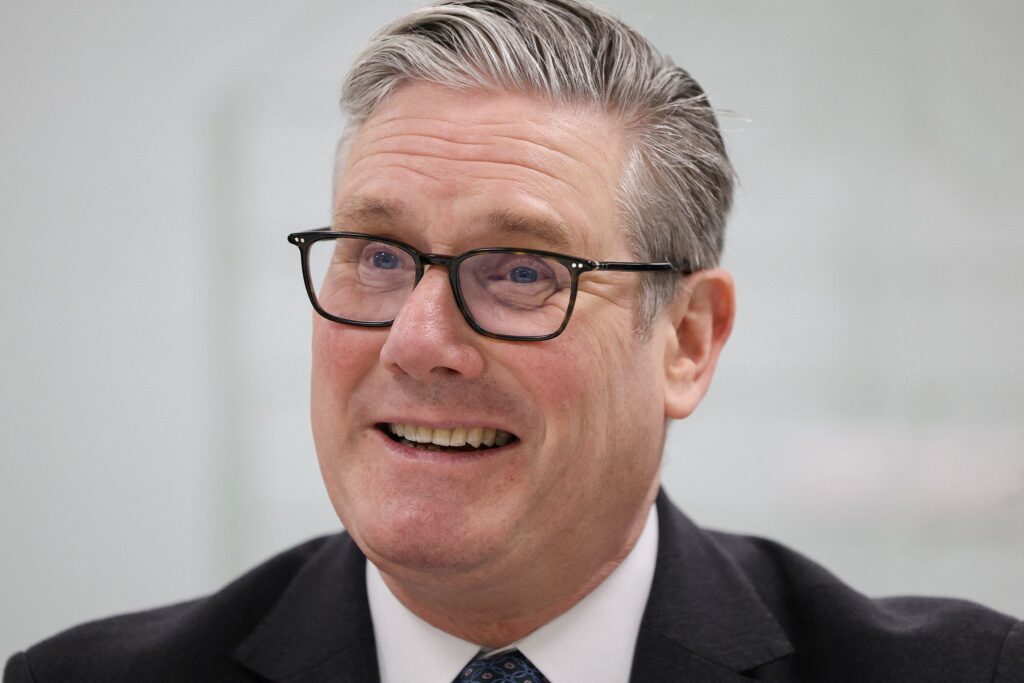
Born in Southwark, London, and raised in Surrey, Starmer became politically engaged during his teenage years. He earned a law degree from the University of Leeds in 1985 and completed a postgraduate Bachelor of Civil Law at St Edmund Hall, Oxford, in 1986. After qualifying as a barrister, he focused largely on criminal defence and human rights law. He advised the Northern Ireland Policing Board on human rights matters and was appointed Queen’s Counsel in 2002. As Director of Public Prosecutions and head of the Crown Prosecution Service, he oversaw major cases, including developments in the Stephen Lawrence murder case. He was knighted in 2014 for his services to law and criminal justice.
READ MORE ARTICLES:
- Victor Glover | Life, Education & NASA Career
- Andrew Heywood | British author, Educationalist, & political theorist
- Genghis Khan (Temüjin)
- Hector De Leon
- Alexandra Eala | Tennis Player, Education, & Biography, Career
- Sanae Takaichi
- Mojtaba Khamenei
Elected to Parliament in 2015, Starmer backed the Remain campaign in the 2016 EU referendum and later supported calls for a second Brexit vote. He served as Shadow Brexit Secretary under Jeremy Corbyn and succeeded him as Labour leader after winning the 2020 leadership contest. As opposition leader, he shifted Labour toward the political centre and prioritised tackling antisemitism within the party. Labour achieved strong results in the 2023 and 2024 local elections, despite declining membership in preceding years.
In the 2024 general election, Starmer led Labour to a decisive victory, ending 14 years of Conservative rule. As prime minister, his government has scrapped certain Winter Fuel Payments, introduced an early-release scheme to ease prison overcrowding, and resolved several public-sector strikes. It replaced the Rwanda asylum policy with a new Border Security Command and launched a National Violent Disorder Programme after nationwide unrest in 2024. His administration tightened visa rules, reformed planning laws, strengthened workers’ and renters’ rights, raised the minimum wage, and committed investment to a new nuclear power station.
On the international stage, Starmer has maintained support for Ukraine in the war with Russia and for Israel during the Gaza conflict, while also calling for a ceasefire and the release of hostages and later formally recognising the State of Palestine. His government has secured free trade agreements with India, the European Union, and the United States, and agreed to transfer sovereignty of the Chagos Archipelago to Mauritius following an advisory opinion from the International Court of Justice.
Despite these actions, Starmer’s public approval has declined significantly during his time in office, with opinion polls by late 2025 showing sharply negative ratings and indicating he had become one of the least popular prime ministers in modern polling history.
Personal life of Keir Starmer
Keir Starmer met his future wife, Victoria Alexander, in the early 2000s when both were working on the same legal case he as a senior barrister at Doughty Street Chambers and she as a solicitor. They became engaged in 2004 and married on 6 May 2007 at the Fennes Estate near Bocking, Essex. They have two children: a son born in 2008 and a daughter born in 2010. Before moving into Downing Street, the family lived in Kentish Town in north London, where they own a townhouse.
Starmer follows a pescatarian diet, while his wife is vegetarian. Their children were brought up as vegetarians until the age of 10, after which they were allowed to decide for themselves whether to eat meat. During the 2024 general election campaign, Starmer said his greatest concern about becoming prime minister was the potential impact on his children, given their sensitive ages. He also said he aimed to avoid work after 6 p.m. on Fridays to observe Shabbat dinners and spend time with his family.
An atheist, Starmer chose to make a solemn affirmation of allegiance to the monarch rather than swear a religious oath. Although he does not believe in God, he has acknowledged the unifying role of faith and has supported raising his children in the Jewish tradition. He attends services with his family at the Liberal Jewish Synagogue in north London.
A passionate football fan, Starmer previously played for the amateur club Homerton Academicals and supports Arsenal. He held a season ticket at the Emirates Stadium before becoming prime minister.
Since September 2024, the family has kept a Siberian cat named Prince at 10 Downing Street.
On 26 December 2024, Starmer’s brother, Nick, died following a cancer diagnosis. The prime minister released a statement the next day paying tribute to him.
Political positions
Keir Starmer’s political stance has shifted notably since winning the Labour Party leadership in 2020 on a platform built around ten left-leaning pledges. Several of those commitments—such as raising income tax for the top 5 per cent of earners, scrapping university tuition fees, and backing freedom of movement—were later dropped or significantly revised during his time as Labour leader and Leader of the Opposition. Starmer has argued that changing economic conditions made some of the original proposals unworkable.
Many observers say he has steered Labour toward the political centre to improve its electoral prospects, drawing comparisons with Tony Blair’s transformation of the party under New Labour. Others contend that these policy reversals suggest he lacks a consistent ideological foundation. A different view holds that Starmer does in fact adhere to a coherent philosophy rooted in the left of the socialist tradition, pointing to policies described as anti-neoliberal and distinct from the New Labour model, with a focus on reshaping what supporters see as a flawed economic system.
Some public figures—including his former employer Geoffrey Robertson, former adviser Simon Fletcher, and journalist Peter Oborne—have characterised Starmer’s leadership style as authoritarian. As prime minister, he has also been seen as attempting to attract voters who favour stronger, more centralised authority.
Although debate continues over the nature and clarity of his ideology, the term “Starmerism” has emerged to describe his political approach, and his supporters are sometimes referred to as “Starmerites.” His adviser Morgan McSweeney is widely viewed as having played a key role in shaping his policy direction.
In an April 2023 interview with The Economist, Starmer outlined what some describe as the defining features of Starmerism. Two core elements were highlighted. The first was a critique of the British state as overly centralised and ineffective, with a proposal to organise government around five overarching missions pursued across two terms in office. The second centred on an economic strategy described as “modern supply-side economics,” aimed at boosting productivity by increasing workforce participation, tackling inequality, improving skills, addressing the consequences of Brexit, and streamlining the planning system to support development.
In a June 2023 interview with Time, Starmer described “Starmerism” as acknowledging the need to repair the UK economy, viewing climate change not only as a responsibility but as a major opportunity for national renewal, reforming public services, ensuring equal opportunity for every child and community, and promoting safety and secure neighbourhoods.
He belongs to the Fabian Society and backs social ownership and public investment in essential services. Starmer continues to support bringing railways and local bus networks back into public control, establishing a state-owned energy company, and tightening oversight of water and energy providers. He also supports lowering the voting age to 16, a reform expected to be in place by the next general election.
A consistent theme of his leadership has been reforming institutions rather than relying solely on taxation and spending, alongside strengthening local governance and devolving powers. He has pledged to abolish the House of Lords—calling it unjustifiable—and replace it with a directly elected Assembly representing the nations and regions, subject to public consultation. He has criticised the awarding of peerages to political allies and donors. Starmer commissioned former prime minister Gordon Brown to propose constitutional reforms; the 2022 report recommended scrapping the Lords, empowering local authorities and mayors, and deepening devolution across the UK. Labour’s 2024 manifesto included plans to remove hereditary peers, impose a retirement age of 80, and consult on creating a more representative second chamber. A 2025 Guardian editorial suggested Starmer’s outlook leans more Anglo-American than European, highlighting his references to US centrist ideas that favour deregulation, infrastructure expansion, and market-driven growth.
On climate policy, Starmer has strongly championed decarbonisation and pledged to remove fossil fuels from the UK’s electricity generation by 2030. His government has also advanced animal welfare reforms, including proposals to ban certain farming practices such as hen cages, pig farrowing crates, and low-welfare chicken breeds.
Regarding LGBT rights, Starmer has expressed support for stronger protections against hate crimes, updating the gender recognition process, and introducing a trans-inclusive ban on conversion therapy—plans reiterated after Labour entered government. However, his administration maintained its opposition to Scotland’s Gender Recognition Reform Bill, and Starmer has rejected self-identification for transgender people, stating that trans women should not access women-only spaces. Following a 2025 Supreme Court ruling clarifying the definition of “woman” under the Equality Act 2010 as referring to biological women, he indicated his acceptance of that interpretation.
After the killing of George Floyd in the United States and the subsequent global protests, Starmer voiced support for the Black Lives Matter movement and joined symbolic gestures of solidarity. He later pledged a Race Equality Act as a central commitment of a Labour government.
In response to the murder of Sarah Everard in 2021, he called for tougher sentences for rape and sexual offences. Starmer has emphasised public safety, promising to halve violence against women and girls, reduce serious violent crime and knife crime, improve trust in the justice system, and establish a Charging Commission to address falling case resolution rates. He has also pledged to station domestic violence specialists in police control rooms handling emergency calls. On immigration, Starmer has committed to reducing high levels of legal migration and lowering net migration by investing in skills and training for the domestic workforce.
In December 2023, Starmer cited Margaret Thatcher, Tony Blair, and Clement Attlee as leaders who demonstrated how governments can deliver lasting change by serving the public rather than imposing their will. He has characterised Labour as a strongly patriotic party and praised former leaders such as Attlee, Harold Wilson, and Blair for advancing policies grounded in the everyday needs of working people.
Speaking in May 2023, Starmer said that the strongest form of progressive politics lies in driving Britain forward with ambition and determination, ensuring future opportunities benefit working people. However, he stressed that such ambition must remain connected to people’s desire for stability, order, and security. He argued that the Conservative Party no longer protects the institutions and values it once claimed to defend, including the environment, the NHS, the BBC, families, and the nation itself. Starmer added that safeguarding the country’s way of life, natural surroundings, and communities for future generations is a responsibility that transcends party labels, and he was unconcerned if that stance appeared traditionally conservative.