The Manitoba government has unveiled a comprehensive flood recovery package that includes immediate $500 advance payments for disaster assistance applicants, a new recovery grant program for uninsured and underinsured residents, and millions of dollars in additional funding aimed at helping flood-stricken communities rebuild faster following weeks of devastating storms across the province.
CANADA – The Manitoba government has announced a significant expansion of financial assistance for residents recovering from widespread flooding, introducing immediate advance payments, a new recovery grant program, and additional partnerships aimed at accelerating relief efforts across some of the province’s hardest-hit communities. The measures reflect a growing recognition that traditional disaster assistance programs often move too slowly to meet the urgent needs of families facing extensive property damage, displacement, and financial uncertainty.
Speaking during a flood update at the Manitoba legislative building on Friday, Premier Wab Kinew emphasized that the province is changing how disaster recovery assistance is delivered by providing financial support much earlier in the recovery process. Approximately 1,800 Manitobans who have already begun applications for Disaster Financial Assistance (DFA) will receive advance payments of $500 as quickly as possible, with provincial officials working throughout the weekend to ensure the money reaches affected residents without unnecessary delays.
READ MORE ARTICLES:
- PH, Canada Sign Historic Labor Pact for OFW Protection
- PM Carney Declares Economic Independence, Canada to Break Heavy U.S. Military Spending Reliance in Historic Policy Shift
- Human Rights Commission Ordered to Re-examine Starbucks Language Policy Complaint
The advance payment is intended to provide immediate financial relief while formal disaster assistance applications continue to be processed. In previous years, many disaster victims were forced to wait months before receiving provincial assistance, creating additional hardship at a time when urgent repairs and replacement of damaged belongings were already placing significant financial pressure on households.
Premier Kinew said the province recognizes that flood victims need access to funding immediately rather than after lengthy administrative reviews. He encouraged homeowners and tenants to begin repairs as soon as it is safe to do so, provided they carefully document all damage with photographs and retain receipts and other records required for future claims.
Residents were told they should not delay purchasing building materials, contacting contractors, or beginning restoration work simply because they are waiting for financial assistance approvals. According to the premier, documenting damage properly will allow recovery work to proceed while ensuring applicants remain eligible for provincial assistance.
Beyond the advance payments, Manitoba has introduced an entirely new Flood Recovery Program designed to assist people who either lack adequate insurance coverage or whose losses exceed what their insurance policies will pay. The program significantly broadens eligibility compared with the traditional Disaster Financial Assistance framework, offering support even to individuals who may not qualify under existing DFA guidelines.
Christine Stevens, director of Manitoba’s Emergency Management Organization (EMO), explained that unlike fixed-benefit programs, payments under the new recovery initiative will depend entirely on each applicant’s individual circumstances. Rather than imposing a maximum payout, officials will assess the extent of damage and determine what level of assistance is appropriate for cleanup, restoration, or structural repairs.
Stevens noted that every disaster affects households differently. While some residents may require assistance with debris removal and cleanup costs, others could face substantial structural damage requiring extensive repairs. The province intends to evaluate each case individually to ensure funding reflects actual recovery needs instead of relying on standardized payment amounts.
Officials believe this flexible approach will help bridge gaps left by private insurance policies, particularly for homeowners whose coverage excludes certain types of flooding or who discover that policy limits are insufficient to restore their homes fully. Renters who suffered losses are also eligible to receive assistance through the new program.
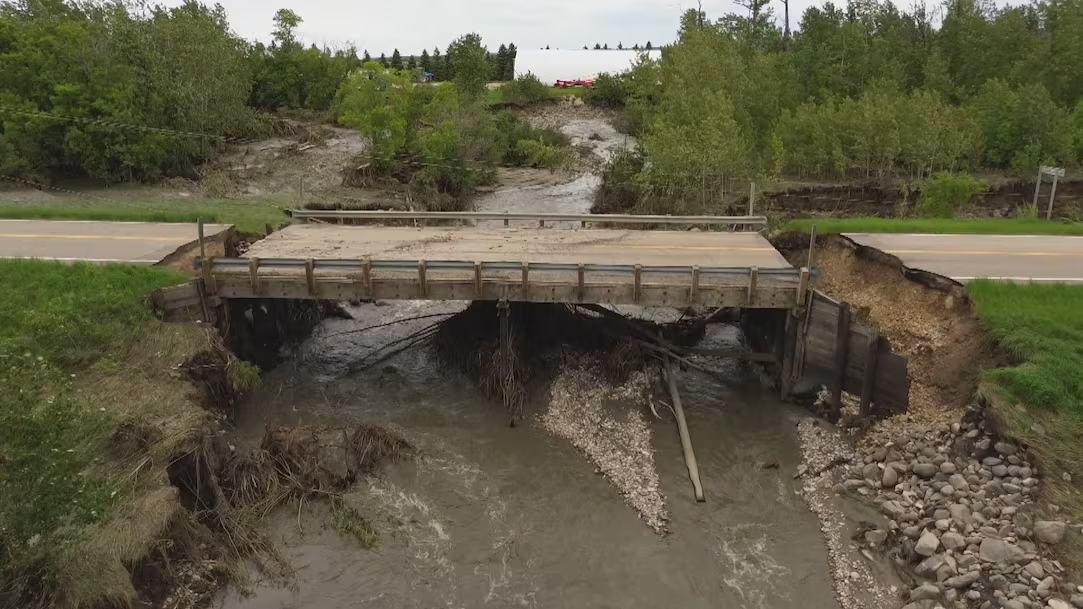
The government’s latest announcements come after weeks of severe weather that produced repeated storms and extensive flooding across western Manitoba, particularly throughout the Parkland region. The province has established Disaster Financial Assistance programs covering three separate weather events occurring between early June and early July, illustrating both the scale and frequency of this year’s natural disasters.
As of Friday morning, Manitoba remained under 48 local states of emergency, highlighting the ongoing challenges communities continue to face even as floodwaters gradually recede. Provincial officials acknowledged that recovery efforts are expected to continue for months as damaged infrastructure, homes, farms, and businesses are restored.
While officials have not yet provided estimates regarding the total number of damaged homes, businesses, or displaced residents, they confirmed that widespread infrastructure damage has been substantial. Approximately 80 provincial roads and highways suffered flood-related damage during the recent storms. Stevens reported that roughly half of those repairs have already been completed, allowing transportation routes to gradually reopen and improving access to affected communities.
Road reconstruction remains one of the province’s highest priorities because transportation disruptions have complicated emergency response operations, delayed deliveries of supplies, and slowed recovery efforts in rural areas. Repair crews continue working across multiple regions as conditions allow.
Financial commitments announced by the province extend well beyond individual assistance payments. Stevens confirmed that Manitoba will distribute approximately $7.8 million in advance funding directly to municipalities and communities beginning next week. Those funds are intended to help local governments manage emergency recovery expenses while waiting for longer-term disaster assistance reimbursements.
Additionally, the provincial government has allocated an initial $15 million specifically for recovery operations. That funding is separate from another $15 million commitment announced Friday that will match charitable donations collected to support flood victims.
To administer those charitable contributions, Manitoba has partnered with the Canadian Red Cross, which will oversee donations and distribute assistance to eligible residents. Unlike some government disaster programs, this charitable assistance will also be available to people who do not qualify for Disaster Financial Assistance, providing another layer of support for households experiencing financial hardship.
Premier Kinew said the matching initiative is designed to encourage Manitobans and Canadians to contribute toward recovery while significantly increasing the total amount of aid available. Every eligible donation received through the Red Cross campaign will effectively be doubled through provincial funding up to the $15 million limit.
The Canadian Red Cross is also expanding its presence in affected communities by deploying staff to the Swan Valley region, one of the areas hardest hit by recent flooding. Recovery specialists will provide one-on-one assistance to residents as they navigate the complex process of rebuilding their lives following the disaster.
Rather than focusing solely on financial aid, Red Cross personnel will help individuals develop comprehensive recovery plans that address housing, insurance issues, financial management, temporary accommodations, emotional well-being, and long-term rebuilding strategies. Provincial officials stressed that disaster recovery often involves significant emotional and psychological challenges alongside physical property damage, making these support services an important component of the overall response.
Another organization playing a key role in recovery operations is Team Rubicon, the military veteran-led humanitarian organization specializing in disaster response. The group has deployed multiple teams to the Swan Valley region to conduct direct outreach within affected neighborhoods.
According to Premier Kinew, five rotating teams consisting of approximately 25 members each will remain active in the region through August 19. Volunteers are going door-to-door identifying households requiring assistance and helping residents connect with available recovery resources.
Team Rubicon had already received 81 requests for assistance by Friday, with officials expecting that number to increase as additional residents return to their homes and begin assessing the full extent of flood damage. Their work includes debris removal, cleanup assistance, and helping vulnerable residents who may be unable to complete physically demanding recovery work themselves.
The province’s broader recovery effort involves close coordination among numerous agencies and organizations. Stevens said Manitoba is working alongside municipal governments, First Nations, Manitoba Hydro, the Office of the Fire Commissioner, the Canadian Armed Forces, emergency management personnel, charitable organizations, and utility providers to ensure recovery operations proceed efficiently across affected regions.
Officials acknowledged that responding simultaneously to multiple disasters places considerable strain on emergency resources. Manitoba has experienced not only severe flooding but also significant wildfire activity and increasingly frequent extreme weather events, forcing governments to reconsider how emergency assistance is delivered.
Premier Kinew argued that the traditional structure of Canada’s Disaster Financial Assistance system no longer reflects the realities of modern climate-related disasters. Historically, municipalities or First Nations served as the first line of response, absorbing immediate costs before provincial governments eventually reimbursed expenses with federal cost-sharing months later.
While that system functioned reasonably well when major disasters occurred less frequently, Kinew suggested it has become increasingly inadequate as communities confront annual flooding, recurring wildfires, and more frequent severe storms. Waiting several months for financial support can create unnecessary hardship for local governments already facing significant emergency expenditures and for residents needing immediate assistance to rebuild.
The premier said Manitoba’s decision to advance funding earlier represents a fundamental shift in disaster recovery philosophy. Rather than requiring communities and individuals to shoulder financial burdens until reimbursements arrive, the province aims to place resources into the hands of those affected as quickly as possible.
Kinew indicated he intends to raise the issue with fellow provincial premiers and the prime minister during future intergovernmental meetings, advocating for broader reforms to disaster funding programs nationwide. He argued that climate-related emergencies are becoming more frequent across Canada, making faster financial assistance an increasingly important public expectation.
According to the premier, Manitobans now reasonably expect governments to respond with urgency when disasters strike, particularly given the growing pattern of annual wildfires, recurring floods, and increasingly destructive storms. Accelerating financial support, he suggested, is becoming just as important as rebuilding damaged infrastructure.
The province’s latest initiatives signal an effort not only to address the immediate impacts of this year’s flooding but also to reshape Manitoba’s long-term disaster response strategy. By combining advance financial assistance, expanded recovery grants, charitable partnerships, volunteer deployment, infrastructure investment, and coordinated emergency management, provincial officials hope to reduce the financial burden on residents while creating a faster, more flexible recovery system capable of responding to increasingly frequent natural disasters.
- Hustisya ang Panawagan ng Pamilya ng Grade 4 Student sa Cavite na Pumanaw Matapos ang School Deworming
- Class Suspensions sa Hulyo 13, 2026: Listahan ng mga Lugar na Walang Pasok
- 16-anyos na Estudyante, Nahulihan ng Glock 17 at 32 Bala Bago Pumasok sa Paaralan sa South Cotabato
- Jaz Valdez Natagpuang Patay sa Basey, Samar; Hinihinalang Nasawi sa Aksidente sa Motorsiklo
- Inaasahang Lilikha ng Daan-Daang Libong Trabaho sa Pamamagitan ng AI Industrial Hub sa Ilalim ng Pax Silica Initiative