Election lawyer Romulo Macalintal is preparing to ask the Supreme Court to review the constitutionality of Republic Act No. 12326, which postpones the Barangay and Sangguniang Kabataan Elections to November 2028 and extends the terms of incumbent local officials.
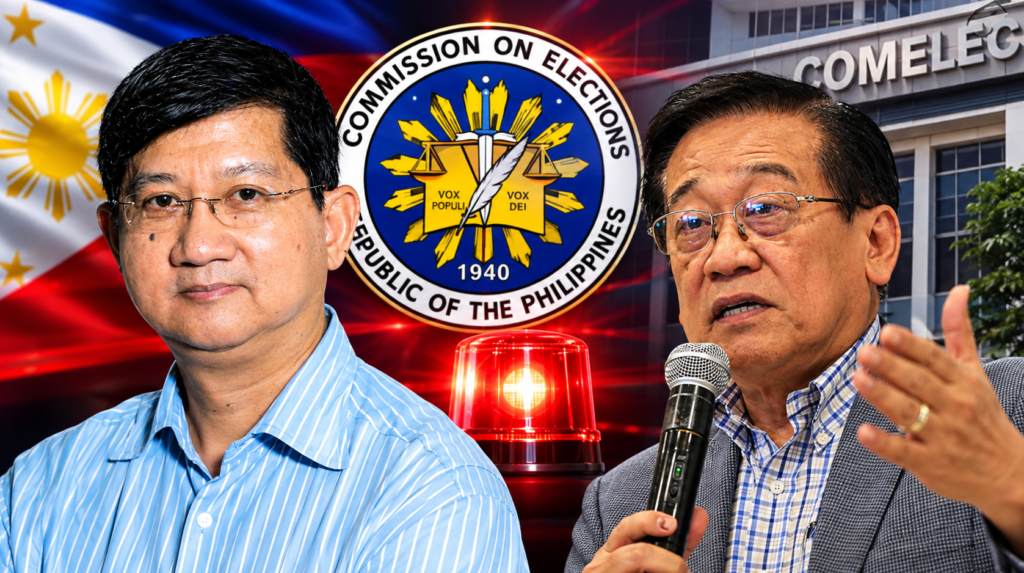
MANILA, Philippines — The postponement of the 2026 Barangay and Sangguniang Kabataan Elections (BSKE) to November 2028 has sparked concerns among election advocates and political analysts, with some warning that keeping incumbent local officials in place could preserve existing political networks as the country approaches the 2028 national elections.
President Ferdinand Marcos Jr. signed Republic Act No. 12326 on September 24, 2026. The signing was publicly announced the following day, just days before the scheduled filing of certificates of candidacy for the barangay and SK elections.
The new law moves the BSKE from November 2, 2026, to the second Monday of November 2028, or November 13, 2028. The elections will therefore take place about six months after the May 2028 presidential and general elections.
Under RA 12326, the terms of barangay and SK officials are fixed at five years. Incumbent officials covered by the transition period will remain in office for an additional two years. The law also limits barangay officials to two consecutive terms in the same position and SK officials to one term. Incumbent barangay officials serving their final term are considered to have completed a term because of the extension and will not be eligible to seek the same position in 2028.
READ OTHER ARTICLES:
- Italy’s Fideuram Bank Loses €95 Million in AI Voice Scam
- CHINA: Commemorating the Spirit of the Long March, 90 Years of Resilience and Triumph
- Many Delegates Walk Out as PM Netanyahu Addresses UN General Assembly
- Leni Robredo Endorses Marvic Leonen for Chief Justice
- Supreme Court Reaffirms Fair Comment Doctrine in Libel Cases
The Marcos administration has defended the measure as giving barangay and SK officials additional time to continue serving the public, complete ongoing programs, and address community concerns. Malacañang has also cited the role of barangay officials in programs involving crime prevention, disaster response, and other local initiatives.
However, critics have raised concerns about the political implications of maintaining the existing barangay leadership until after the 2028 national elections.Roland Simbulan, chair of the Center for People Empowerment in Governance (CenPEG), said the administration could gain politically from the postponement because the existing barangay political configuration would remain in place while political groups prepare for the 2028 elections.
The concern centers on the possibility that incumbent local officials could continue serving as important grassroots political contacts and maintaining local political networks.
Election watchdogs have also questioned the impact of repeatedly postponing local elections on voters’ ability to choose their barangay leaders. The Parish Pastoral Council for Responsible Voting (PPCRV), for example, argued that postponement removes an opportunity for voters to either replace incumbent officials or retain them through an election.
The controversy has also prompted plans for a legal challenge. Election lawyer Romulo Macalintal said he was preparing to ask the Supreme Court to review the constitutionality of RA 12326. He has argued that the postponement unreasonably extends the terms of incumbent barangay and SK officials and raises questions about voters’ right to elect their local representatives.
The latest postponement is also significant because the 2026 BSKE had already been moved from an earlier schedule. Marcos signed RA 12232 in 2025, transferring the elections to November 2026. The latest law now moves them again, this time to November 2028.
Groups critical of the measure have described the repeated postponements as a troubling pattern, particularly when national elections are approaching. They argue that delaying local elections can affect voters’ ability to regularly evaluate their grassroots representatives and decide whether to replace them.
The administration and its supporters, however, maintain that the extended period is intended to allow incumbent officials to continue implementing programs and serving their communities rather than to provide an additional political advantage.
The new law also states that incumbent officials remain subject to pending and future administrative, civil, and criminal investigations and liabilities.
With the law now in effect, the Commission on Elections has stopped preparations for the 2026 BSKE, including the filing of certificates of candidacy that had been scheduled to begin on September 28. Voter registration is expected to resume in November 2026 as preparations shift toward the 2028 electoral cycle.
The Supreme Court may ultimately determine whether the new law’s provisions, particularly the extension of incumbent officials’ terms and the postponement of the elections, comply with constitutional requirements.
Namfrel Raises Concerns Over Barangay Election Postponement
Election watchdog National Citizens’ Movement for Free Elections (Namfrel) has raised concerns over the repeated postponement of the Barangay and Sangguniang Kabataan Elections (BSKE), saying the practice should be stopped as the country moves closer to the 2028 national elections.
Namfrel said the timing of the next BSKE is particularly concerning because the local elections will be held in the same year as the presidential and general elections.
According to the group, barangay officials can play an important role in national political campaigns because of their close connections with voters and communities. Keeping incumbent officials in office until 2028 could therefore raise political concerns, particularly during a major election year.
Namfrel Secretary General Eric Alvia questioned the decision to extend the terms of barangay and Sangguniang Kabataan officials to five years.
“The wisdom of extending the terms of office even to five years was very arbitrary and had only an anecdotal basis for assuming that a longer term will redound to an efficient, responsive and productive administration and governance at the barangay level,” Alvia told the Inquirer.
He said no studies were cited to show that longer terms would necessarily result in better governance at the barangay level.
Alvia also argued that officials who benefit from an extended term should eventually seek a fresh mandate from voters rather than remain in office solely because of a law extending their tenure.
“A fresh mandate from the voting public should be the requirement for those benefiting from an extended term and not through an executive-legislative action,” he said.
Namfrel’s concerns come as the Commission on Elections (Comelec) had already started preparations for the 2026 BSKE before the elections were postponed.
The poll body had reportedly spent at least ₱8 billion on preparations for the elections, raising additional questions about the financial impact of postponing the polls after preparations were already underway.
The repeated postponement has consequently become a subject of debate among election watchdogs, lawyers, and other groups, particularly over the length of incumbents’ terms, voters’ right to choose their local officials, and the potential political implications of holding the next barangay elections after the 2028 national polls.
- AITSA Cabuyao Violations

- The Timeless Bond and Contemporary Crossroads of Philippines–China Relations
- Macalintal Eyes Supreme Court Challenge Over BSKE Postponement
- Italy’s Fideuram Bank Loses €95 Million in AI Voice Scam
- GMA News Binatikos sa Panayam kay Gracioso sa ₱2-Bilyong Alegasyon sa mga Duterte
- Sara Duterte Itinangging Tumanggap ng Pera Mula sa Nagpakilalang Bagman ni Velasco



Namfrel Backs Legal Challenge to Barangay Election Postponement
Election watchdog National Citizens’ Movement for Free Elections (Namfrel) said it will support efforts to challenge the constitutionality of the law postponing the Barangay and Sangguniang Kabataan Elections (BSKE) to 2028, adding to growing questions over the extended terms of incumbent local officials.
Namfrel said it would “support and join the effort of individuals and groups moving to question the constitutionality of RA 12326,” arguing that the law “strikes at the heart of our democracy and reflects a grave abuse of discretion.”
The group’s position comes after election lawyer Romulo Macalintal raised plans to bring the new law before the Supreme Court. Macalintal has argued that postponing the BSKE for three years effectively allows incumbent barangay and SK officials to remain in office beyond the period originally expected by voters.
Macalintal said the extension is particularly significant because voters will not be given an opportunity to decide whether they want the incumbent officials to continue serving.
“Combined, this translates to three long years where millions of Filipino voters are stripped of their fundamental right of suffrage, governed instead by local officials effectively thrust upon us through legislative appointment rather than the ballot,” he said.
Previous Election Postponements
The latest dispute is not the first time Macalintal has questioned a law postponing the barangay and SK elections. He previously challenged Republic Act No. 11935 before the Supreme Court. The law, signed by President Ferdinand Marcos Jr. on October 10, 2022, moved the BSKE from December 5, 2022, to October 30, 2023.
In June 2023, the Supreme Court declared RA 11935 unconstitutional. The ruling became an important part of the legal debate surrounding subsequent attempts to move the barangay elections.
The government later passed another law affecting the schedule of the BSKE. On August 13, 2025, Marcos signed Republic Act No. 12232, which moved the elections from December 1, 2025, to November 2, 2026. RA 12232 also increased the term of barangay and SK officials from three years to four years.
Macalintal again challenged the law before the Supreme Court. He argued that the postponement was not supported by what he considered an important, substantial, or compelling reason, but was instead based on the perceived shortness of the incumbent officials’ terms.
His challenge was joined by three other petitioners. High school teacher John Barry Tayam, a group of young voters led by Mystro Yushi Fujii, and lawyer Alberto Hidalgo separately filed pleadings questioning RA 12232.
The petitioners argued, among other things, that the law did not comply with guidelines on election postponements established by the Supreme Court in the 2023 case of Macalintal v. Commission on Elections.
The Supreme Court eventually upheld the constitutionality of RA 12232. On November 11, 2025, the court issued an 8-5-2 ruling rejecting the four consolidated petitions challenging the law.
In the decision written by Associate Justice Jhosep Lopez, the Supreme Court said Congress has the authority under the Constitution to determine the length of the terms of barangay officials. The court also explained that RA 12232 should fundamentally be viewed as a law setting the terms of office of barangay and SK officials. It established a four-year term and imposed restrictions on consecutive terms for SK officials.
The Supreme Court further ruled that RA 12232 did not violate the public’s right to vote because the law did not permanently remove or indefinitely suspend the BSKE.
The majority consisted of eight of the court’s 15 justices: Chief Justice Alexander Gesmundo and Associate Justices Rodil Zalameda, Samuel Gaerlan, Ricardo Rosario, Jhosep Lopez, Japar Dimaampao, Jose Midas Marquez, and Antonio Kho Jr. Five justices dissented: Senior Associate Justice Marvic Leonen and Associate Justices Alfredo Benjamin Caguioa, Henri Jean Paul Inting, Maria Filomena Singh, and Raul Villanueva.
Associate Justices Ramon Paul Hernando and Amy Lazaro-Javier did not participate in the case. The constitutional questions surrounding RA 12326 could now bring another election postponement case before the Supreme Court. Because Hernando and Lazaro-Javier did not participate in the earlier case involving RA 12232, they could participate in any new petition challenging RA 12326, subject to the applicable rules on judicial participation.
For Namfrel, the repeated changes to the BSKE schedule raise broader questions about the regular exercise of voters’ rights at the local level. The group has argued that barangay elections are an important part of the democratic process because they give residents an opportunity to choose the officials closest to their communities.
Barangay officials deal directly with residents on many local concerns, making the regular selection of these officials particularly important to voters. The latest postponement means that incumbent officials covered by the new law will remain in office beyond the schedule previously established for the 2026 elections.
Critics of RA 12326 argue that such an extension should be subjected to close constitutional scrutiny because voters will not have an election through which they can either retain or replace their barangay and SK officials during the extended period.
Supporters of the law, meanwhile, have maintained that extending the terms allows incumbent officials to continue their work and provide uninterrupted services to their communities.
The legal debate therefore centers on a fundamental question: whether Congress can extend the terms of incumbent barangay and SK officials and postpone the elections while still complying with constitutional principles governing elections and the right of suffrage.
The Supreme Court’s previous ruling on RA 12232 will likely be relevant to any new challenge, although RA 12326 will have to be examined based on its own provisions and circumstances. If a petition against RA 12326 is filed, the Supreme Court will have the opportunity to determine whether the latest postponement falls within Congress’ constitutional authority or violates other constitutional protections.
For now, the BSKE is scheduled for November 2028, meaning voters will not choose new barangay and SK officials in 2026 unless the law is subsequently changed or invalidated. The controversy highlights the continuing legal and political debate over how often local elections should be held, how long elected officials should remain in office, and how changes to election schedules affect the voting rights of millions of Filipinos.
THIS IS THE INVESTIGATION ARTICLES OF APTIKONS WITH OTHER SOURCES