President Xi Jinping’s latest summit with U.S. President Donald Trump highlighted efforts to manage tensions between the world’s two largest powers, while major disagreements over trade, technology and Taiwan remained unresolved.
A key outcome was the extension of the U.S.-China trade truce, which prevents another escalation of tariffs but was extended only until January rather than for a longer period. The move leaves major issues including tariffs, China’s control of rare-earth supplies and its access to advanced U.S. semiconductor technology open for further negotiations.
China has a strong interest in maintaining access to international markets as its domestic economy faces continued pressure. Weak consumer demand, high youth unemployment and declining property prices have created challenges, making exports increasingly important to economic growth.
Taiwan also remained a major point of disagreement. Xi reiterated China’s opposition to Taiwan independence and emphasized that U.S. arms sales to the self-governing island remain a sensitive issue for Beijing. Trump has not publicly indicated any change in Washington’s longstanding support for Taiwan’s ability to defend itself.
The leaders also discussed artificial intelligence, with Xi emphasizing the importance of keeping AI under human control. However, no major agreement on AI safety or cooperation was publicly announced.
READ OTHER ARTICLES:
- Donald Trump Administration Prepares Sweeping Sanctions Against ICC
- Donald Trump Expands Drug Pricing Deal, Projecting $27.6 Billion 50 State Savings
- North Korea nuclear tests may have triggered earthquakes near Mount Mantap
- DOJ Reaches Agreements With NYU, UPMC Over Transgender Care for Minors
- Catriona Gray Still Reigns as the Gold Standard of Beauty Queens
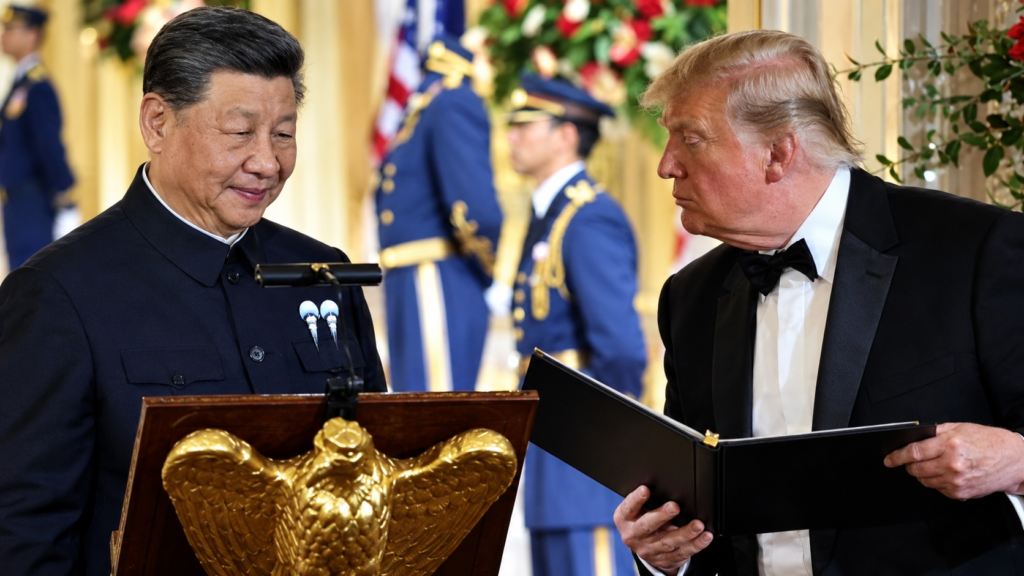
Beyond the policy discussions, the summit carried significant symbolic importance. Trump gave Xi a highly formal welcome, including an airport greeting and state banquet, while China’s announcement that two pandas will soon arrive in Atlanta added a diplomatic and cultural element to the visit.
For Xi, the warm reception provided valuable diplomatic optics at home and reinforced the image of China engaging with the United States on an equal footing. Yet beneath the pageantry, the fundamental competition between Washington and Beijing over economic power, technology, security and global influence remains unresolved.
The Geopolitical Landscape
The current geopolitical landscape is characterized by a complex interplay of power dynamics among nations, with China and the United States at the forefront. As China emerges as a major global power, its rise is often accompanied by concerns in Washington about its intentions and ambitions. These concerns have contributed to a U.S. policy approach that Beijing views as an attempt to contain China’s growing influence and challenge its sovereignty and global aspirations.
In recent years, relations between China and the United States have become increasingly strained, marked by trade disputes, military tensions in the South China Sea, and differences in political systems and strategic interests. The United States has sought to strengthen cooperation with its allies and partners in response to China’s growing influence, while Beijing views initiatives such as the Belt and Road Initiative as part of its efforts to expand economic and diplomatic ties. From China’s perspective, these U.S. actions reflect an effort to shape the international order in ways that could constrain Beijing’s growing role.
China, on the other hand, maintains that it has the right to pursue a greater role in international affairs and presents its rise as an opportunity for cooperation and mutual development. China’s growing economic and military capabilities have nevertheless generated concerns in the United States and among some of its allies, particularly regarding regional security. Beijing describes these concerns and related policies as containment and argues that they conflict with its national interests and its vision of a more multipolar international system.
As Xi Jinping and Donald Trump engage in dialogue, these broader geopolitical tensions form an important backdrop to their discussions. The implications of their relationship extend beyond the two countries, affecting alliances, partnerships, trade and security arrangements around the world. Understanding these underlying tensions is important for assessing the future direction of U.S.-China relations and their potential impact on global affairs.
Trade Negotiations and Economic Pressures
Trade negotiations between Xi Jinping and Donald Trump have become a significant element of the broader U.S.-China relationship. The discussions have taken place against the backdrop of a temporary tariff truce, which has helped prevent further escalation of economic tensions between the two countries. The pause in additional tariffs provides both sides with an opportunity to reassess their economic strategies and negotiate outstanding trade issues.
China also faces domestic economic challenges, including slower growth, weak consumer demand and problems in the property sector. These pressures make stable access to international markets particularly important for Beijing. For Xi Jinping, maintaining trade relations with major economies, including the United States, is an important part of managing these economic challenges.
The negotiations have involved a range of issues, including tariffs, market access, technology restrictions and China’s trade practices. The discussions between Xi and Trump therefore have implications that extend beyond bilateral relations, as decisions by the world’s two largest economies can affect global trade and supply chains.
The trade negotiations reflect the broader effort by both countries to manage their economic relationship while protecting their respective interests. As Washington and Beijing continue to negotiate, their decisions could influence economic policies and trade relations well beyond their borders.
A Closer Look at Taiwan Relations
Taiwan remains one of the most sensitive issues in U.S.-China relations. China claims Taiwan as part of its territory, while Taiwan operates under its own government and maintains extensive unofficial relations with other countries. The United States has maintained unofficial relations with Taiwan and provides it with defensive arms, a policy that Beijing strongly opposes.
U.S. arms sales to Taiwan have repeatedly drawn criticism from the Chinese government. Beijing regards such support as interference in what it considers an internal Chinese matter and has consistently called on Washington to stop providing military assistance to the island.
The United States, meanwhile, has described its support for Taiwan as part of its broader effort to maintain peace and stability in the Taiwan Strait. The issue is also important to U.S. allies and partners in the Indo-Pacific because of the potential regional security consequences of a conflict involving Taiwan.
Taiwan therefore remains a major point of tension in discussions between Washington and Beijing. Differences over the island, military support and regional security create the possibility of further tensions if either side believes the other is changing the existing balance. Managing these disagreements remains an important challenge for U.S.-China relations.
Artificial Intelligence Dialogue
During the summit between Xi Jinping and Donald Trump, significant attention was given to artificial intelligence (AI), a field that has become increasingly important to global economic and security competition. Both leaders addressed the rapid pace of AI development and its potential implications for national security and economic competitiveness. However, their remarks also highlighted differences in their approaches and priorities.
Xi Jinping emphasized the importance of using artificial intelligence to support China’s technological development and economic growth. He presented AI as a potential driver of productivity and technological advancement. His remarks were consistent with China’s broader efforts to strengthen its position in the global AI sector through investment in research, development and technological innovation. Xi’s position reflects the view that AI represents not only an economic opportunity but also an important component of national technological capabilities.
Donald Trump, meanwhile, has expressed a different approach to artificial intelligence. While recognizing the potential benefits of the technology, he has also commented on concerns surrounding its rapid development and possible risks. Issues such as cybersecurity, safety and regulation have become part of the wider international debate over AI. The differing approaches of Washington and Beijing illustrate the challenges involved in developing common principles for managing a rapidly evolving technology.
Despite the importance of AI in the broader U.S.-China relationship, the summit did not result in a major publicly announced agreement on how the two countries would address the challenges associated with artificial intelligence. The lack of a concrete accord is notable amid growing international discussions about AI safety, regulation and competition. The issue remains part of the broader challenge facing both countries as they seek to balance technological innovation with national security and other concerns.
Panda Diplomacy: A Symbol of Cooperation
Panda diplomacy has long played a distinctive role in China’s international relations, including its relationship with the United States. The presence of giant pandas in American zoos has often been associated with goodwill, cultural exchange and diplomatic engagement. During the summit between Xi Jinping and Donald Trump, the tradition again attracted attention, highlighting the role of cultural exchanges in bilateral relations.
The history of panda diplomacy between China and the United States dates back to the 1970s, when China sent its first pair of giant pandas to the United States following the establishment of diplomatic relations between the two countries. Since then, pandas have become a recognizable symbol of U.S.-China cultural ties. The planned arrival of additional pandas in the United States provides another example of how cultural exchanges can accompany broader diplomatic engagement.
Against the backdrop of complex international challenges, such exchanges can help create opportunities for people-to-people connections and cultural understanding. Pandas have attracted considerable public interest in the United States and have also helped raise awareness of China’s wildlife and conservation efforts.
Panda diplomacy also generates significant media attention, particularly during periods of heightened diplomatic activity. As a result, the presence of pandas can become part of the broader public image of China’s relationship with other countries. While such exchanges do not resolve major disagreements over trade, security or technology, they can provide a softer dimension to otherwise difficult diplomatic relationships.
The continued use of cultural exchanges demonstrates that diplomacy involves more than formal negotiations. Symbolic gestures, cultural programs and public engagement can exist alongside discussions over complex political, economic and security issues.
The Importance of Image Management
In international diplomacy, public image can play an important role during high-level meetings between national leaders. Summits involving Xi Jinping and Donald Trump attract considerable attention not only because of the issues being discussed but also because of how the meetings are presented to domestic and international audiences.
For Xi Jinping, the public presentation of meetings with the U.S. president can contribute to the broader image of China as an important global power. Formal ceremonies, personal meetings and diplomatic exchanges can be used to emphasize China’s role in international affairs and its ability to engage directly with Washington on major global issues.
Donald Trump has likewise placed considerable emphasis on the public presentation of his meetings with foreign leaders. His engagements with Xi can be portrayed as opportunities to demonstrate his approach to negotiations and his focus on U.S. interests. The visual and symbolic elements of a summit can therefore become part of the wider political messaging surrounding the meeting.
Image management extends beyond official appearances. Media coverage, public statements and the framing of diplomatic discussions can influence how audiences interpret a summit. Leaders must therefore balance the symbolic aspects of diplomacy with the substantive issues being negotiated.
The summit’s public presentation can shape perceptions of the relationship between the two countries, but it does not necessarily resolve the underlying disagreements. Beneath the ceremonies and diplomatic gestures, Washington and Beijing continue to face difficult questions involving trade, technology, security and their respective roles in the international system.
Public Perception and Social Media Impact
The meeting between Xi Jinping and Donald Trump was not only a significant moment in international relations but also an event closely scrutinized and interpreted through social media. In today’s digital age, social media platforms serve as important channels for shaping public perceptions, particularly during high-profile diplomatic engagements. The narrative surrounding the summit was influenced by memes, comments and online debates that reflected a wide range of views among users in China and the United States.
During and after the summit, social media platforms were filled with content expressing different perspectives on the interactions between the two leaders. In China, internet users used platforms such as Weibo to create and share memes that sometimes portrayed the relationship between Xi and Trump humorously. These forms of online expression served not only as entertainment but also as a way for users to communicate their views about the leaders and the outcome of the meeting.
Social media can also amplify narratives that reflect particular political or individual perspectives. For example, government-supporting accounts may emphasize cooperation and positive diplomatic gestures, while critical voices may focus on disagreements or unresolved issues. This contrast illustrates how social media can contribute both to public engagement and to divisions in public opinion.
The rapid spread of information through social media means that perceptions of diplomatic events can change quickly, influenced by trending hashtags, viral posts and prominent online figures. The digital discussion surrounding the Xi-Trump meeting therefore reflects a broader trend in which social media has become an important factor in how international summits are perceived and discussed by the public.
Underneath the Surface: Strategic Competition
Strategic competition between the United States and China has been a major feature of international relations over the past two decades. The relationship extends beyond individual disputes to include economic, military, technological and diplomatic dimensions. Meetings between leaders such as Xi Jinping and Donald Trump often attract extensive media attention, which can sometimes overshadow the broader issues underlying their relationship.
At the center of the U.S.-China relationship are competing interests and differing approaches to global influence. The United States seeks to maintain its role in international affairs while responding to China’s growing economic, technological and military capabilities. China, under Xi Jinping, has sought to expand its role in international affairs and strengthen its influence through economic, diplomatic and strategic initiatives. This competition can be seen in areas ranging from the Belt and Road Initiative to security issues in the South China Sea.
Technology is another important component of the relationship. Both countries recognize that developments in areas such as artificial intelligence, cybersecurity and telecommunications have implications for national security and economic competitiveness. As a result, investments in research and development have become increasingly important to both governments. Competition in these areas can also affect global supply chains, technology standards and international economic relationships.
High-level summits can create opportunities for diplomacy and cooperation, but they do not necessarily resolve the broader strategic differences between Washington and Beijing. Addressing these issues requires continued dialogue and negotiations covering trade, technology, security and other areas of mutual concern.
Future of U.S.-China Relations
The meeting between Xi Jinping and Donald Trump represented an important moment in U.S.-China relations, with the direction of the relationship shaped by the differing interests and priorities of the two governments. Xi has emphasized the importance of maintaining a stable external environment for China’s economic development and international interests. Trump, meanwhile, has frequently emphasized trade, economic interests and U.S. national priorities in his approach to China.
One possible development following the summit is a temporary reduction in tensions. Both countries have economic reasons to avoid an uncontrolled escalation of their trade disputes and may therefore continue negotiations on tariffs and other outstanding issues. Such discussions could provide opportunities to address areas of disagreement while preserving channels for economic engagement.
However, significant challenges remain. The United States continues to raise concerns about China’s military activities and regional security policies, including its approach to Taiwan and the South China Sea. China, meanwhile, objects to what it views as U.S. interference in matters involving its sovereignty and national interests. These disagreements remain important obstacles to a broader improvement in bilateral relations.
Changes in the global balance of power will also continue to influence U.S.-China relations. As China expands its economic, technological and diplomatic influence, the United States is adjusting its policies and partnerships in response. This dynamic is likely to produce a combination of competition and cooperation, depending on the specific issue and circumstances.
The future of U.S.-China relations therefore remains uncertain. Continued negotiations, diplomatic engagement and efforts to manage areas of disagreement could help reduce the risk of escalation. At the same time, major differences over trade, technology, security and Taiwan will continue to shape the relationship between the world’s two largest powers.
- AITSA Cabuyao Violations

- The Timeless Bond and Contemporary Crossroads of Philippines–China Relations
- Macalintal Eyes Supreme Court Challenge Over BSKE Postponement
- Italy’s Fideuram Bank Loses €95 Million in AI Voice Scam
- GMA News Binatikos sa Panayam kay Gracioso sa ₱2-Bilyong Alegasyon sa mga Duterte
- Sara Duterte Itinangging Tumanggap ng Pera Mula sa Nagpakilalang Bagman ni Velasco