The administration of U.S. President Donald Trump is preparing sweeping sanctions against the International Criminal Court in The Hague, potentially restricting its access to U.S. financial services, technology, insurance, and other essential commercial support as Washington intensifies its confrontation with the tribunal over investigations involving U.S. forces and Israeli officials.
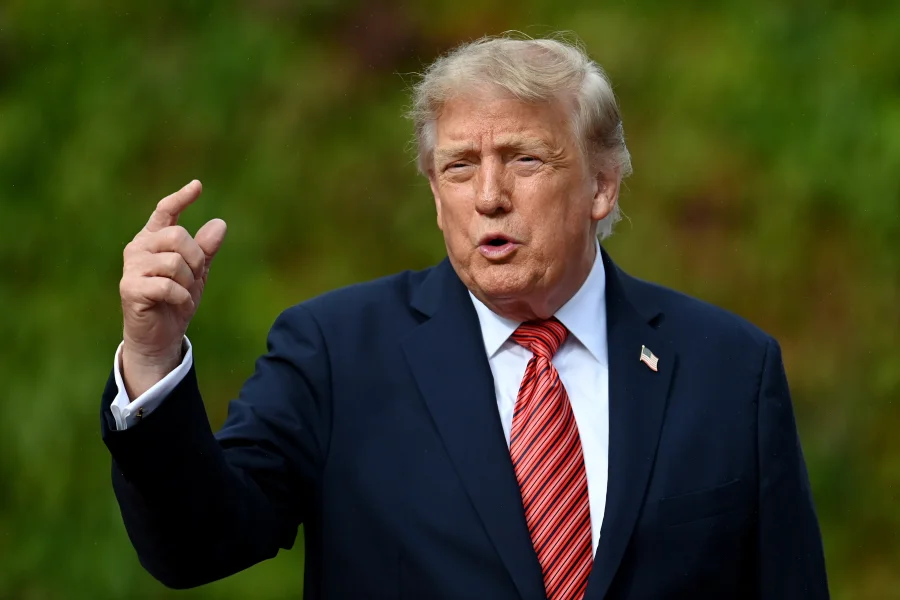
The administration of United States President Donald Trump is preparing sweeping new sanctions against the International Criminal Court is located in The Hague, Netherlands, sharply escalating Washington’s confrontation with the global tribunal over its investigations involving the United States and Israel.
According to officials familiar with the plans, the proposed measures would target the ICC as an institution rather than only individual judges and prosecutors, representing a significant expansion of penalties already imposed by Washington against several court officials. The sanctions could bar United States citizens and companies from providing funds, goods, or services to the court without explicit authorisation from the U.S. Department of the Treasury.
The Trump administration’s deepening opposition to the ICC stems from two core disputes, the court’s investigation into alleged crimes committed by U.S. forces in Afghanistan, and its issuance of arrest warrants for senior Israeli officials including Prime Minister Benjamin Netanyahu in connection with the conflict in Gaza. Both Israel and Netanyahu have firmly rejected the allegations against them.
READ OTHER ARTICLES:
- Donald Trump Administration Prepares Sweeping Sanctions Against ICC
- Google Gemini Accidentally Breaks Out of AI Sandbox and Hacks Real Companies
- Donald Trump Expands Drug Pricing Deal, Projecting $27.6 Billion 50 State Savings
- North Korea nuclear tests may have triggered earthquakes near Mount Mantap
- DOJ Reaches Agreements With NYU, UPMC Over Transgender Care for Minors
- September 21: Special Non-Working Days Declared in Rizal, Ifugao; Manila Classes Suspended
U.S. Secretary of State Marco Rubio announced in July that Washington would launch a broad campaign to isolate the ICC and encourage other nations to withdraw from the treaty body. While the United States has already sanctioned a number of ICC judges and prosecutors, it has until now stopped short of imposing measures against the institution as a whole.
Should the broader sanctions proceed, their impact would extend far beyond the court’s access to U.S. financial services. Restrictions targeting the ICC as an organisation could hinder its ability to secure information technology systems, insurance, and other essential commercial support from American firms. Routine financial operations including the payment of staff based in the United States would also face disruption. Because banks and financial institutions worldwide typically avoid transactions that might expose them to U.S. penalties, the ripple effects would likely reach well beyond American companies directly named in the measures.
The court has been bracing for the possibility of expanded sanctions for months. Earlier this year, it shifted away from Microsoft products in favour of software from a German provider, according to the Associated Press, and has also replaced insurance and financial service providers with firms that have little or no significant operational presence in the United States.
The Netherlands, which hosts the ICC headquarters in The Hague, is likewise drawing up contingency plans for serious disruption. Dutch authorities are examining ways to ensure the court can continue paying its staff and protecting witnesses, while maintaining security at its detention facility. European officials have also discussed safeguards to shield European organisations from the fallout of U.S. sanctions, though the legal viability of such protections for an international institution remains uncertain.
Neither the exact timing nor the full scope of the sanctions has yet been finalised. Reuters reports that the administration has finalised draft measures and may announce them during the upcoming United Nations General Assembly, while the Associated Press notes that Dutch officials have been warned the penalties could be imposed at any moment.
The United States has never been a member of the ICC, which was founded in 2002 to prosecute individuals for genocide, war crimes, and crimes against humanity when national judicial systems are unable or unwilling to act. The court currently counts 125 nations as member states. If put into force, institution-wide U.S. sanctions would present an unprecedented challenge to the ICC, owing to the central role of the U.S. dollar and American technology firms in global commerce. The measures stand to reshape not only the court’s relationship with Washington, but also the wider network of banks, suppliers, and partners that sustain its daily work.
U.S. Never Funded the ICC — New Sanctions Could Block Access to Global Transaction Systems
It is important to establish a key fact at the outset: the United States has never provided direct financial funding to the International Criminal Court (ICC) since the court was founded in 2002. Because the United States is not a party to the Rome Statute—the international treaty that established the court—it has no legal obligation to contribute to the ICC’s budget and has not made regular or voluntary contributions to the institution.
This means the current dispute is not about Washington withdrawing financial support it once provided. The pressure now being prepared is fundamentally different. In 2002, the United States enacted the American Service-Members’ Protection Act, which explicitly prohibits U.S. government agencies and officials from providing funds or assistance to the ICC. The measure was designed, in part, to protect American military personnel from the court’s jurisdiction. That restriction has remained in place for more than two decades.
What the Trump administration is now advancing in 2026 goes far beyond simply withholding money. The sweeping new sanctions being prepared could bar the ICC from conducting transactions in U.S. dollars and prohibit American companies from providing the court with essential services, including information technology infrastructure, email systems, insurance, and operational support. The issue is therefore not lost donations but access to the global financial and commercial systems that underpin the court’s daily operations.
The impact of these measures would not be the loss of U.S. government grants funds that were never provided in the first place. Instead, what could be restricted is the ICC’s ability to freely use its own substantial budget, held in financial institutions around the world, when those funds must move through or interact with U.S.-connected banking networks. Because the U.S. dollar and American technology providers play a major role in global commerce, restrictions of this kind could make it more difficult for the court to access systems it relies on to pay staff, procure services, and conduct investigations, even as its operating budget remains funded by its 125 member states.
ICC’s €196 Million Budget Backed by 125 Nations – Japan is the Top
The International Criminal Court draws its financial foundation from a membership of 125 States Parties, with no direct funding received from either the United States or China, neither of which are signatories to the Rome Statute. For the current fiscal year of 2026, the court’s approved budget stands at €196.8 million approximately $210 million in U.S. dollars a sum shouldered entirely by member states according to a scale based on national economic size and population.
Because major global powers outside the court’s membership do not contribute, the largest share of the financial responsibility falls upon the world’s leading economies that have ratified the founding treaty. Japan stands as the single largest contributor, providing approximately 15.9% of the total budget. It is followed closely by Germany at 11.4%, France at 8.5%, and the United Kingdom at 8.2%. Rounding out the top ten contributors are Italy with 5.9%, South Korea at 5.0%, Canada at 4.9%, and further contributions from Brazil, Spain, and Australia.
Top 10 Contributors
| Country | Approx. Share of Budget |
|---|---|
| 1. Japan | 15.9% |
| 2. Germany | 11.4% |
| 3. France | 8.5% |
| 4. United Kingdom | 8.2% |
| 5. Italy | 5.9% |
| 6. South Korea | 5.0% |
| 7. Canada | 4.9% |
| 8. Brazil | (within top 10) |
| 9. Spain | (within top 10) |
| 10. Australia | (within top 10) |
Beyond these leading nations, the court’s budget is supported by a broad global coalition spanning every continent. Collectively, countries of the European Union provide nearly half of all funding. The remainder comes from regions across the world: 28 nations from Latin America and the Caribbean, including Argentina, Mexico, and Colombia; 33 African states, among them South Africa, Nigeria, and Ghana though three Sahel nations, Mali, Burkina Faso, and Niger, have announced their withdrawal from the court; and 19 states across the Asia-Pacific, where Japan and South Korea lead, and which once included the Philippines before its official departure in 2019.
In addition to mandatory annual assessed contributions, several member states provide voluntary donations to the Trust Fund for Victims, a dedicated mechanism that delivers financial and medical support to those affected by war crimes, genocide, and crimes against humanity. This layered system of funding underscores the court’s reliance on its broad international membership rather than contributions from non-member states.
- Eastern Visayas’ Fun Run Set September 27 in Tacloban to Mark World Tourism Day

- Donald Trump Administration Prepares Sweeping Sanctions Against ICC
- Google Gemini Accidentally Breaks Out of AI Sandbox and Hacks Real Companies
- Donald Trump Expands Drug Pricing Deal, Projecting $27.6 Billion 50 State Savings
- North Korea nuclear tests may have triggered earthquakes near Mount Mantap
- DOJ Reaches Agreements With NYU, UPMC Over Transgender Care for Minors