Meta CEO Mark Zuckerberg has been summoned to face lawmakers over social media safety concerns, with the House of Representatives warning that stronger measures, including possible restrictions on Facebook’s operations in the Philippines, could be considered if Meta fails to address long-standing concerns involving user safety, online scams, harmful content, and child protection.
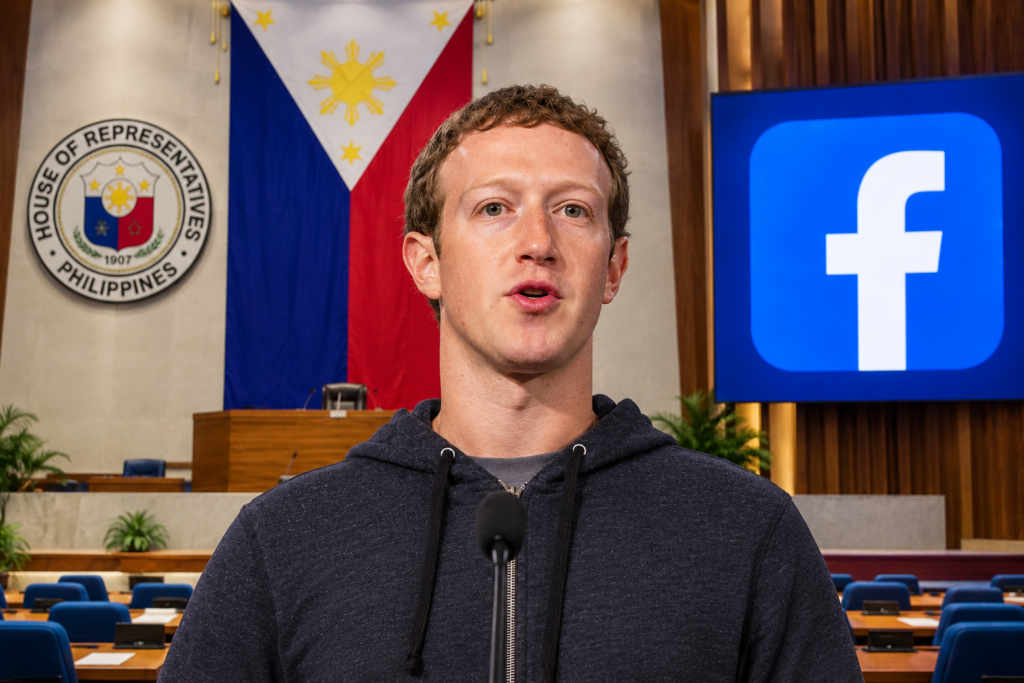
MANILA, Philippines — The House of Representatives has called on Meta CEO Mark Zuckerberg to appear before lawmakers as part of an inquiry into social media safety, following growing concerns over harmful online content, child protection, scams, misinformation, and the accountability of major technology platforms.
The move came after the House deferred consideration of the proposed 2027 budget of the Department of Information and Communications Technology (DICT), with lawmakers seeking action on unresolved concerns involving Meta, the company behind Facebook and Instagram.
The congressional inquiry is expected to examine how Meta handles harmful content, responds to complaints from Philippine authorities, removes scam-related and exploitative accounts, and protects children and young users from online risks. The DICT has identified online sexual abuse and exploitation of children, child sexual abuse material, illegal online gambling, cyberbullying, and other harmful digital activities among the concerns raised.
READ OTHER ARTICLES:
- Roblox Corp. Unveils Comprehensive Safety Overhaul for Young Users 5 to 15 Age
- Ferdinand Marcos Jr. Has No Final Position on Proposed 2026 BSKE Postponement
- Quirino Governor Dax Cua Dies at 48 After 25 Years in Public Service
- ABS-CBN to Cut 200 Jobs Amid Weak Advertising
The DICT said it respects the decision of the House and supports efforts to strengthen accountability among major social media platforms. The department said Meta continues to fall short of its responsibility and commitment to youth safety, while emphasizing that platforms with a large presence in the Philippines should maintain effective safeguards and cooperate transparently with authorities.
Rep. Presley de Jesus has also raised concerns over Meta’s lack of a full physical corporate presence in the Philippines. Lawmakers have questioned whether the company has sufficient local accountability despite the country’s large number of Facebook users. Rep. Brian Poe-Llamanzares likewise pointed to the absence of a country manager and a full local office for Meta.
The possibility of stronger restrictions on Meta’s services has also entered the congressional discussion. A House resolution filed in 2026 calls for an inquiry into whether Meta’s continued operations in the Philippines should be subjected to heightened regulation, restriction, suspension, or possible prohibition, depending on the findings of the investigation. This does not mean that Facebook has been banned or suspended in the Philippines.
The current congressional action follows months of discussions between Philippine officials and Meta regarding online safety. In April, the DICT and the Presidential Communications Office called on Meta to strengthen its response to high-risk disinformation and establish faster coordination mechanisms for urgent cases involving public safety and other serious concerns.
The government has also previously engaged Meta representatives on measures involving misinformation and illegal online gambling content. The DICT said the latest concerns require concrete and measurable safeguards, particularly when the safety of Filipino children and young people is involved.
As of the latest reports, there has been no public response from Zuckerberg personally regarding the House’s call. Meta’s representatives have previously engaged with Philippine authorities, but the timing and manner of Zuckerberg’s possible participation in the congressional inquiry have not been publicly confirmed.
The controversy does not mean that Zuckerberg has announced any plan to shut down Facebook in the Philippines. Instead, the immediate issue before Congress is whether Meta will sufficiently address the concerns raised by lawmakers and government agencies over online safety, platform accountability, and the protection of Filipino users.
- Mark Zuckerberg Summoned as Facebook Faces Possible Suspension in Philippines

- August–September 2026 Nurses Licensure Exam Results Released; 28,652 Pass
- Over 230,000 Fake Recruitment Posts Removed by Meta, TikTok Since 2022
- Roblox Corp. Unveils Comprehensive Safety Overhaul for Young Users 5 to 15 Age
- Lorna Kapunan | Education, Professional Career & Issue
- NLE G-K August–September 2026 Nurse Licensure Exam Passers