U.S. President Donald Trump has expanded his most-favored-nation drug pricing initiative to all 50 states, the District of Columbia and Puerto Rico, with the White House projecting $27.6 billion in savings for state governments over the next decade.
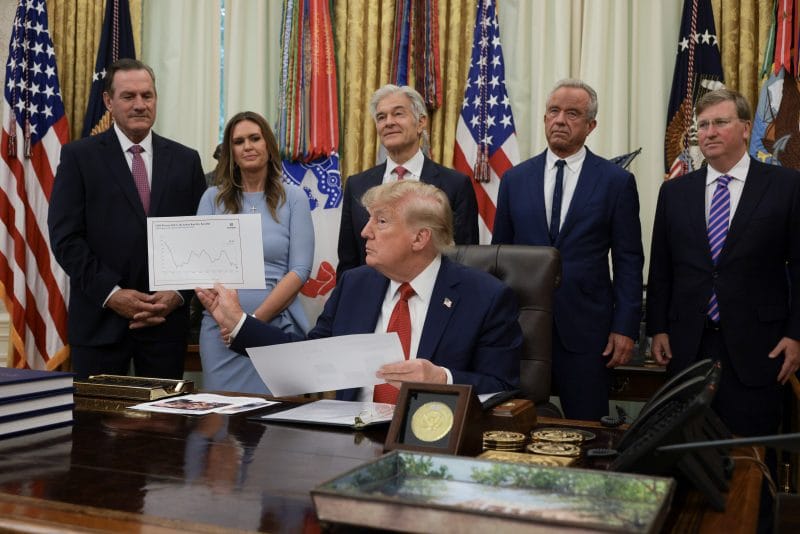
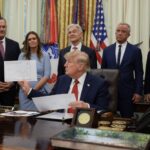
WASHINGTON — U.S. President Donald Trump announced Friday that all 50 states, along with the District of Columbia and Puerto Rico, will participate in a federal initiative extending “most favored nation” pricing to Medicaid prescription drugs.
The program is designed to lower the prices Medicaid programs pay for certain brand-name medicines by requiring participating pharmaceutical manufacturers to provide rebates that bring final prices in line with prices paid by other developed countries.
According to the White House, the initiative is projected to generate $64.3 billion in Medicaid savings over the next decade. Of that amount, an estimated $27.6 billion would accrue to state governments, while $36.6 billion would represent savings for the federal government.
The Centers for Medicare & Medicaid Services said the model covers hundreds of medicines across major drug categories, including treatments for cancer, diabetes and asthma. The agency said all 50 states, Washington, D.C., and Puerto Rico have applied to participate, while 40 states and Puerto Rico had already signed agreements as of September 18.
The administration calls the program the GENEROUS Medicaid Payment Model. Under the arrangement, participating drug manufacturers will provide rebates to state Medicaid programs so that the final cost of eligible medicines does not exceed the most-favored-nation price.
READ OTHER ARTICLES:
- DOJ Reaches Agreements With NYU, UPMC Over Transgender Care for Minors
- September 21: Special Non-Working Days Declared in Rizal, Ifugao; Manila Classes Suspended
- Mark Zuckerberg Summoned as Facebook Faces Possible Suspension in Philippines
- DepEd Benguet Bans Weekend School Activities for Rest
- Over 230,000 Fake Recruitment Posts Removed by Meta, TikTok Since 2022
- Roblox Corp. Unveils Comprehensive Safety Overhaul for Young Users 5 to 15 Age
The initiative builds on Trump’s earlier efforts to establish international reference pricing for medicines. The White House said 26 major pharmaceutical companies, representing about 90% of the branded U.S. prescription drug market, have agreed to participate in various most-favored-nation arrangements.
The White House estimates that the broader agreements could produce nearly $65 billion in Medicaid drug savings over 10 years. It has also promoted the policy as part of a wider effort to reduce the difference between prescription drug prices in the United States and other developed countries.
Trump said during an Oval Office event that the savings could give states additional money to spend on other healthcare priorities or other government programs.
The administration has also highlighted TrumpRx, a government-backed online platform offering discounts on certain prescription medicines. The White House said the platform has generated more than $700 million in savings and now covers more than 1,000 branded and generic medicines.
The administration further said 26 pharmaceutical companies have committed approximately $170 billion toward U.S. manufacturing and research and development, linking the drug-pricing agreements with efforts to strengthen domestic pharmaceutical production and reduce reliance on foreign supply chains.
The drug-pricing initiative has also drawn questions from outside the administration. Reuters reported that pharmaceutical industry representatives have opposed aspects of the policy, while some analysts have questioned how much of the projected savings will ultimately materialize because Medicaid already receives substantial drug discounts.
The latest announcement therefore expands the administration’s most-favored-nation pricing strategy nationwide within Medicaid, while the projected financial impact will depend on how the agreements are implemented and how much states ultimately save on eligible medicines.
Trump Expands Drug Pricing Deal, Projecting $27.6 Billion State Savings
The program, known as the GENEROUS Medicaid Payment Model, is part of Trump’s broader effort to bring U.S. drug prices closer to the prices paid in other developed countries. Under the arrangement, participating drug companies will provide additional discounts so Medicaid programs do not pay more than the agreed-upon international price for certain medicines.
The White House Council of Economic Advisers estimates that the program could save taxpayers about $64.3 billion over the next 10 years. Of that amount, $27.6 billion is projected to go toward savings for state governments, while another $36.6 billion is expected to come from the federal government’s share of Medicaid costs.
The program covers hundreds of brand-name medicines used to treat a wide range of illnesses, including cancer, diabetes and asthma. The basic idea is simple: Medicaid programs would receive rebates from participating drug manufacturers so the final price paid for eligible medicines would not be higher than the lowest price available in comparable developed countries.
The announcement builds on drug-pricing agreements the Trump administration has made with pharmaceutical companies during 2026. The White House said it now has agreements with 26 manufacturers, covering about 89% of the U.S. branded-drug market.
The Centers for Medicare & Medicaid Services said all 50 states, Washington, D.C., and Puerto Rico had applied to participate as of September 18. Forty states and Puerto Rico had already signed agreements at that point, according to the agency.
For Medicaid beneficiaries, the change is expected to affect the prices paid by the government and participating health programs rather than simply providing a cash discount directly to every patient. The savings are expected to reduce Medicaid’s spending on eligible medicines.
The administration says the policy could also give states more room in their budgets because Medicaid is jointly funded by state and federal governments. The White House estimates that state governments alone could save $27.6 billion over the next decade.
However, the projected savings are estimates rather than money already saved. Reuters reported that Medicaid already receives significant discounts on prescription drugs, and some industry representatives and analysts have questioned how much additional savings the new arrangements will ultimately produce.
Another issue is that many details of the agreements between the government and drug manufacturers have not been made fully public. That makes it difficult for outside observers to independently determine how much the program will save once it is fully implemented.
The pharmaceutical industry has also raised concerns about the possible effects of the pricing policy. Reuters reported that the industry’s main trade group, PhRMA, has opposed the initiative, arguing that the approach could affect access to medicines and future investment in drug development.
The new Medicaid initiative is part of Trump’s wider push to reduce prescription drug costs. The administration has also promoted TrumpRx, an online platform offering discounts on certain medicines, while negotiating separate agreements with pharmaceutical companies.
For now, the key figure remains the administration’s $64.3 billion estimate over 10 years, including $27.6 billion in projected state savings. How much states and the federal government actually save will depend on how the agreements work in practice and how widely the discounted prices are applied.
- Donald Trump Expands Drug Pricing Deal, Projecting $27.6 Billion 50 State Savings
 U.S. President Donald Trump has expanded his most-favored-nation drug pricing initiative to all 50 states, the District of Columbia and Puerto Rico, with the White House projecting $27.6 billion in savings for state governments over the next decade. WASHINGTON — U.S. President Donald Trump announced Friday that all 50 states, along with the District of…
 - North Korea nuclear tests may have triggered earthquakes near Mount MantapNorth Korea’s underground nuclear tests may have triggered a long-term increase in earthquake activity around Mount Mantap, where the country conducted all six of its known nuclear tests, according to a new scientific study that identified 1,399 earthquakes in the area between 2008 and 2025. PYONGYANG, North Korea — A new scientific study suggests that…
- DOJ Reaches Agreements With NYU, UPMC Over Transgender Care for MinorsThe U.S. Department of Justice has reached agreements with NYU Langone and UPMC that will end their provision of certain transgender medical interventions to minors, with the two health care systems agreeing to pay a combined $9.45 million to resolve federal investigations. ADS The U.S. Department of Justice (DOJ) has reached agreements with two major…
- September 21: Special Non-Working Days Declared in Rizal, Ifugao; Manila Classes SuspendedSeveral communities in the Philippines will observe localized changes to work and school activities on Monday, September 21, 2026, as local governments mark important anniversaries and authorities prepare for commemorative activities. The arrangements cover special non-working days in San Mateo, Rizal, and Aguinaldo, Ifugao, while face-to-face classes at all levels in Manila are suspended. These…
- Mark Zuckerberg Summoned as Facebook Faces Possible Suspension in PhilippinesMeta CEO Mark Zuckerberg has been summoned to face lawmakers over social media safety concerns, with the House of Representatives warning that stronger measures, including possible restrictions on Facebook’s operations in the Philippines, could be considered if Meta fails to address long-standing concerns involving user safety, online scams, harmful content, and child protection. MANILA, Philippines…
- August–September 2026 Nurses Licensure Exam Results Released; 28,652 PassThe Professional Regulation Commission (PRC) has released the results of the August–September 2026 Nurses Licensure Examination (NLE), with 28,652 out of 37,359 examinees successfully passing the examination. The nursing licensure examination was administered by the Board of Nursing across 26 testing centers throughout the Philippines in August and September 2026. The results were released on…