Local officials are urgently warning tourists to stay out of the waters at St. Vincent’s Beach after numerous visitors ignored safety warnings while watching humpback whales. The beach’s steep underwater drop-off, powerful rip currents, and unpredictable waves make it one of the area’s most dangerous shorelines, where a single misstep could quickly turn a sightseeing trip into a tragedy.
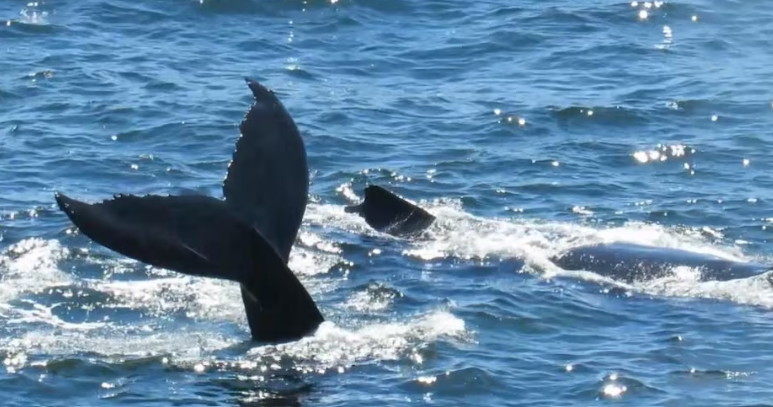
ST. VINCENT’S, Newfoundland and Labrador, Canada — The breathtaking spectacle of humpback whales swimming just meters from the shoreline has transformed St. Vincent’s Beach in Newfoundland and Labrador into one of Canada’s most remarkable wildlife destinations. Every summer, visitors gather along the coast to witness these magnificent marine giants feeding and surfacing in waters so close to land that the experience appears almost surreal. Yet beneath this extraordinary natural beauty lies a hidden and potentially fatal danger that local officials, residents, and safety advocates say too many tourists continue to underestimate.
Authorities are urgently reminding visitors that the shoreline at St. Vincent’s is not a place for recreational swimming or wading. Despite the beach’s calm and inviting appearance, the ocean conceals a combination of hazardous underwater conditions capable of turning a peaceful sightseeing trip into a life-threatening emergency within seconds. Local leaders fear that without greater public awareness and respect for the warnings, the community may eventually witness a preventable tragedy.
READ MORE ARTICLES:
- Alex Pilon Returns Mistaken $24,000 Refund, Faces Locked CRA Account and Delayed Payments
- St. Vincent’s Beach Warns Tourists About Deadly Waves and Dangerous Riptides Today
- CANADA: Manitoba Expands Flood Relief With Faster Financial Aid for Residents Recovery
- PH, Canada Sign Historic Labor Pact for OFW Protection
- PM Carney Declares Economic Independence, Canada to Break Heavy U.S. Military Spending Reliance in Historic Policy Shift
Mayor Verna Hayward emphasized that the beach possesses one of the most dangerous coastal profiles in the region. Unlike ordinary beaches that gradually slope into deeper water, St. Vincent’s features an exceptionally steep underwater drop-off. This unique geological formation allows humpback whales to swim astonishingly close to the shoreline, creating an unforgettable viewing experience for visitors. However, the same feature also means that a person standing only a short distance into the surf can suddenly find themselves in deep water with little opportunity to recover.
Compounding this danger are the beach’s powerful rip currents and violent undertows. These fast-moving currents can develop with little warning, pulling even experienced swimmers away from shore in moments. According to local officials, once someone is carried beyond the shoreline by these currents, the chances of returning safely become extremely slim. The force of the ocean can overpower adults and children alike, while unpredictable waves may knock individuals off their feet before they realize the severity of the situation.
Long-time residents have expressed growing concern after repeatedly observing visitors ignoring warning signs and venturing dangerously close to the water. Many tourists, captivated by the sight of whales breaching and feeding offshore, become so focused on capturing photographs or enjoying the scenery that they overlook the hazardous conditions surrounding them. Residents have also reported seeing children playing unsupervised near the surf, prompting community members to issue repeated safety reminders through local social media groups and public discussions.
Their concern stems not only from personal observation but from years of living alongside an ocean whose beauty commands both admiration and respect. They describe the shoreline as deceptively peaceful, masking powerful currents capable of sweeping people into deep water without warning. The tranquil appearance of the sea often creates a false sense of security among first-time visitors unfamiliar with the area’s unique coastal characteristics.
Several tourists admitted they had been unaware of the hidden dangers before arriving at the beach. Many believed that simply standing in shallow water posed little risk, never imagining that strong currents or sudden waves could pull someone into the ocean almost instantly. Such misconceptions underscore the importance of educating visitors before they approach the shoreline.
Parents, in particular, are exercising heightened vigilance while visiting the area. Families have shared that they remain constantly alert whenever children approach the waves, recognizing that even a brief moment of distraction could have devastating consequences. Their experiences serve as a powerful reminder that the ocean, regardless of how inviting it appears, demands continuous caution and respect.
The attraction of observing humpback whales in their natural habitat remains one of Newfoundland and Labrador’s greatest tourism treasures. Every sighting offers a rare opportunity to appreciate the remarkable biodiversity of Canada’s Atlantic waters while fostering greater awareness of marine conservation. However, experts emphasize that wildlife viewing should never come at the expense of personal safety. Maintaining a safe distance from the water allows visitors to fully enjoy the extraordinary experience while significantly reducing the risk of accidents.
Local officials continue to encourage everyone visiting St. Vincent’s Beach to carefully observe posted warning signs, remain on dry land, supervise children at all times, and resist the temptation to approach the surf for a closer view. The whales may inspire awe, but the ocean surrounding them remains an immensely powerful natural force that cannot be controlled or predicted.
As the summer whale-watching season continues and increasing numbers of visitors arrive to witness one of nature’s most spectacular displays, community leaders hope that education and responsible behavior will prevent needless loss of life. The unforgettable beauty of St. Vincent’s Beach should remain a source of wonder rather than sorrow. By respecting the power of the Atlantic Ocean and following local safety guidance, visitors can ensure that their memories of this extraordinary destination are defined by inspiration, appreciation, and safe enjoyment rather than irreversible tragedy.
Saving Lives at St. Vincent’s Beach Requires More Than Warning Signs
St. Vincent’s Beach in Newfoundland and Labrador has become one of Canada’s most extraordinary whale-watching destinations. Each summer, thousands of visitors travel from across the country and around the world to witness humpback whales feeding only a few metres from the shoreline. The breathtaking display of nature has earned the beach international attention, creating opportunities for tourism, local businesses, and environmental appreciation.
Yet behind this remarkable natural attraction lies an increasingly urgent public safety crisis. The same underwater geography that allows humpback whales to approach so close to land also creates one of the most dangerous coastlines in the region. A steep underwater drop-off, violent rip currents, powerful undertows, and unpredictable Atlantic waves have transformed what appears to be a peaceful shoreline into an environment where a single misstep can have fatal consequences.
Despite warning signs already installed throughout the beach, local residents continue to witness tourists entering the surf, allowing children to play near the water, or standing at the shoreline for photographs while completely unaware of the invisible dangers beneath the waves. Community leaders fear that it is no longer a question of whether a tragedy could happen but when one might occur if stronger preventive measures are not implemented.
The challenge facing St. Vincent’s cannot be solved by changing nature. The beach’s dramatic underwater slope is a permanent geological feature that makes the area uniquely attractive to humpback whales. Engineers cannot simply remove the steep drop-off or eliminate the powerful Atlantic currents without causing irreversible environmental damage. Therefore, the only practical solution is to change human behavior through stronger safety infrastructure, active monitoring, and comprehensive public education.
One of the most immediate improvements should be the installation of visible physical barriers that clearly establish a safe viewing boundary. Low-profile rope fencing or rustic safety lines placed across the dry sand would create a psychological and visual reminder that visitors should not proceed toward the water’s edge. Such barriers would preserve the natural beauty of the beach while providing a constant indication of where safe observation ends and danger begins.
Current warning signs should also be redesigned to communicate the severity of the hazard more effectively. Traditional informational signs often fail to capture the attention of visitors eager to watch whales or take photographs. High-visibility warning boards using internationally recognized danger symbols, bright red coloring, and multilingual messages stating “Stay Out of the Water – Lethal Undertow” would provide a far stronger warning. Because the beach welcomes international travelers, safety information should be presented in several major languages alongside universally understood pictograms.
Additional visual guidance could be provided through a color-coded zoning system. Permanent markers identifying a “Green Zone” for safe viewing and a clearly designated “Red Zone” representing the hazardous shoreline would help visitors instantly recognize where they should remain. Similar systems have proven effective at beaches and national parks where environmental hazards are not immediately obvious.
Infrastructure alone, however, is insufficient. During peak whale-watching months, active supervision should become a central component of public safety. Seasonal beach wardens or trained volunteer ambassadors could patrol the shoreline, politely reminding visitors to remain behind designated safety boundaries and warning those who unknowingly approach dangerous areas. Human interaction often proves far more effective than static signage, particularly when tourists become distracted by the excitement of whale sightings.
Emergency preparedness must also be strengthened. Public rescue stations equipped with lifebuoys, throw ropes, flotation devices, and emergency call boxes should be strategically positioned throughout the beach. While these resources are never a substitute for prevention, they can significantly improve emergency response during the critical first minutes of an accident, particularly in areas where mobile phone coverage may be unreliable.
Public address systems could provide another valuable layer of protection. Automated announcements broadcast at regular intervals during busy periods could remind visitors to remain on dry land, supervise children closely, and respect the power of the Atlantic Ocean. Similar systems are successfully used at beaches, parks, and wildlife reserves worldwide to reinforce safety messages without requiring continuous staff intervention.
Education should begin long before visitors arrive at the shoreline. Modern technology offers innovative opportunities to reach tourists during their journey. Through digital geofencing, mobile devices entering the St. Vincent’s area could automatically receive a welcome message accompanied by a critical safety alert explaining that the beach is strictly for whale viewing and that entering the water could be life-threatening. Receiving this information before reaching the beach would help visitors arrive with an understanding of the risks rather than discovering them after they have already approached the surf.
Tourism operators likewise have an essential responsibility. Commercial tour companies, shuttle operators, and rental car agencies should incorporate mandatory safety briefings into their visitor experience. A simple one-minute explanation accompanied by printed safety brochures could dramatically increase awareness while demonstrating a shared commitment to responsible tourism.
Social media must also become part of the solution. Because many visitors first discover St. Vincent’s Beach through online photographs and viral videos, digital platforms should be used to communicate safety just as effectively as they promote the destination itself. Targeted campaigns on Instagram, Facebook, TikTok, and other travel platforms could educate potential visitors about the deceptive appearance of the shoreline, emphasizing that the safest place to enjoy the whales is from dry land.
Perhaps the most significant long-term investment would be the construction of elevated whale-viewing platforms and boardwalks overlooking the beach. Carefully designed wooden observation decks situated on higher, stable ground would provide spectacular panoramic views while naturally encouraging visitors to remain away from the dangerous waterline. These structures would improve accessibility for families, seniors, photographers, and visitors with disabilities while simultaneously reducing the temptation to approach the surf for a closer look.
Ultimately, preserving both public safety and the natural environment requires balancing tourism with responsibility. St. Vincent’s Beach should continue to inspire awe through its extraordinary wildlife encounters, but that inspiration must never come at the cost of human life. Every visitor deserves the opportunity to witness humpback whales safely, and every local resident deserves confidence that their community will not become known for preventable tragedy.
Nature cannot be controlled, nor should it be. The Atlantic Ocean will always command respect with its immense power, changing tides, and unpredictable currents. What can be controlled is how communities prepare, educate, and protect those who come to admire its beauty.
By combining stronger infrastructure, active enforcement, innovative technology, comprehensive education, and thoughtfully designed viewing facilities, St. Vincent’s Beach can become an international model for safe wildlife tourism. Preventing tragedy is not simply a matter of installing more signs—it is a commitment to ensuring that every visitor leaves with unforgettable memories of magnificent whales rather than becoming another heartbreaking reminder of the ocean’s unforgiving power. / aptikons