The Professional Regulation Commission (PRC) has suspended the medical license of former anti-insurgency spokesperson Dr. Lorraine Marie T. Badoy for six months after finding her guilty of unethical and unprofessional conduct for red-tagging fellow healthcare workers without sufficient evidence, in a landmark ruling that reinforces the ethical obligations of physicians and underscores accountability for public statements made by licensed medical professionals.
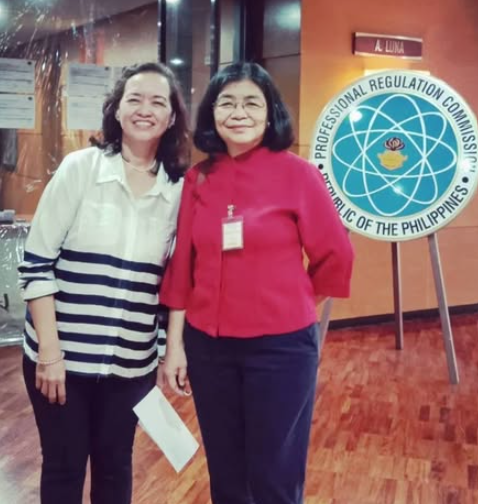
MANILA, Philippines — The Professional Regulation Commission (PRC) has suspended the medical license of former anti-insurgency spokesperson Dr. Lorraine Marie T. Badoy for six months after finding her guilty of unethical and unprofessional conduct over public statements that red-tagged fellow healthcare workers and medical professionals.
The decision, contained in a resolution dated May 8 and made public on Saturday, June 27, marks a significant disciplinary action by the country’s medical regulatory body, reinforcing the professional and ethical responsibilities expected of licensed physicians regardless of whether they are actively practicing medicine.
In its ruling, the PRC Professional Regulatory Board of Medicine found that Badoy’s actions violated the Revised Code of Ethics of the Medical Profession, warranting the suspension of her certificate of registration.
“Wherefore, in view of the foregoing, the board finds respondent Lorraine Marie T. Badoy guilty of violation of the Revised Code of Ethics of the Medical Profession, which constitutes unethical and unprofessional conduct and accordingly suspends her certificate of registration for a period of six months (6) from finality hereof,” the resolution stated.
The board further ordered that Badoy must refrain from practicing medicine throughout the suspension period and may only resume her profession after submitting an affidavit certifying that she has fully served the imposed penalty.
“During the period of suspension, respondent is prohibited from engaging in the practice of medicine,” the resolution added.
The PRC, the government agency tasked with administering and enforcing professional regulatory laws in the Philippines, emphasized that physicians remain accountable to the ethical standards of their profession regardless of their career paths or public roles.
The disciplinary case stemmed from a complaint filed in 2022 by healthcare workers led by nurse Jocelyn Andamo, chief nurse organizer of the Alliance of Health Workers (AHW). The complainants accused Badoy of defamation and red-tagging through a series of public statements directed at healthcare leaders, unionists, and medical activists.
Central to the complaint were Badoy’s statements linking community physician Dr. Ma. Natividad “Naty” Castro to the Communist Party of the Philippines (CPP), despite the absence of official findings supporting such allegations.
In its resolution, the PRC board concluded that Badoy’s accusations lacked evidentiary basis.
According to Rico Domingo, founding chairperson of the Movement Against Disinformation, the ruling affirmed that the allegations were unsupported by official records.
“The Board found that Dr. Badoy’s statements clearly referred to AHW and its members; that no official document proved AHW’s alleged CPP-NPA-NDF affiliation; and also found that Dr. Castro was branded a terrorist before any such designation. That is the core of the ruling: grave accusations cannot stand without evidence,” Domingo said.
The PRC also underscored that physicians are held to a higher standard of professionalism because of the public trust attached to the medical profession. It stressed that even though Badoy was not engaged in the traditional clinical practice of medicine at the time of the incidents, she remained bound by the ethical obligations expected of every licensed physician.
The board stated that medical professionals are expected to uphold propriety, integrity, and respect toward colleagues and fellow healthcare workers in all public and professional engagements.
The commission, however, stopped short of revoking Badoy’s medical license, noting that the violation constituted her first recorded administrative offense before the commission.
“Taking into consideration the discussions above, and considering that this is the first offense of Respondent based on Commission records, it is deemed appropriate to impose the lesser penalty of suspension instead of the ultimate penalty of revocation of authority to practice medicine,” the PRC said.
The case also carries broader implications following the Supreme Court’s landmark ruling in the Deduro case, where the High Court formally defined red-tagging as a form of threat used to discourage perceived subversive activities. The Supreme Court further recognized that individuals publicly branded as communist sympathizers or terrorists may become vulnerable to harassment, abduction, extrajudicial killings, or attacks by vigilantes, paramilitary groups, or even state agents.
The High Court’s pronouncement has since become a significant legal reference in cases involving allegations of red-tagging, highlighting the serious consequences such accusations may have on an individual’s safety, reputation, and constitutional rights.
Healthcare organizations welcomed the PRC’s ruling, viewing it as a victory for medical professionals and advocates who have long campaigned against the vilification of healthcare workers involved in labor organizing, community health programs, and human rights advocacy.
Following the release of the resolution, Andamo reaffirmed the commitment of healthcare workers to continue opposing red-tagging and defending truth and human rights.
“Patuloy ang ating laban para sa katotohanan at kampanya laban sa vilification ng mga unionists, human rights defenders, at health activists! Ipagtagumpay ang laban ng mamamayan! No to NTF-ELCAC,” Andamo said.
The ruling represents one of the most prominent disciplinary actions taken by the PRC involving allegations of red-tagging, underscoring the commission’s position that ethical standards governing the medical profession extend beyond hospitals and clinics and apply equally to physicians’ conduct in the public sphere.
Former NTF-ELCAC Spokesperson Lorraine Badoy Faces Series of Legal Setbacks Over Red-Tagging Cases
The six-month suspension imposed by the Professional Regulation Commission (PRC) against former National Task Force to End Local Communist Armed Conflict (NTF-ELCAC) spokesperson Dr. Lorraine Marie T. Badoy marks the latest in a growing series of legal and administrative sanctions stemming from her controversial public statements and repeated red-tagging of professionals, lawyers, healthcare workers, and members of the judiciary.
Once among the most outspoken faces of the government’s anti-insurgency campaign under the administration of former President Rodrigo Duterte, Badoy has, in recent years, faced mounting legal consequences over allegations that she made public accusations linking individuals and organizations to communist groups without sufficient evidence.
The PRC’s decision to suspend Badoy’s medical license for six months represents another significant disciplinary action, reinforcing the principle that licensed professionals remain accountable for their conduct both inside and outside their respective fields of practice.
The latest ruling follows previous findings by other government institutions that similarly held Badoy accountable for statements deemed defamatory, unethical, or threatening.
In 2023, the Office of the Ombudsman found Badoy and retired military officer Antonio Parlade Jr., both former spokespersons of the NTF-ELCAC, administratively liable following a complaint filed by the National Union of Peoples’ Lawyers (NUPL).
The Ombudsman reprimanded both former officials after determining that their public claims identifying the lawyers’ organization as a front organization of the Communist Party of the Philippines (CPP) lacked sufficient factual basis and violated standards expected of public officials.
The administrative complaint was initiated by the NUPL after the organization argued that the accusations placed its members at serious risk by publicly associating them with the communist movement despite the absence of judicial or official findings supporting such allegations.
The ruling was widely viewed by legal observers as an affirmation that government officials are expected to exercise caution and responsibility when making statements that could endanger individuals or organizations through unfounded accusations.
Badoy encountered another major legal setback in 2024 when the Supreme Court found her guilty of indirect contempt for issuing what the High Court described as “vitriolic and outright threats” against Manila Regional Trial Court Judge Marlo Magdoza-Malagar.
The Supreme Court ordered Badoy to pay a fine of P30,000 and issued a stern warning that any repetition of similar conduct would result in a more severe penalty.
The contempt case stemmed from Badoy’s public attacks against Judge Malagar after the magistrate dismissed the Philippine government’s long-pending petition seeking to declare the Communist Party of the Philippines (CPP) and the New People’s Army (NPA) as terrorist organizations under the Human Security Act.
In September 2022, Judge Malagar ruled that while the CPP and NPA had committed violent acts, the government failed to sufficiently establish that the organizations, as entities, met the legal definition of terrorist groups under the applicable law. The decision drew significant public attention and prompted criticism from several government officials and anti-insurgency advocates, including Badoy.
The Supreme Court later concluded that Badoy’s statements directed at Judge Malagar crossed the boundaries of protected criticism and instead constituted conduct that undermined the administration of justice.
The High Court emphasized that judges must be allowed to perform their constitutional duties free from intimidation, harassment, or threats arising from their judicial decisions.
The succession of rulings against Badoy—from the Ombudsman’s administrative reprimand, to the Supreme Court’s contempt citation, and now the Professional Regulation Commission’s suspension of her medical license—reflects increasing institutional scrutiny over the practice of red-tagging and the responsibilities attached to public discourse by government officials and licensed professionals.
Legal experts and human rights advocates have long argued that red-tagging carries serious consequences, noting that individuals publicly accused of links to communist organizations often face harassment, surveillance, threats, and, in some cases, violent attacks.
The latest PRC decision further reinforces the growing legal recognition that allegations branding individuals or organizations as communist fronts or terrorists must be supported by credible evidence and cannot be made recklessly without accountability.
As regulatory agencies and the judiciary continue to address cases involving red-tagging, the series of sanctions imposed on Badoy has become one of the country’s most prominent examples of public officials and licensed professionals being held legally and administratively accountable for statements made in the course of political and public advocacy.
- Australian Man Arrested in Pattaya After Missing Teen Found Dead Inside Suitcase
- PRC Suspends Dr. Lorraine Badoy for Six Months Over Red-Tagging, Against Healthcare Workers
- Rare Twin Earthquakes Devastate Venezuela as Scientists Identify Historic Strike-Slip Doublet
- 920 + Dead in Venezuela Earthquake; Rescue Efforts Expand Amid Heavy Damage
- Supreme Court Orders Reinstatement of Worker, Rules Absence Alone Is Not Ground for Dismissal