U.S. President Donald Trump has rescheduled campaign rallies in Iowa and Kansas for Sunday, November 1, just two days before the crucial 2026 midterm elections, reversing an earlier decision to cancel the appearances as Republicans face closely contested Senate races in both states. The last-minute schedule change underscores the importance of Trump’s campaign push to rally Republican support for candidates Ashley Hinson and Roger Marshall as voters prepare to head to the polls.
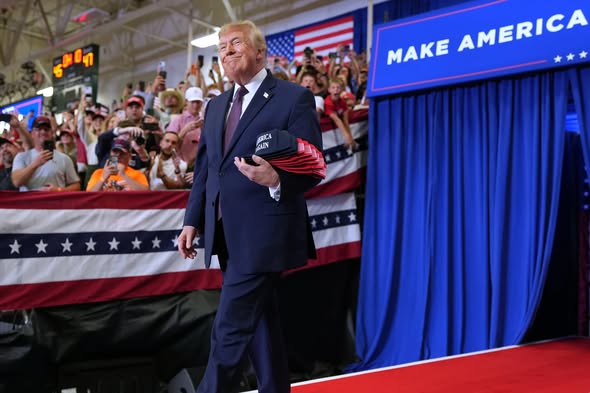
WASHINGTON, USA — U.S. President Donald Trump has reversed his earlier decision to cancel campaign appearances in Iowa and Kansas, rescheduling both rallies for Sunday, November 1, as Republicans intensify their efforts to protect their Senate majority ahead of the November 3 midterm elections. The sudden change comes just a day after the Republican National Committee (RNC) announced that Trump would replace the in-person events with a nationwide series of telephone rallies, raising fresh attention to the campaign’s strategy in two states with closely contested Senate races.
According to a person familiar with the president’s plans, Trump will now hold back-to-back campaign rallies in Iowa and Kansas on Sunday. The source, who requested anonymity because they were not authorized to publicly discuss the president’s schedule, said the revised arrangements were made to accommodate newly added telephone rallies while retaining the president’s planned in-person appearances in both states.
The reversal followed an earlier announcement by the Republican National Committee that Trump’s weekend campaign stops would be canceled in favor of a large-scale virtual outreach effort. The initiative, described as a 72-hour campaign sprint, was designed to connect the president with voters across multiple states through telephone rallies rather than traditional public appearances.
Under Trump’s original itinerary, the president was scheduled to visit Salina, Kansas, on Saturday before traveling to Dubuque, Iowa, for a rally on Sunday. However, those plans were abruptly changed, prompting questions about the campaign’s priorities and its strategy in the final days before Election Day.
READ MORE ARTICLES:
- ₱50-Milyong Pabuya kay Bato Dela Rosa, Manhunt ng PNP at Panawagan sa Mapayapang Pagsuko
- Abogado ni Bato Dela Rosa: Walang Interpol Red Notice Laban sa Senador
- Over 230,000 Fake Recruitment Posts Removed by Meta, TikTok Since 2022
- Has the “Godfather of AI” Geoffrey Hinton Come to Regret Creating Artificial Intelligence?
ADS
Trump initially indicated that an additional visit to Kansas was unnecessary, expressing confidence in Republican Senator Roger Marshall’s campaign. The RNC subsequently announced that the Iowa appearance would also be replaced with virtual campaign events.
The latest decision, however, restores the president’s in-person appearances in both states, allowing him to combine traditional campaign rallies with the expanded telephone outreach program.
The timing is particularly significant because Kansas and Iowa are home to competitive Senate contests that could influence whether Republicans maintain control of the upper chamber of Congress. With Election Day approaching on Tuesday, November 3, both parties are making a final push to mobilize supporters, persuade undecided voters and secure critical votes.
In Kansas, Republican Senator Roger Marshall is facing a competitive challenge from Democratic candidate Adam Hamilton. Recent polling has highlighted the closeness of the contest, increasing the importance of Trump’s campaign appearance as Republicans seek to strengthen Marshall’s position.
A CNN/SSRS poll conducted from October 20 to 26 showed Hamilton leading Marshall by 49 percent to 45 percent among likely voters, underscoring the competitive nature of the race.
Meanwhile, Iowa presents another important electoral battleground for Republicans. Republican Representative Ashley Hinson is competing against Democratic candidate Josh Turek for an open Senate seat.
The latest polling has also shown a closely contested race, with the candidates separated by only a small margin in several surveys. The outcome could have significant implications for the balance of power in the U.S. Senate.
Trump has already traveled to Kansas and Iowa earlier in October to campaign for Marshall and Hinson. Those visits formed part of an extensive Republican campaign effort, during which the president headlined approximately 25 rallies throughout the month to support Republican candidates ahead of the midterm elections.
His return to both states underscores the importance Republicans are placing on the Senate contests as they approach the final stretch of the campaign.
Beyond the individual candidates, the elections carry broader political consequences for Trump’s administration. Maintaining a Republican majority in the Senate would be important for advancing the president’s legislative priorities and supporting his administration’s political agenda during the remainder of his term.
The combination of in-person rallies and telephone campaign events also reflects the Republican Party’s effort to maximize voter outreach in the closing days of the election season. While traditional rallies allow Trump to energize supporters directly, telephone events provide an opportunity to reach voters across several states without requiring additional travel.
With only days remaining before Americans head to the polls, Trump’s revised campaign schedule places renewed attention on Iowa and Kansas, where the Senate races could help determine the future political balance in Washington.
The rescheduled appearances demonstrate that the Republican campaign is continuing to adjust its strategy as Election Day draws closer, with both states remaining important battlegrounds in the fight for control of the U.S. Senate.
ADS