The Federal Aviation Administration (FAA) has lifted a nationwide ground stop that disrupted thousands of flights across the United States after a communication problem affected air traffic control centers, though significant delays and cancellations are expected to continue as airlines work to restore normal operations.
USA — The Federal Aviation Administration (FAA) has ended a nationwide ground stop that disrupted flights throughout the United States following a communication problem involving air traffic control centers, bringing a major aviation disruption to a close.
The FAA ordered the nationwide halt at 3:54 p.m. Eastern time on Friday. It was the first time the United States had imposed a nationwide flight ground stop since January 2023, when a malfunction in a critical FAA computer system caused widespread disruptions. The latest incident has once again raised concerns about the condition and reliability of the country’s aging air traffic control infrastructure.
The restriction was lifted at 8:15 p.m. Eastern time Friday, or 1:15 a.m. GMT Saturday, after the FAA said it had conducted extensive testing and determined that its systems were operating reliably.
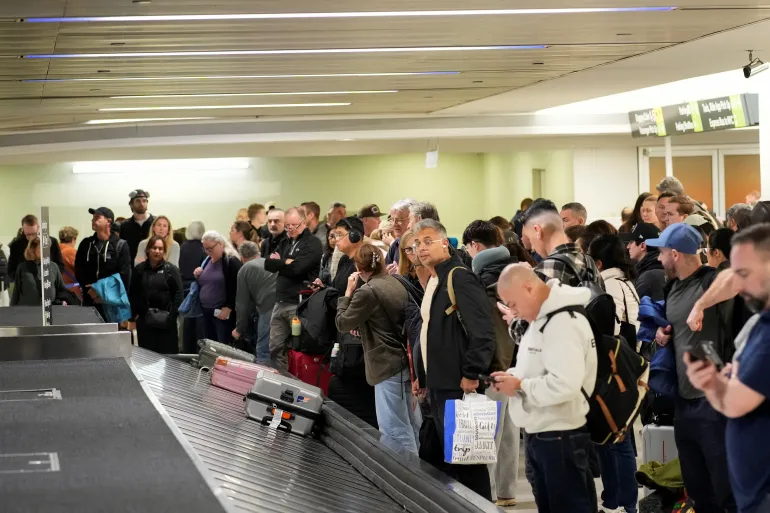
Despite the resumption of flights, passengers and airlines continued to deal with the consequences of the disruption. Airports across the US, along with aviation operations linked to Canada and Mexico, began returning to normal, although travelers were warned that delays could persist through the weekend.
Baltimore/Washington International Airport and Washington Dulles International Airport were among the facilities cautioning passengers about continued delays as airlines worked to clear the backlog caused by the nationwide stoppage.
According to figures cited by The Associated Press, more than 8,000 flights were cancelled nationwide, affecting more than 1.5 million passengers.
The disruption also renewed concerns about the state of the US air traffic control system and prompted calls for improvements to its infrastructure.
READ MORE ARTICLES:
- FAA Lifts Nationwide Ground Stop After Major Air Traffic
- US Democrats Target Tech Giants as AI Security Concerns Trigger Congressional Probe
- OpenAI Sued Over Deaths of Bowen Wan, Sam Nelson, Zane Shamblin, Adam Raine
- GLP-1 Costs Threaten Retirement Savings as Drug Use Continues Rising
- U.S. Judge Orders Removal of Three Taxpayer-Funded Trump Ads
US Transportation Secretary Sean Duffy pointed to outdated infrastructure as a major vulnerability in the country’s aviation network and urged Congress to allocate additional funding to modernize the system.
The incident has intensified pressure on US authorities to accelerate upgrades to air traffic control technology and communications systems, particularly as air travel demand and the complexity of aviation operations continue to grow.
The disruption also sparked political criticism. Former Republican Congresswoman Marjorie Taylor Greene faulted President Donald Trump for not publicly addressing the aviation crisis or posting about the situation on Truth Social as the disruption unfolded.
For millions of affected passengers, however, the priority remained reaching their destinations.
Following the lifting of the ground stop, airlines and airports began restoring flight schedules, repositioning aircraft and crews, and working through the large backlog of passengers. Although the FAA said its systems had been verified as stable, travelers could still experience delays and cancellations as airlines gradually return to normal operations.
The incident has underscored the importance of maintaining and modernizing the infrastructure that supports America’s aviation network. A communications or technical problem within air traffic control can quickly spread across the system, affecting thousands of flights and leaving large numbers of travelers stranded or uncertain about their plans.
Passengers scheduled to fly over the weekend were advised to check their flight status before traveling to the airport and to expect possible delays as airlines continue recovering from the disruption.
FAA Chief Hearing Scrapped Days Before Nationwide Flight Disruption
A congressional hearing involving Federal Aviation Administration (FAA) Administrator Bryan Bedford was abruptly cancelled just days before a nationwide ground stop disrupted air travel across the United States, putting renewed attention on the agency’s efforts to modernize the country’s air traffic control system.
Bedford had been scheduled to testify before the House Transportation and Infrastructure Subcommittee on Aviation on Tuesday morning. However, lawmakers cancelled the session less than a day before it was scheduled, The Washington Examiner reported, citing the congressional committee.
Officials did not provide a public explanation for the decision to cancel the hearing.
The planned session was expected to examine the FAA’s $12.5 billion program to develop and implement a new air traffic control system, an initiative intended to replace and modernize aging technology used across the nation’s aviation network.
The cancellation has attracted greater scrutiny following Friday’s nationwide flight disruption, which was attributed to a communications problem involving air traffic control centers.
The FAA and the Department of Transportation are also seeking an additional $30 billion in congressional funding to advance the modernization of the nation’s air traffic control infrastructure.
Had the hearing proceeded, lawmakers would have had an opportunity to question Bedford about the progress of the modernization program, the condition of the existing system and the challenges confronting the country’s air traffic control network.
Bedford has not appeared to publicly comment on Friday’s outage. Transportation Secretary Sean Duffy and Department of Homeland Security Secretary Markwayne Mullin instead addressed the administration’s response to the disruption.
The incident has once again brought the reliability of the US air traffic control system under scrutiny while strengthening calls for greater investment in aging aviation infrastructure.
The FAA said it conducted extensive testing of its systems before lifting the nationwide ground stop. Nevertheless, the disruption resulted in thousands of cancelled and delayed flights and affected millions of travelers.
The cancelled hearing is now likely to receive additional attention as lawmakers and transportation officials confront growing pressure to explain how the United States intends to modernize its air traffic control network and reduce the risk of future technical or communications failures causing widespread disruption.
Passengers Stranded as Flight Disruptions Drive Up Hotel Costs
Travelers across the United States faced long hours at airports, cancelled flights and unexpectedly expensive hotel rooms following Friday’s nationwide ground stop, leaving many scrambling to find alternative travel arrangements and places to stay.
At Los Angeles International Airport, Texas couple Bobby and Caroline were among those affected after returning from an 11-day cruise to Mexico. They had arrived at the airport around 9:30 a.m. local time expecting to continue their journey home without major problems.
The couple had already boarded their flight and taken their seats when the situation suddenly changed.
Caroline told Al Jazeera’s John Hendren that everything initially appeared normal before passengers were informed that their departure had been delayed.
The disruption soon created another problem for the couple: finding an affordable place to spend the night.
Bobby said one hotel offered them a room for $1,900, while another property located roughly an hour away was charging close to $400. He estimated that getting to the cheaper hotel could require another $100 to $200 in taxi or rideshare expenses.
Rather than take on those costs, the couple decided to remain at the airport overnight. They were hoping to take a 7:30 a.m. flight the next morning.
Their situation was echoed by passengers at other airports as the nationwide disruption caused widespread delays and cancellations.
At Ronald Reagan Washington National Airport in Arlington, Virginia, traveler Tim said he had spent more than 10 hours at the airport.
Speaking to Al Jazeera’s Eva McKend, Tim said he and other passengers had already boarded a Southwest Airlines flight scheduled to leave at 3:55 p.m. when they were unexpectedly told to leave the aircraft.
He was later placed on another flight scheduled for the following morning because he was trying to reach Columbus for an Ohio State University football game. But his replacement flight, scheduled for 7 a.m., was also cancelled.
The uncertainty surrounding the sudden disruption also left some travelers wondering whether the incident could have been caused by a more serious security problem.
Tim said the situation was unsettling because passengers did not initially know whether a cyberattack or another major threat was responsible. Despite those concerns, he said he continued to feel safe flying in the United States.
The Federal Aviation Administration eventually lifted the nationwide ground stop after testing its systems and determining that they were stable. However, the end of the restriction did not immediately restore normal air travel.
Airlines were left with the difficult task of rearranging flight schedules, accommodating stranded passengers and dealing with a large backlog created by the cancellations and delays.
For many travelers, the disruption also brought unexpected expenses. Those forced to remain overnight faced potentially high hotel rates, transportation charges and additional food costs, while passengers with connecting flights or important events risked further financial and personal losses.
The experience of travelers such as Bobby, Caroline and Tim illustrates the broader impact of the aviation shutdown. Even after flights resumed, many passengers still had to navigate long waits, cancelled bookings, expensive accommodation and uncertain schedules before they could finally complete their journeys.
Reagan National Airport Gradually Restores Flights After Nationwide Disruption
Flight operations were slowly picking up at Ronald Reagan Washington National Airport in Arlington, Virginia, as airlines began bringing services back online and passengers returned to the terminal following the nationwide ground stop.
After spending more than 10 hours at the airport, some travelers were encouraged by the gradual return of flights and hoped they would finally be able to leave later in the evening. Passengers whose earlier flights had been delayed were closely watching departure boards for updates.
Not everyone remained at the airport, however. Some travelers decided to stay at nearby hotels, while others chose to return home after hours of waiting and uncertainty.
The terminal also continued to hold passengers who had missed connecting flights because of the nationwide disruption. Travelers who had planned to transfer at Reagan National found themselves stranded after being unable to board the next flights on their itineraries.
With services gradually resuming, passengers were hopeful that airlines would begin working through the growing backlog in the coming hours. Still, uncertainty remained as travelers waited for confirmed departure times and replacement flights.
The disruption proved especially stressful for people traveling for important events. Some passengers were trying to attend sporting events, while others were attempting to reach weddings, family celebrations and other important gatherings.
For these travelers, the disruption represented far more than a delayed journey. Some had already boarded aircraft expecting to depart, only to be sent back to the gate and forced to begin the process again, raising fears that they could miss important occasions.
The situation at Reagan National Airport reflected the broader consequences of the nationwide aviation disruption, which left thousands of flights affected and stranded large numbers of passengers across the country.
Airlines continued working to rebuild their schedules, rebook affected travelers and clear the backlog as airport officials monitored the gradual recovery.
While flight services were beginning to return, the disruption remained a significant event for the US aviation system, with its impact continuing to affect travelers even after the nationwide ground stop had officially ended.