A deadly landslide in Kerala has once again exposed the devastating consequences of extreme monsoon weather, raising urgent questions about unsafe construction practices, environmental degradation, and the growing impact of climate change across India.
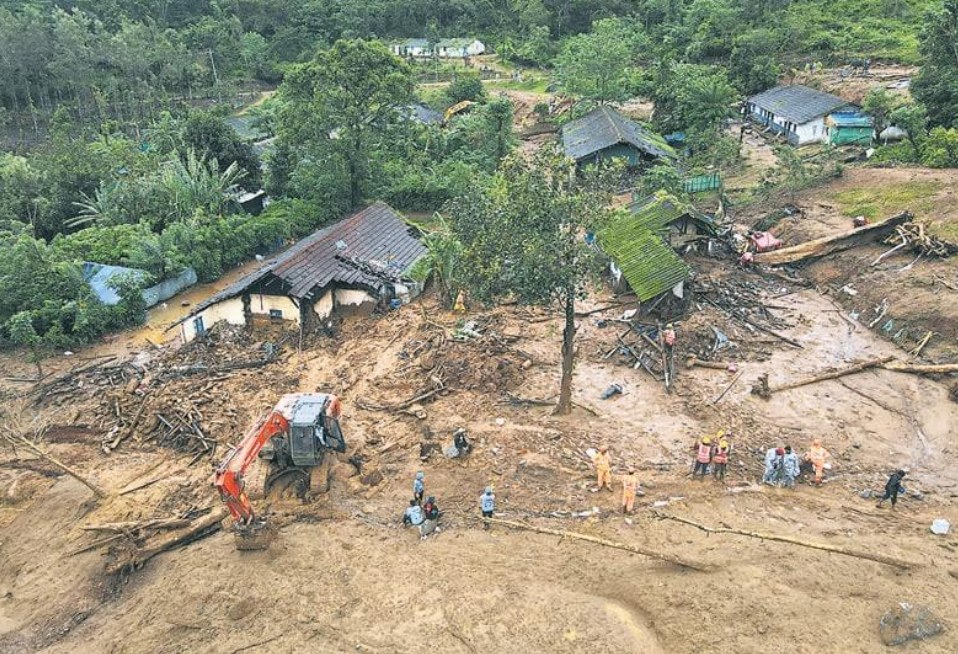
KERALA, INDIA-The deadly landslide that struck the Wayanad district of Kerala serves as another painful reminder that natural disasters are becoming increasingly intertwined with human decisions. As rescue teams continue searching for five missing workers amid relentless monsoon rains, the tragedy has already claimed at least three lives and left several others injured. Beyond the immediate loss of life, the disaster has reignited debate over whether the catastrophe was simply an unavoidable act of nature or a preventable consequence of poor environmental and construction management.
Rescue operations remain difficult as heavy rainfall continues to batter the mountainous region, forcing authorities to divide the affected area into multiple search zones while disaster response personnel and sniffer dogs comb through unstable terrain. The dangerous conditions highlight the enormous risks faced not only by the workers trapped beneath the debris but also by the rescuers attempting to reach them before time runs out.
READ MORE ARTICLES:
- China Landslide Death Toll Reaches 21 After Deadly Gansu Mountain Collapse
- Retired Indian Judge Leads Landmark UN Probe, Palestinian Children’s Deaths in Gaza
- Nigeria Celebrates Terrorist Surrenders While Victims Continue Seeking Justice and Recovery
- Türkiye Eyes F-35 Deal as NATO Leaders Gather for High-Stakes Defense Summit
Video footage from the disaster site paints a frightening picture of the landslide’s sheer force. Massive volumes of mud cascaded down the hillside, uprooting trees and sweeping away barricades surrounding the tunnel construction project. Within moments, what had been an active construction zone transformed into a deadly landscape buried beneath earth and debris.
However, the tragedy has quickly evolved into more than a rescue mission. It has become the center of an intensifying political and environmental dispute. Kerala Agriculture Minister T. Siddique has argued that the landslide should not be viewed solely as a natural disaster but rather as the result of human negligence. According to the minister, large quantities of excavated earth were allegedly dumped without proper scientific planning, despite previous warnings from authorities. Such accusations suggest that the disaster may have been significantly worsened by unsafe construction practices and inadequate environmental safeguards.
The construction company has firmly rejected these allegations, maintaining that the landslide originated high above the tunnel construction site and insisting that the project itself did not trigger the collapse. With conflicting claims emerging from both government officials and project developers, authorities have launched a formal investigation to determine the true cause of the disaster and whether negligence played any role.
Regardless of the investigation’s outcome, the incident underscores a broader challenge confronting India as extreme weather events become increasingly frequent and destructive. Kerala has long experienced seasonal monsoon rains, but experts have warned that the pattern of these rains has changed dramatically in recent years. Instead of steady and predictable precipitation, intense cloudbursts now unleash enormous volumes of rainfall within short periods, overwhelming rivers, saturating hillsides, and dramatically increasing the likelihood of landslides and flash floods.
Scientists widely attribute these changing weather patterns to human-driven climate change, which is intensifying monsoon systems across South Asia. Rising global temperatures allow the atmosphere to hold more moisture, resulting in heavier downpours when storms develop. The result is an increasingly volatile cycle of extreme rainfall followed by prolonged dry periods, placing greater pressure on infrastructure, communities, and emergency response systems.
The Kerala disaster is not an isolated event. Last year alone, India witnessed devastating floods, cloudbursts, and landslides that caused widespread destruction, displaced thousands of residents, and claimed numerous lives across several states. Each successive monsoon season appears to bring greater uncertainty and higher risks, particularly for communities living in mountainous regions where unstable slopes are especially vulnerable.
The broader impact of this year’s monsoon is already being felt across western and northern India. Heavy rainfall has triggered flooding and landslides in multiple regions, while New Delhi and neighboring states have experienced severe waterlogging despite receiving welcome relief from intense summer heat. Transportation, businesses, and daily life have all been disrupted as drainage systems struggle to cope with unusually intense rainfall.
The India Meteorological Department has warned that even heavier rainfall is expected across northern India over the coming days, raising concerns that additional flooding and landslides may occur if vulnerable areas receive further downpours.
The tragedy in Kerala ultimately reflects the growing intersection between climate change, rapid infrastructure development, and environmental stewardship. While monsoon rains have always shaped life across the Indian subcontinent, the increasing severity of weather events demands stronger disaster preparedness, stricter enforcement of environmental regulations, and more sustainable approaches to construction in ecologically sensitive regions. As families wait anxiously for news of the missing workers, the landslide stands as a stark reminder that protecting lives requires not only effective emergency response but also long-term commitment to responsible development and climate resilience. ABCNEWS JSA aptikons
APTIKONS