House prosecutor Rep. Terry Ridon challenged Vice President Sara Duterte to personally appear before her impeachment trial, arguing that a constitutional battle of such magnitude demands her direct presence and cannot be fought solely through legal representatives.
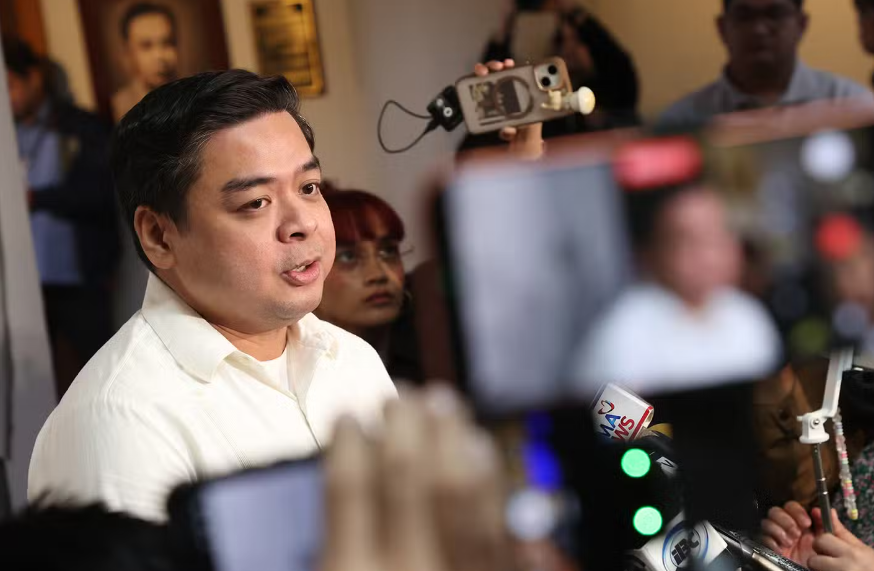
MANILA, Philippines — A House prosecutor has thrown down a direct challenge to Vice President Sara Duterte, urging her to personally appear before the Senate once her impeachment trial formally begins, stressing that the constitutional process demands accountability that cannot be delegated to representatives.
Bicol Saro Party-list Representative Terry Ridon, one of the House prosecutors tasked with presenting the impeachment case, said the Vice President should confront the charges herself rather than relying solely on legal representatives. His remarks came amid intensifying public interest in what is shaping up to be one of the most consequential political and constitutional battles in recent Philippine history.
In a strongly worded statement issued Tuesday, Ridon said Duterte would be “very much welcome to attend the bloodbath,” using the metaphor to describe what is expected to be a fierce legal and political confrontation before the Senate sitting as an impeachment court. He emphasized that while the Vice President has every right to assemble a formidable legal defense, the gravity of the proceedings requires her personal participation.
READ MORE ARTICLES:
- Alex Eala’s Historic Wimbledon Run Ends, Inspires Nation Despite Heartbreaking Loss
- Filipina Alexsandra Diaz Shatters Two Youth World Records in Colombia Championship
- Canciledes Elementary School Naglabas ng Opisyal na Pahayag Kaugnay ng Kumalat na Insidente
- Dekorasyon Lamang ba ang Senate President? Pahayag ni Rowena Guanzon, Nagpasiklab sa Unang Araw ng Impeachment Trial
According to Ridon, it is inconsistent to claim active participation in a proceeding of such national significance while leaving the actual courtroom engagement entirely to legal proxies. He argued that if the Vice President truly intends to defend her name and challenge the allegations against her, she should be physically present to witness the presentation of evidence, hear the testimonies firsthand, and directly respond to the constitutional accusations leveled against her.
The House prosecutor underscored that impeachment is unlike an ordinary legal dispute. Rather than being a simple courtroom contest between opposing lawyers, impeachment is a constitutional accountability mechanism designed to determine whether a high-ranking public official remains worthy of the trust bestowed by the Filipino people. For this reason, Ridon believes the respondent’s presence carries both legal and symbolic importance.
His statement immediately sparked discussions among political observers, legal experts, and supporters of both camps. While Philippine law permits respondents in impeachment proceedings to be represented by counsel, questions continue to arise regarding the extent to which the accused should personally participate, particularly in a case involving one of the country’s highest elected officials.
The impeachment trial against Vice President Duterte has drawn nationwide attention due to its enormous political implications. The proceedings are expected to test not only the strength of the evidence presented by House prosecutors but also the ability of the Senate to conduct an impartial constitutional trial amid intense public scrutiny and partisan divisions.
Legal analysts note that the impeachment process is ultimately decided by senator-judges, who must determine whether the evidence presented satisfies the constitutional standard for conviction. A conviction would require the constitutionally mandated number of votes from the Senate and could result in Duterte’s removal from office and possible disqualification from holding future public office.
For House prosecutors, however, public confidence in the process also depends on the willingness of all parties to fully engage in the proceedings. Ridon suggested that appearing personally before the impeachment court would demonstrate respect for the constitutional process and reinforce transparency before the Filipino people.
Supporters of the Vice President, meanwhile, have consistently maintained that Duterte is entitled to mount her defense through her chosen legal team, arguing that every respondent in an impeachment proceeding enjoys the same constitutional rights afforded to any individual facing legal accusations. They contend that legal representation exists precisely to ensure that constitutional rights are protected throughout the proceedings.
The exchange reflects the increasingly heated rhetoric surrounding the impeachment trial, with both prosecution and defense seeking to shape public perception even before the presentation of evidence begins. As preparations continue, every public statement from key figures is being closely examined for its potential influence on the highly anticipated proceedings.
With political tensions rising and national attention fixed on the Senate, the impeachment trial is expected to become one of the defining constitutional events in the country’s contemporary political history. Whether Vice President Sara Duterte ultimately chooses to personally attend every stage of the proceedings or entrusts much of her defense to her legal counsel remains a closely watched question one that House prosecutors believe carries significant implications for accountability, transparency, and public trust in the impeachment process.
House Prosecutor Challenges VP Sara Duterte to Personally Face Impeachment Trial, Says ‘You Cannot Fight a Bloodbath from the Sidelines’
The political drama surrounding the impeachment trial of Sara Duterte intensified on Tuesday after House prosecutor and Terry Ridon openly challenged the Vice President to personally attend the proceedings instead of allowing her legal team to solely represent her before the impeachment court.
Ridon’s remarks came shortly after Duterte reiterated her earlier statement describing the impeachment proceedings as a “bloodbath,” a phrase that has continued to dominate public discussion since she first used it to characterize the political battle she expects to face inside the Senate.
Speaking before members of the media, Duterte acknowledged that she expects to emerge from the proceedings “bloodied,” but emphasized that she intends to remain firm and unbroken regardless of the outcome. The Vice President maintained that she is fully aware of the magnitude of the impeachment process and the political consequences it carries.
Her statement, however, immediately drew a pointed response from Ridon, one of the prosecutors tasked with presenting the House of Representatives’ case against her.
In a strongly worded statement, Ridon welcomed Duterte’s willingness to embrace what she described as a “bloodbath,” but insisted that such a battle demands her physical presence before the impeachment court.
“Welcome to the bloodbath, Madam Vice President. But you cannot have a bloodbath from the sidelines, you cannot have a bloodbath through proxies,” Ridon declared.
According to Ridon, while legal counsels play a vital role in presenting arguments and protecting the constitutional rights of the respondent, the impeachment process is ultimately directed against the Vice President herself, making her participation both symbolically and politically significant.
He stressed that lawyers should not become substitutes for the principal respondent in a proceeding of such national importance.
“Hindi ho pwedeng mga abogado lang ‘yon pong humaharap sa paglilitis,” Ridon said, emphasizing that it should not be left solely to Duterte’s legal representatives to confront the accusations being raised before the impeachment court.
He further urged Duterte to appear personally during the trial and directly confront the charges leveled against her.
“Dumalo po tayo sa paglilitis, harapin natin ang katotohanan,” Ridon added, calling on the Vice President to face what he described as the truth before the Senate.
The exchange highlights the increasingly confrontational tone that has characterized the impeachment proceedings, with both camps projecting confidence as the trial continues to capture national attention.
Political observers note that Duterte’s repeated use of the term “bloodbath” reflects her view that the impeachment trial is not merely a legal contest but also a fierce political struggle that could shape the country’s political landscape ahead of future elections.
Supporters of the Vice President have argued that the impeachment proceedings are politically motivated and have continued to express confidence that she will successfully defend herself before the Senate. Meanwhile, House prosecutors maintain that the process is grounded on constitutional accountability and evidence presented by the House of Representatives.
Ridon’s latest challenge also raises questions regarding how visible Duterte intends to be throughout the trial. While respondents in impeachment proceedings are generally represented by legal counsel, personal appearances often carry significant political weight, allowing public officials to directly demonstrate confidence in their defense and reinforce their message before both lawmakers and the Filipino public.
The impeachment trial has become one of the country’s most closely watched constitutional proceedings, drawing intense public interest as senators serve as judges while House prosecutors seek to establish their case against the Vice President. Every statement issued by both the prosecution and the defense has been closely scrutinized, reflecting the high political stakes surrounding the proceedings.
As the trial progresses, expectations remain high regarding Duterte’s level of personal participation, particularly after Ridon’s direct invitation for her to face the proceedings in person. Whether the Vice President chooses to regularly attend the hearings or continue relying primarily on her legal team may influence not only public perception but also the overall political narrative surrounding one of the most consequential impeachment trials in recent Philippine history.
APTIKONS