
Pope Leo XIV’s weekly general audience serves as a vital forum for addressing significant issues facing both the Catholic Church and the global community. This gathering brings together pilgrims, followers, and dignitaries from around the world who come to hear the Holy Father’s reflections on current events, spiritual guidance, and humanitarian concerns. Each audience is a momentous occasion, showcasing the Pope’s commitment to fostering dialogue and promoting peace.
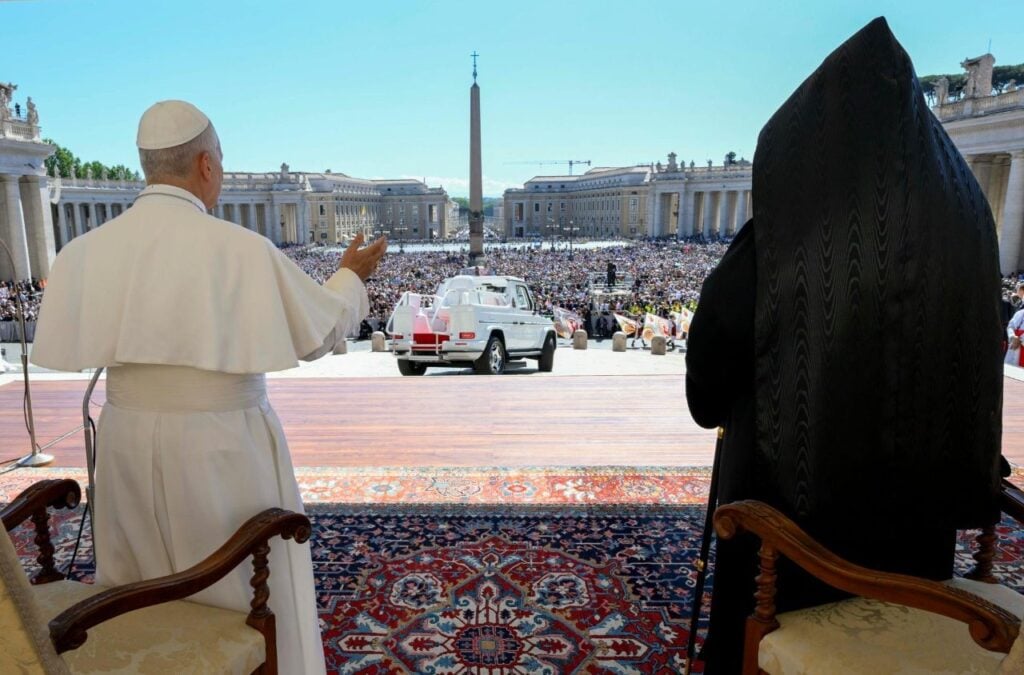
Notably, the attendance of Catholicos Aram I during this particular general audience underscores the importance of Christian unity and cross-cultural dialogue in the pursuit of peace. The presence of such esteemed religious leaders facilitates discussions that transcend denominational boundaries, emphasizing collective efforts to address pressing social and political issues. In the context of Lebanon and the broader Middle East, this collaboration highlights the importance of prayer and moral support in promoting peace amidst turmoil.
Lebanon, a country influenced by a complex history and a rich tapestry of cultures and religions, has recently faced significant challenges. Both Pope Leo XIV and Catholicos Aram I have expressed deep concerns over the state of peace in Lebanon, an aspect that resonates with the broader struggles faced in the Middle East. Their shared commitment to fostering understanding among diverse communities serves as a beacon of hope during these turbulent times. Throughout the audience, the discussion will focus on the necessity of peace and reconciliation, aiming to inspire those in attendance while reaching out to millions of faithful worldwide.
READ MORE ARTICLES:
- Pope Leo XIV’s Call for Peace in Lebanon and the Middle East
- Started in 2002, Friendster Returns in 2026 with a Radical Promise: No Algorithms, No Ads — Just Real-Life Connections
- Ukraine Marks 40th Anniversary of Chornobyl Disaster, Facing Fresh Nuclear Safety Risks Amid Ongoing War
- Min Aung Hlaing Grants Amnesty, Secures Release of Win Myint as Aung San Suu Kyi Remains Detained
- Donald Trump Turns on Ally PM Giorgia Meloni After Public Clash Over Pope and Iran Policy
- President Marcos Jr, Appoints Trade Envoy Dita Angara-Mathay as New Secretary of Tourism
- Day 36 of the US-Israel Attacks on Iran
Greetings to Catholicos Aram I
Pope Leo XIV extended a heartfelt greeting to Catholicos Aram I, symbolizing the significance of their relationship rooted in mutual respect and shared spiritual goals. This warm exchange reflects the deep historical ties that exist between the Roman Catholic Church and the Armenian Apostolic Church, fostering a spirit of camaraderie that transcends denominational boundaries. Both leaders are committed to promoting peace and unity, particularly in the tumultuous context of the Middle East and Lebanon.
The visit underscores a pivotal moment for ecclesiastical relations, bringing two influential figures together in pursuit of a common cause. Pope Leo XIV’s greeting serves not only as a gesture of goodwill but also as a reminder of the profound impact that collaborative dialogue can have in addressing the challenges faced by Christians in this region. The dialogue between the Pope and Catholicos Aram I highlights the importance of unity among Christian denominations amid the prevailing divisions and strife.
A critical aspect of their discussions centers around the need for a unified Christian voice in advocating for peace and reconciliation in Lebanon and neighboring countries. By recognizing their shared responsibilities, both leaders emphasize the necessity of a concerted effort towards healing communities affected by conflict and injustice. This fraternal meeting is a testament to their collective aspiration for harmony, underscoring the belief that the unity of the Church can play a vital role in social transformation.
In light of these dynamics, the greeting is more than a polite formality; it embodies a profound commitment to fostering not just inter-church relations but also broader societal healing. In an era where divisions are commonplace, their shared vision serves as a beacon of hope, encouraging collaboration among Christian communities working towards common aspirations for peace and understanding.
The Importance of Unity Among Churches
In the context of Pope Leo XIV’s call for peace in Lebanon and the broader Middle East region, the unity among Christian denominations, particularly between the Catholic Church and the Armenian Apostolic Church, gains crucial significance. This alliance not only fosters a spirit of cooperation but also strengthens their collective voice in advocating for peace and reconciliation. Historically, both churches have carried rich and profound theological traditions, which share significant commonalities despite their differences.
The Catholic Church, with its extensive global reach, offers a framework of values that resonate with many Armenians, particularly in maintaining a sense of identity and hope amidst challenging times. The Armenian Apostolic Church, one of the oldest Christian traditions, enriches this dialogue through its unique historical context and cultural heritage. The tension and struggles faced by the Armenian community, particularly in Lebanon, further underscore the need for a united front in addressing communal challenges.
Additionally, the theological context plays a vital role in promoting unity. Both churches, while distinct in doctrine and liturgical practices, share a belief in the fundamental teachings of Christ, the significance of the sacraments, and the call to serve humanity. Engaging in ecumenical dialogue can dismantle misconceptions and foster mutual respect. It allows both traditions to reflect on their shared mission of peace, aiding the regions most affected by strife.
Therefore, understanding the importance of unity among churches is vital for the quest for peace in Lebanon and the Middle East. It encourages collaborative efforts that transcend historical grievances and emphasizes the role of faith as a unifying force. Ultimately, a united church presence can serve as a beacon of hope and stability in an often-divided society, advocating for harmony and fostering lasting relationships across community lines.
Pope Leo XIV’s Prayer for Peace
Pope Leo XIV has consistently emphasized the importance of peace in his messages, particularly in the context of the increasingly volatile situation in Lebanon and the broader Middle East region. His recent call for prayer serves as a compelling reminder of the dire circumstances that many face due to ongoing violence and conflict. As various factions engage in hostilities, the impacts on civilian lives have been profound, prompting urgent appeals for solidarity through prayer and action.
The current climate in Lebanon is marked by political instability, economic hardship, and the enduring repercussions of regional tensions. In such a precarious environment, the Pope’s reflections resonate deeply, invoking a shared responsibility among individuals and nations to foster dialogue and understanding. His prayer highlights a yearning for compassion and empathy, core tenets of faith that transcend religious divides and promote peace.
In his prayer, Pope Leo XIV underlines not only the necessity of divine intervention but also the role of individuals in advocating for peace. He urges believers to engage actively in peaceful endeavors, demonstrating that prayer can be a powerful catalyst for change when combined with tangible efforts to promote reconciliation and harmony. The moral imperatives expressed in his message remind us that peace is not merely the absence of conflict; rather, it is a multifaceted quest that requires active participation from all societal sectors.
In light of the Pope’s poignant appeal, it becomes evident that the path to peace in Lebanon and the Middle East will necessitate collective action alongside spiritual commitment. By fostering an environment where healing and dialogue are prioritized, communities can aspire to overcome the profound challenges they face. Pope Leo XIV’s call for prayer thus emerges as a beacon of hope, urging us all to contribute our voices and actions to the pursuit of peace.
Understanding the Catholicosate of Cilicia
The Catholicosate of Cilicia, an integral institution of the Armenian Apostolic Church, has a rich history interwoven with the cultural tapestry of the Armenian people. Established in the early 20th century, it is primarily situated in the region of Cilicia, which today falls within modern-day Turkey. This ecclesiastical body was formalized during a period when Armenian communities faced significant challenges, such as the diminishing influence of the Ottoman Empire and the subsequent need for a unifying leadership amidst adversity.
Geographically, the Catholicosate of Cilicia is positioned within a complex landscape marked by historical migrations and conflicts. Its relocation from the historical seat in Edessa to Lebanon in the 1930s marked a pivotal turn, as the Middle East became a sanctuary for many displaced Armenians. This transition not only provides insight into the resilience of the Armenian identity but situates the Catholicosate of Cilicia as a beacon of hope for Armenians globally, particularly within Lebanon, where a significant diaspora flourished.
The importance of the Catholicosate of Cilicia transcends its spiritual functions. It plays a vital role in maintaining the Armenian Apostolic Church’s involvement in social and cultural issues, especially within Lebanon’s diverse religious landscape. The Catholicosate serves as a spiritual guide and offers a sense of community for Armenians, promoting the preservation of their language, traditions, and heritage. Furthermore, the leadership of the Catholicos is critical in advocating for peace and dialogue in a region often marred by conflict, underscoring its relevance in contemporary discussions about stability in the Middle East.
The Role of Ecumenism
The dialogues between Pope Leo XIV and Catholicos Aram I represent a significant stride towards fostering ecumenism in the Middle East. Ecumenism, the movement promoting unity among different Christian denominations, plays a pivotal role in these discussions, creating a foundation for mutual understanding and cooperation in a region often fraught with discord. Through prayerful dialogue and theological discussions, these leaders are navigating complex issues that transcend mere institutional differences and focus on the shared faith in Jesus Christ.
Both Pope Leo XIV and Catholicos Aram I have shown a profound commitment to ecumenical efforts, emphasizing the importance of collaboration across various Christian traditions. Their discussions center around core theological principles and shared values, aiming to dismantle barriers that have historically divided the churches. This not only strengthens ties among different communities but also highlights the universal call of Christianity to act as a united witness in the world.
By prioritizing ecumenism, these church leaders are addressing broader social and political challenges present in Lebanon and the Middle East. The emphasis on unity among Christian denominations serves as a testament to the belief that collective witness can play a crucial role in promoting peace and reconciliation. This initiative encourages congregations to engage in shared activities, fostering a culture of friendship and respect that extends beyond doctrinal divisions. Furthermore, the commitment to ecumenism lays the groundwork for addressing contemporary issues such as violence, poverty, and injustice through coherent, collaborative efforts grounded in a shared mission.
The Pilgrimage to the Tombs of the Apostles
The pilgrimage undertaken by Catholicos Aram I to the tombs of Saints Peter and Paul holds profound significance within the context of faith and ecclesiastical solidarity. This journey reflects an earnest devotion embedded in centuries of Christian tradition, celebrating the lives and sacrifices of the Apostles who laid the foundational tenets of Christianity. The tombs of these saints are not merely historical sites; they represent pivotal locations where faith was not only professed but also embodied through the Apostles’ unwavering commitment to spreading the Gospel.
Located in Rome, the sacred sites of Saints Peter and Paul draw pilgrims from around the globe, each seeking spiritual renewal and connection with the early Christian church. For Catholicos Aram I, this pilgrimage symbolizes a recognition of the shared mission that transcends regional disputes and sectarian divides, particularly crucial in the current context of Lebanon and the broader Middle East. The act of pilgrimage fosters unity among faithful, encouraging a reflection on the importance of peace and reconciliation in areas marred by conflict.
During this solemn visit, Catholicos Aram I is expected to engage in prayer and reflection, seeking the intercession of Saints Peter and Paul for peace and liberation for communities facing disruption. The pilgrimage further amplifies the call for dialogue and understanding among different denominations. In tandem with Pope Leo XIV’s advocacy for peace, the journey resonates with a broader message; it emphasizes healing and the essential role of faith in navigating social and political adversities.
As the Catholic and Armenian Apostolic Churches share a rich history intertwined with the lives of these Apostles, this pilgrimage serves not only as a personal spiritual journey for Catholicos Aram I but also as a collective reminder of the enduring legacy of faithful witness and the pursuit of fraternity that informs the Christian calling in today’s world.
Prayers and Saints Invoked for Unity
Pope Leo XIV, in his fervent plea for peace and unity in Lebanon and the broader Middle Eastern region, highlighted the importance of invoking saints who hold significant positions within the Armenian and Catholic traditions. These saints are not merely historical figures; they are revered as intercessors who bridge the gap between the faithful and the divine. Their intercession is believed to be especially potent in times of strife and division.
Among the saints mentioned, Saint Nerses the Great stands out in the Armenian tradition. He is celebrated for his efforts to unify the Christian community during tumultuous periods in history. Saint Nerses is often called upon for guidance in promoting harmony among Christians, emphasizing the essential call for unity in a region plagued by conflict.
Similarly, in the Catholic tradition, saints such as Saint Francis of Assisi are invoked for their teachings on peace and fraternity. Saint Francis is particularly esteemed for his commitment to inter-religious dialogue and understanding, making him a powerful symbol of hope and reconciliation. His life reflects the belief that peace comes from love, compassion, and mutual respect among differing faiths.
The power of prayer is amplified when these saints are invoked by communities facing struggles. Their stories and teachings inspire believers to seek unity not only through prayer but also in actions that respect and embrace diversity. As Pope Leo XIV calls for peace, he points towards these saints as exemplars for the Christian community, urging the faithful to draw upon their virtues.
In understanding the significance of these saints, it becomes clear that their intercession is of paramount importance in the quest for unity among Christians. The prayers addressed to them serve as a reminder that through faith, hope, and a collective yearning for peace, a more harmonious existence is attainable.
Conclusion: A Collective Call to Action
Pope Leo XIV’s recent general audience highlighted the urgent need for peace in Lebanon and the broader Middle East, reflecting the historical tensions and ongoing conflicts that affect millions. The Pope’s heartfelt message resonates not only within the walls of the Vatican but also with individuals worldwide who yearn for stability, harmony, and coexistence. It serves as a poignant reminder that the responsibility for peace lies with each one of us.
The call for collective prayer is particularly significant; it emphasizes that spiritual solidarity can transcend geographical and cultural divides. The Pope urged people of all faiths to come together, reinforcing the idea that the quest for peace transcends religious boundaries. By engaging in collective prayer, individuals can foster a sense of unity and shared purpose, which is crucial in addressing the challenges faced by the Middle Eastern communities.
Furthermore, actionable steps must accompany these prayers. The Pope encouraged civil leaders, community organizers, and laypeople alike to advocate for dialogue, understanding, and active measures toward conflict resolution. It highlights that prayer without action may be inadequate; tangible efforts toward reconciliation and support for humanitarian initiatives are necessary. Each individual’s involvement can make a significant difference, whether through advocacy, education, or simply by raising awareness about the situation in Lebanon and surrounding regions.
In conclusion, Pope Leo XIV’s message serves as both a beacon of hope and a rallying cry. It calls for a commitment to peace and a collective effort toward healing. As global citizens, let us come together to heed this call, transforming our intentions into meaningful actions that contribute to a peaceful and just world for Lebanon and all of the Middle East.