
St. Bernardine of Siena, born in 1380 in the town of Massa Marittima in Tuscany, is a pivotal figure in the Franciscan tradition and a notable saint of the Catholic Church. His life and actions reflect the spiritual fervor and socio-political challenges of late medieval Italy. Born into a noble family, Bernardine faced personal tragedy early on with the death of his parents. This loss, combined with an upbringing that emphasized both intellectual rigor and moral duty, significantly impacted his future path.
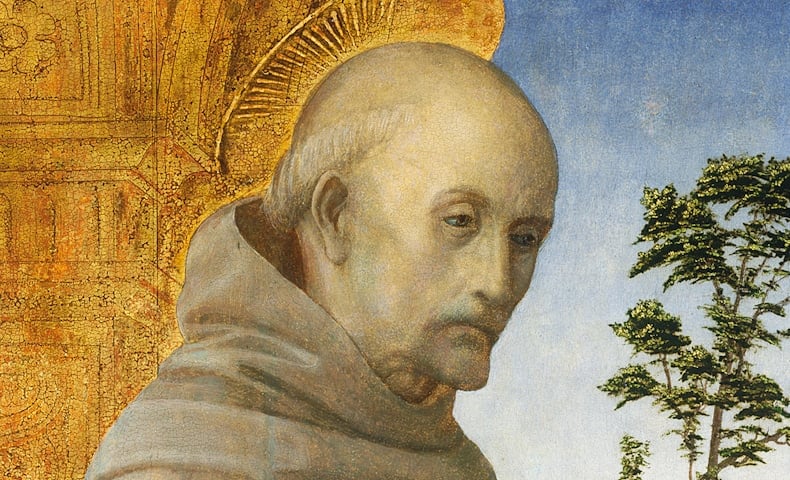
After studying at the University of Siena, Bernardine felt a profound calling to devote his life to serving God. This conviction led him to join the Order of Friars Minor in 1403, where he adopted the Franciscan values of simplicity, humility, and service to the poor. His early experiences as a friar included engaging in pastoral work in Siena, where he preached and provided spiritual guidance to his peers and parishioners. He quickly garnered a reputation for his eloquence and fervent dedication to the faith.
The historical context surrounding Bernardine’s life was fraught with upheaval. The late 14th and early 15th centuries were marked by political instability in Italy, characterized by the fragmentation of city-states and frequent conflicts among rival factions. Additionally, the period was a time of considerable spiritual turbulence, as the church faced criticism and calls for reform. In response to these societal challenges, Bernardine became an advocate for peace and reconciliation, emphasizing the importance of unity among Christians.
Through his preaching and writings, St. Bernardine sought to address the spiritual and moral crises of his time, reinforcing a sense of community amidst chaos. His enduring legacy is rooted in his unwavering commitment to spreading the Gospel message and fostering a spirit of love and forgiveness, emblematic of the broader Franciscan mission during an era of significant transformation.
The Life and Works of St. Bernardine
St. Bernardine of Siena, born in 1380 in Massa Marittima, Italy, was a key figure in the history of the Franciscan order. Renowned for his eloquence and dedication to the preaching of the Gospel, St. Bernardine became one of the most influential Franciscans of his time. His life’s mission revolved around spreading the message of God’s love, emphasizing themes such as penance, mercy, and devotion. He was ordained a priest in 1404 and began his extensive preaching expeditions, which took him throughout Italy.
St. Bernardine’s missionary work was characterized by his ability to connect with the populace. He employed simple yet powerful language, allowing people from various walks of life to understand and embrace his teachings. His sermons often centered on the mercy of God, with an emphasis on the importance of repentance and reconciliation. One notable sermon described the significance of the Holy Name of Jesus, a theme he often revisited, and he advocated for the veneration of this name as a source of strength and devotion.
In addition to preaching, St. Bernardine was also a prolific writer. His numerous treatises and sermons have been instrumental in the spiritual development of the Franciscan order and the Catholic Church. The themes in his writings consistently point towards renewal and reform, not only within the Franciscan order but also among the laity. He called for a return to the core values of the Gospel, which he believed had been overshadowed by secular concerns.
Through his efforts, St. Bernardine played a vital role in revitalizing the religious fervor of his time. His commitment to penance and his heartfelt call to spiritual conversion have left an indelible mark on Franciscan history, inspiring countless adherents to dedicate their lives to a deeper relationship with God.
Franciscan History Contextualized
The Franciscan Order, founded by St. Francis of Assisi in the early 13th century, represented a significant development in the history of medieval Christianity. St. Francis sought to return to the roots of the Gospel, emphasizing poverty, humility, and service to the poor. These principles not only defined his personal lifestyle but were also foundational tenets of the Franciscan Order, instilling a belief that Christ’s message should be lived out rather than merely preached.
From its inception, the Order grew rapidly, attracting followers who were inspired by St. Francis’s dedication to a life of simplicity and compassion. This included distinguishing itself from other religious orders by rejecting wealth and advocating for a profound connection with nature and humanity. The Early Franciscans were characterized by their itinerant lifestyle, preaching, and commitment to living among the marginalized and disenfranchised, thus reshaping the spiritual and social landscape of Europe.
Over the centuries, the Franciscan Order underwent development and transformation, leading to the establishment of various branches, the most notable being the Friars Minor, the Capuchins, and the Conventuals. Each branch sought to interpret and live out the original Franciscan spirit according to the needs of their respective eras. The influence of the Franciscans extended beyond the confines of the Church, contributing to the broader cultural and intellectual currents of the times, including art, education, and social justice movements.
Through these evolutions, figures like St. Bernardine of Siena emerged, championing the elements of Franciscan belief while also adapting to the changing social and political landscapes of their times. He exemplified the commitment to preaching and the revitalization of communal morality, reaffirming the relevancy of Franciscan ideals in the ongoing narrative of Christianity.
Canonization of St. Bernardine
The process of canonization for St. Bernardine of Siena began after his death in 1444, reflecting the significant impact he had during his lifetime as a preacher and reformer within the Franciscan Order. His extensive contributions to faith and society, characterized by his dedication to preaching and his efforts in promoting a deeper understanding of the Christian faith, set the stage for his recognition as a saint. The formal canonization took place on July 24, 1450, under the papacy of Nicholas V.
In the Catholic Church, the criteria for sainthood are rigorous, often requiring evidence of a life of extraordinary virtue, the performance of miracles, and the confirmation of the individual’s impact on Christian doctrine or practice. In the case of St. Bernardine, his life was marked by remarkable piety, deep spirituality, and a profound commitment to the teachings of Christ and the Franciscan ideals. The numerous conversions he facilitated and the spiritual revivals he ignited are testimonies to his robust influence as a preacher.
The Church plays a pivotal role in the canonization process as it investigates potential saints’ lives, ensuring that they exemplify the virtues required. In St. Bernardine’s case, many accounts provided evidence of his pious life and miracles attributed to him posthumously. The canonization process further involved the verification of these miraculous events which solidified his status within the Church. The acknowledgment of his contributions extended beyond his lifetime, marking him as a vital figure in Franciscan history, providing inspiration to the faithful and illustrating the path of sanctity through a life fully devoted to God.
Feast Day Celebrations
St. Bernardine of Siena, a prominent figure in the Franciscan tradition, is honored on May 20th each year. This feast day is a significant occasion for various Catholic communities around the world, serving as a reminder of his contributions to the faith and the impact of his preaching on early Renaissance society. The significance of the date is deeply rooted in the historical and spiritual legacy left by St. Bernardine, emphasizing themes of devotion, community, and the power of the word.
In many regions, the celebration of St. Bernardine’s feast day manifests through special liturgical services and communal gatherings. For instance, in Italy, where Bernardine was born, parishes often hold festive Masses that are particularly characterized by the inclusion of his relics, allowing the faithful to connect with his sanctity. The readings and prayers specifically tailored for this day highlight his life and teachings, thereby deepening spiritual reflection among the attendees.
Additionally, local traditions can vary widely. In some areas, it is customary to host processions featuring banners and icons of St. Bernardine, serving as vibrant expressions of faith and cultural identity. These processions are often accompanied by music and chanting, fostering a sense of unity among participants. In other communities, charitable activities, such as food drives or outreach programs, are organized to embody the Franciscan spirit of service that St. Bernardine exemplified.
Moreover, many Franciscan institutions and groups take this opportunity to organize educational events. These are intended to engage participants with St. Bernardine’s teachings, discussing themes such as reconciliation and the importance of living a gospel-centered life. Through these various observations, the feast of St. Bernardine of Siena becomes not just a commemoration of a saint, but a living expression of Franciscan values in action.
The Legacy of St. Bernardine of Siena
St. Bernardine of Siena, a prominent figure in the Franciscan order, has left an indelible mark on both religious and secular spheres through his teachings, leadership, and monastic example. His life and works have had lasting implications for subsequent generations, establishing him as a critical influence in Christian history. Bernardine’s methodology in preaching emphasized the love of God and the importance of community, which resonated deeply with his contemporaries and continues to inspire individuals today.
Bernardine’s commitment to the Franciscan values of humility, poverty, and social justice played a pivotal role in shaping the Franciscan movement, particularly during the 15th century in Italy. His efforts in emphasizing the importance of the name of Jesus have fostered spiritual devotion, leading to the establishment of various honorific titles and institutions dedicated to his legacy. For instance, the Order of Friars Minor remembers him as a patron saint, and his charisma in preaching has inspired countless Franciscans to embody similar values throughout history.
Today, the impact of St. Bernardine can be observed in various social and spiritual movements. His teachings have inspired reformers in the Catholic Church, influencing modern interpretations of Franciscan spirituality and evangelization. Numerous institutions, including schools, hospitals, and charities, bear his name, reflecting his ongoing relevance in the context of faith-based altruism and community service. His approach to discourse, highlighting the significance of dialogue and reconciliation, can be seen as a cornerstone for contemporary social justice efforts.
In essence, the legacy of St. Bernardine of Siena endures, marked by a profound impact on the Franciscan order and the broader Christian community. His teachings continue to guide individuals seeking to promote peace, social equity, and spiritual growth, ensuring that his influence remains vibrant in modern society.
Servants of God Connected to St. Bernardine
St. Bernardine of Siena is not only a pivotal figure in Franciscan history; he has also inspired numerous individuals who have been recognized as Servants of God. These individuals, influenced by his teachings and profound spirituality, have made significant contributions to the Church and society. Among them is St. John of Capestrano, a contemporary of Bernardine, who shared many of his ideals, including a deep commitment to preaching and promoting Christian values. John traveled extensively, offering guidance and forming communities centered around the Franciscan spirit.
Another notable figure is St. Leonard of Port Maurice, who, like St. Bernardine, focused on promoting the devotion to the Holy Name of Jesus. His dedication to preaching, particularly in Italy, can be traced back to the evangelistic fervor fostered by Bernardine. Leonard’s efforts toward the spiritual formation of the laity and the establishment of numerous religious practices highlight the enduring essence of Bernardine’s influence.
In addition to these prominent saints, numerous beatified individuals also owe their allegiance to the legacy of Bernardine. Blessed Angela of Foligno, for instance, although not directly a Franciscan, studied the writings of Bernardine and drew upon his emphasis on the importance of a life of prayer and contemplation. Her own mystical experiences and profound theological insights further signify the broad impact of Bernardine’s teachings across various spiritual paths within Catholicism.
The spiritual lineage inspired by St. Bernardine of Siena reveals a network of faith that transcends time. Each Servant of God connected to him has helped propagate the essence of his message, demonstrating how one saint’s legacy can illuminate many others’ paths. Their contributions collectively signify a rich tradition within the Franciscan ethos, reinforcing the importance of Bernardine’s role as a beacon of inspiration to all those pursuing holiness and service in their communities.
Contemporary Relevance of St. Bernardine’s Teachings
St. Bernardine of Siena remains a pivotal figure within the Franciscan tradition, his teachings transcending time and continuing to resonate in today’s world. His emphasis on community service highlights the importance of collective action in addressing societal challenges. In an era where issues such as poverty, inequality, and environmental degradation are prevalent, the call for individuals to contribute to the betterment of their communities remains imperative. Bernardine’s teachings advocate for active citizenship, encouraging people to engage in volunteerism and initiatives that foster social justice and communal harmony.
Peacemaking, another cornerstone of St. Bernardine’s message, holds immense relevance in contemporary contexts marked by division and conflict. His approach to conflict resolution, which emphasizes dialogue and reconciliation, can serve as a guide in an increasingly polarized society. By promoting understanding and compassion, individuals and groups can work together to bridge divides and foster peaceful coexistence. This commitment to peacemaking is especially vital in addressing challenges that stem from cultural and religious differences and through recognizing the shared humanity that binds diverse communities.
Moreover, St. Bernardine’s teachings on the significance of faith in public life provide a robust framework for individuals navigating the complexities of modern existence. In a world often seen as secular, his call to integrate faith with daily actions inspires people to lead lives marked by integrity and purpose. This integration fosters a moral compass that can guide individual behavior and community policies, aligning personal convictions with actionable outcomes that benefit society as a whole.
Overall, the essence of St. Bernardine’s teachings provides timeless guidance, encouraging individuals to embody the principles of service, peacemaking, and faith in all aspects of their lives, thereby contributing to a more just and compassionate world.
Reflecting on St. Bernardine’s Influence
St. Bernardine of Siena stands as a pivotal figure within the realm of Franciscan history, embodying the core values and teachings established by St. Francis himself. His commitment to preaching, coupled with his innovative approaches to spirituality, has had lasting impacts centuries beyond his lifetime. By advocating for peace and reconciliation, St. Bernardine demonstrated the relevance of Franciscan principles in addressing both personal and collective grievances faced by society. His emphasis on the Holy Name of Jesus not only served as a spiritual rallying point during his time but continues to resonate with modern believers seeking guidance and solace.
The historical context of St. Bernardine’s life highlights his ability to navigate societal challenges and foster community through his extensive travels and sermons. His messages transcended mere theological discourse, as he adeptly integrated social issues into his teachings. This dedication to addressing the needs of the marginalized affirms his role as a transformative leader whose influence stretches into contemporary religious practice and communal life. By reflecting on his legacy, individuals today are encouraged to draw upon his insights, utilizing them as a framework for navigating the complexities of the modern world.
Readers are called to consider how St. Bernardine’s principles of love, unity, and service can be manifested within their own lives. Whether it be through community service, personal reflection, or embracing forgiveness, the teachings of this revered saint offer valuable lessons. The enduring relevance of his work encourages us all to aspire for harmony and understanding in our interactions, ultimately making us better stewards of peace. Through a thoughtful examination of St. Bernardine’s life and teachings, we are reminded that the virtues he championed remain essential for fostering a just and compassionate society.