U.S. President Donald Trump has abruptly cancelled a planned visit by American envoys to Pakistan, casting fresh uncertainty over already fragile Iran-mediated peace efforts, as regional tensions continue to escalate. The decision came after Tehran’s latest diplomatic overtures were deemed insufficient, while parallel developments saw Israel intensify military operations against Hezbollah in Lebanon despite a tenuous ceasefire.
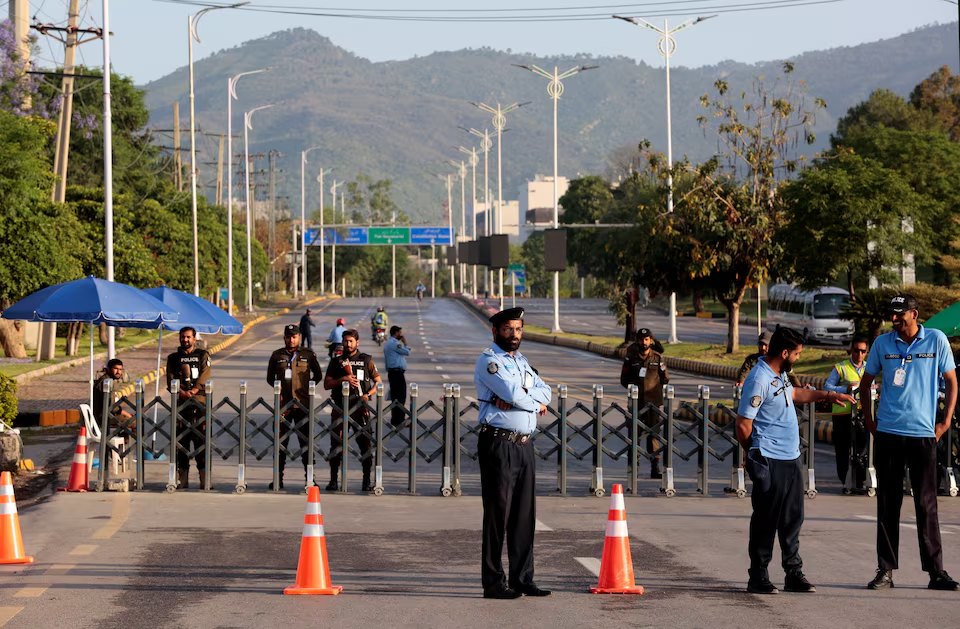
ISLAMABAD — President Donald Trump on Saturday scrapped a planned diplomatic mission to Pakistan, abruptly cancelling a trip by U.S. envoys Steve Witkoff and Jared Kushner that had been aimed at exploring potential pathways to ease tensions with Iran. The decision dealt a fresh blow to already fragile peace prospects, even as Israel escalated military pressure in neighboring Lebanon.
READ MORE ARTICLES:
- Donald Trump Calls Nominee Dr. Erica Schwartz a “STAR” as She’s Tapped for CDC Chief
- Justin Fairfax Former Virginia Lt. Governor, Dies in Apparent Murder-Suicide That Killed Wife Dr. Cerina Fairfax
- US Commander Claims Sea Blockade Halts 90% of Iran’s Economy Amidst Peace Talks
- Donald Trump Turns on Ally PM Giorgia Meloni After Public Clash Over Pope and Iran Policy
Speaking to reporters in Florida before boarding Air Force One for Washington, Trump said the visit to Islamabad was called off because the talks required “too much travel and expense,” and because Iran’s latest proposal to resolve the conflict was “not good enough.”
“They’ve improved the offer after we cancelled,” Trump said, “but not enough.”
In a post on Truth Social, Trump described what he called “tremendous infighting and confusion” within Iran’s leadership. “Nobody knows who is in charge, including them. Also, we have all the cards, they have none! If they want to talk, all they have to do is call!!!” he wrote.
The cancelled trip came as Iran’s top diplomat, Abbas Araqchi, departed Islamabad after meeting Pakistani officials, including Prime Minister Shehbaz Sharif, without announcing any breakthrough. Although Araqchi described the discussions as “very fruitful,” there were no signs of concrete progress toward direct U.S.-Iran engagement.
Meanwhile, tensions widened on another front. In Israel, Prime Minister Benjamin Netanyahu ordered the military to “forcefully” target positions linked to Hezbollah in Lebanon, according to his office. The move further tested a fragile three-week ceasefire along the Israel-Lebanon border, raising fears of renewed regional escalation.
Iranian President Masoud Pezeshkian underscored Tehran’s hardened stance in a phone call with Sharif, saying Iran would not enter “imposed negotiations” under threats or blockade. In a statement released by the Iranian government, Pezeshkian insisted that the United States must first remove “operational obstacles,” including what he described as a blockade on Iranian ports, to lay the groundwork for meaningful talks.
The back-and-forth underscores the diplomatic stalemate that continues to define U.S.-Iran relations. With Washington demanding stronger concessions and Tehran rejecting negotiations under pressure, prospects for a negotiated settlement appear increasingly distant.
As military tensions simmer and diplomatic channels stall, regional leaders face mounting pressure to prevent the conflict from widening further a task made more complicated by mistrust, political posturing, and competing strategic interests on all sides.
Fragile Ceasefire Under Strain as Iran-U.S. Tensions Disrupt Global Oil Routes and Diplomacy Falters
Washington and Tehran remain locked in a tense standoff as the fragile ceasefire between the United States, Israel, and Iran struggles to hold, with global energy markets caught in the crossfire.
Iran has largely closed the Strait of Hormuz the narrow waterway through which roughly one-fifth of the world’s oil and liquefied natural gas shipments typically pass in retaliation for U.S. and Israeli actions. At the same time, Washington continues to block Iran’s oil exports, tightening economic pressure on Tehran and deepening the diplomatic impasse.
The conflict erupted on February 28, when U.S.-Israeli airstrikes targeted Iranian facilities. Tehran responded with missile and drone strikes against Israel, U.S. military bases, and targets in Gulf states, dramatically widening the confrontation. Although a ceasefire is now in place, tensions remain high and the risk of renewed hostilities lingers.
The war has sent global energy prices soaring to multi-year highs, fueling inflation and casting a shadow over global growth. Economists warn that prolonged disruption in the Strait of Hormuz could further destabilize supply chains and energy-dependent economies worldwide.
During recent diplomatic efforts in Islamabad, Iranian Foreign Minister Abbas Araqchi said he had “explained our country’s principled positions regarding the latest developments related to the ceasefire and the complete end of the imposed war against Iran,” according to a statement posted on his official Telegram account.
However, negotiations appear stalled. An Iranian diplomatic source in Islamabad told Reuters that Tehran would not yield to what it views as excessive demands from Washington. “Principally, the Iranian side will not accept maximalist demands,” the source said, signaling continued resistance to U.S. conditions.
On the American side, White House Press Secretary Karoline Leavitt acknowledged signs of limited progress in recent days, expressing hope that further movement could emerge over the weekend. Vice President JD Vance, who led an earlier round of unsuccessful talks with Iranian officials in Pakistan this month, was said to be prepared to return to Islamabad if discussions showed promise.
Despite those diplomatic signals, neither side has publicly outlined concrete concessions, leaving observers skeptical about the durability of the ceasefire or the prospects for a comprehensive settlement.
As the region braces for uncertainty, global leaders are watching closely. The stakes extend far beyond the Middle East: with energy markets volatile and geopolitical tensions simmering, the outcome of U.S.-Iran negotiations could shape economic and security conditions worldwide in the months ahead.
- Donald Trump Rushes Iran Deal as Tehran Pushes Back: Diplomatic Drama Exposes Deep Mistrust Behind “Historic” Agreement
- DepEd DO 016 s. 2026, Issues New Guidelines on Lesson Planning Promotes Flexible and Meaningful Learning Design in Philippine Schools
- Thai Princess Bajrakitiyabha Dies at Age 47 After More Than Three Years in Coma
- Millions Affected as Facebook Suffers Major Outage Across the world
- CNN Analyst Points to Record Inflation Disapproval After Trump’s Controversial Remarks