Thousands of protesters staged demonstrations across Manila as US President Donald Trump arrived in the Philippines for the 49th ASEAN Summit and other regional meetings, voicing opposition to American military presence, the proposed US-led Pax Silica initiative, and Washington’s policies on the Middle East conflict.
MANILA, Philippines — Thousands of protesters gathered in different parts of Manila as US President Donald Trump arrived in the Philippines to participate in the 49th Association of Southeast Asian Nations (ASEAN) Summit, the Quad leaders’ meeting, and the US-ASEAN Special Summit.
Trump’s arrival on Tuesday, November 17, prompted demonstrations from activist organizations opposing several US policies, including Washington’s involvement in the Middle East conflict and its proposed Pax Silica initiative. Protesters also criticized the continued presence of American military forces in the Philippines and raised concerns about US influence over the country’s political and economic direction.
Protest activities began days ahead of Trump’s visit, with various groups staging street marches, rallies, and other forms of public demonstrations. Some activists set fire to effigies depicting the US president, while others displayed protest signs calling for an end to the war in the Middle East and rejecting the proposed US-led initiative.
Students, indigenous peoples, women’s organizations, and progressive groups took part in the demonstrations. Protesters marched through several major streets in the capital, including Kalaw Avenue, while security forces maintained a heightened presence near the venues hosting the international meetings.
READ OTHER ARTICLES:
- Manila Protests Trump’s Arrival for ASEAN Summit
- LEYTE: Tacloban-Born Chef Earns Prestigious Michelin Star
- DepEd Confirms Davao Teacher Email Compromised in Italy Bomb Threats
- Marcos Signs Order Establishing Council to Guide Artificial Intelligence Governance
- GCash Introduces Offline Payments Through New ‘No Signal Pay’ Feature
A major issue raised during the rallies was Pax Silica, a US-backed program designed to develop cooperation in artificial intelligence, semiconductor production, and critical-mineral supply chains. The initiative’s proposed technology and industrial development site in New Clark City, Tarlac, has drawn criticism from groups worried about its possible consequences for indigenous populations, the environment, and communities dependent on local resources.
Indigenous Ayta and Aeta representatives have expressed concern that the planned development could threaten ancestral territories and place families at risk of displacement. Activists have urged Philippine authorities to review the project carefully and guarantee meaningful consultations with affected communities before proceeding with decisions involving their ancestral lands.
Tensions also emerged between protesters and law enforcement officers during the demonstrations. Reports said authorities detained more than 200 individuals following clashes and protest activities near summit-related locations. Police presence was increased across parts of Manila as officials prepared to receive foreign dignitaries and secure the venues for the diplomatic events.
Meanwhile, Trump continued with his scheduled engagements despite the demonstrations. He arrived at Ninoy Aquino International Airport on Tuesday afternoon before attending the Quad leaders’ meeting, marking the group’s first leaders’ gathering in two years.
The Quad brings together the United States, India, Japan, and Australia. Discussions during the meeting included regional security, artificial intelligence development, maritime cooperation, and initiatives aimed at improving access to critical minerals and strengthening supply chains.
The gathering was attended by Indian Prime Minister Narendra Modi, Japanese Prime Minister Sanae Takaichi, and Australian Prime Minister Anthony Albanese, alongside Trump. The leaders discussed areas of cooperation as the four countries seek to advance their shared regional interests.
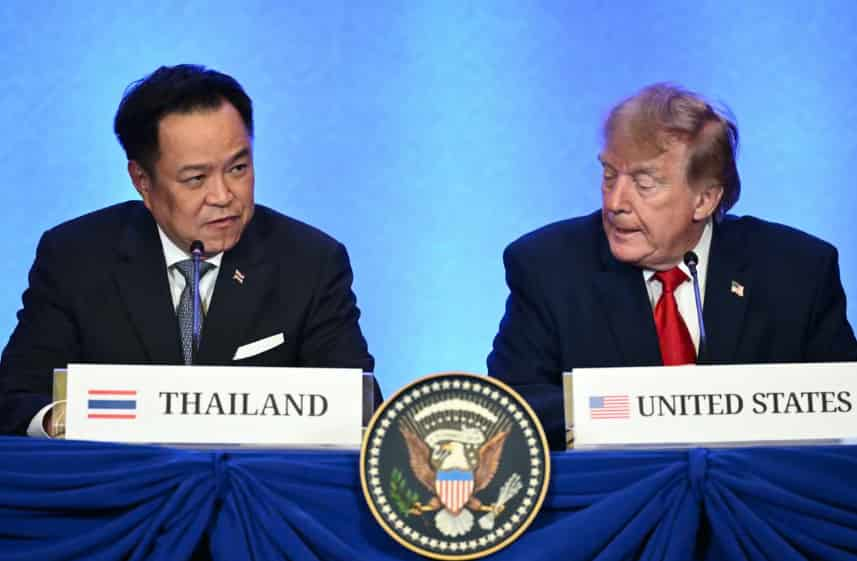
Trump was also scheduled to participate in the US-ASEAN Special Summit, which focused on economic ties, regional stability, and security cooperation between Washington and Southeast Asian nations. His Manila itinerary also included bilateral discussions with Philippine President Ferdinand Marcos Jr. and a meeting with Thai Prime Minister Anutin Charnvirakul.
The Pax Silica proposal has remained a subject of public debate in the Philippines as opposition groups continue to question its potential implications. US Ambassador to the Philippines Lee Lipton earlier clarified that no announcement on the initiative was scheduled during Trump’s visit, noting that any decisions would be discussed with the Philippine government.
The protests surrounding Trump’s Manila visit reflected widespread concerns among participating organizations about US foreign policy, military involvement, and the possible effects of proposed economic and technology partnerships on local communities.
While regional leaders pursued diplomatic discussions on security and economic cooperation, demonstrators used the occasion to call for greater consideration of Philippine sovereignty, indigenous rights, and the country’s national interests. The events placed the government’s international engagements alongside growing public scrutiny of initiatives involving the United States.
- Babae mula Naval, Biliran, nasawi sa aksidente sa motorsiklo
- Elon Musk Developing Two Philippine Islands
- PRC: CHELE RESULTS November 2026 Chemical Engineer Licensure Exam Passers
- Mga Bahagi ng Katawan ng Tao, Natagpuan sa Tubuhan sa Ormoc City
- DepEd kinondena ang pagpatay sa school principal sa Maguindanao del Sur