The Philippines and Canada have signed their first-ever federal bilateral labor and migration agreement, strengthening protections, rights, and opportunities for Overseas Filipino Workers employed across Canadian provinces and territories. Add as Preferred on google search
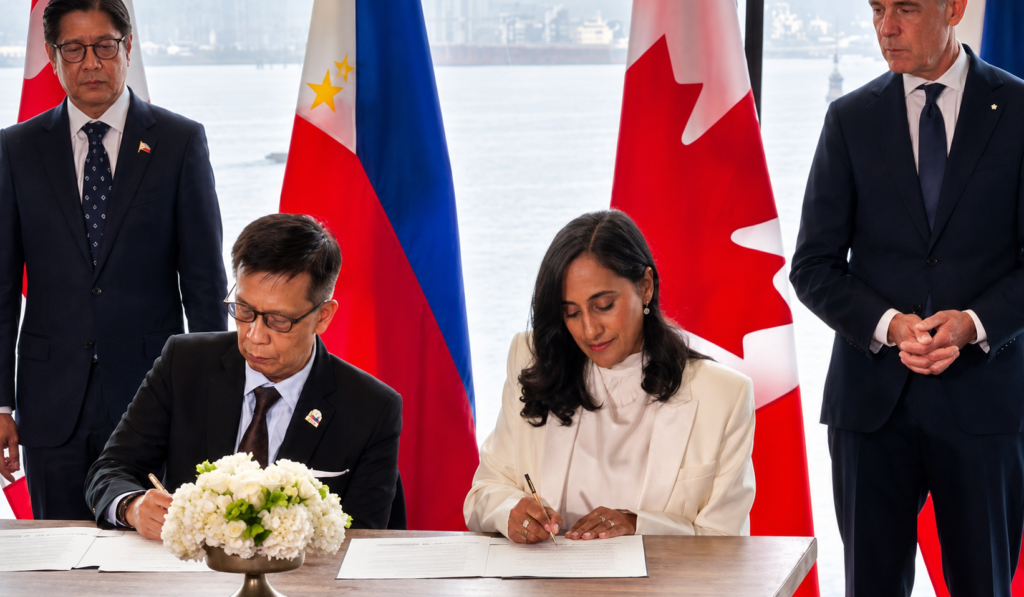
Philippines, Canada Seal Historic Labor Pact for OFW Protection
The Philippines and Canada have taken a significant step toward reshaping the future of overseas employment for thousands of Filipinos after signing a landmark federal bilateral labor and migration agreement aimed at strengthening the protection of Overseas Filipino Workers (OFWs) through fair recruitment practices and deeper cooperation between the two governments. The historic agreement, signed between the Department of Migrant Workers (DMW) and Canada’s Department of Citizenship and Immigration, represents the first federal-level labor and migration pact ever forged between the Philippines and Canada, underscoring the growing partnership between the two nations in promoting safe, orderly, and regular migration.
The Joint Declaration of Intent on Labor and Migration Cooperation was formalized during President Ferdinand R. Marcos Jr.’s working visit to Canada upon the invitation of Canadian Prime Minister Mark Carney, with Migrant Workers Secretary Hans Leo Cacdac and Canadian Foreign Minister Anita Indira Anand signing the agreement in Vancouver in the presence of both leaders. The declaration establishes a common federal framework designed to guide labor mobility and migration cooperation while ensuring that the recruitment, deployment, and employment of Filipino workers are conducted in accordance with the laws and regulations of both countries.
READ MORE ARTICLES:
- English Grammar Rules
- Bangkay ng Lalaking Natagpuang Nakasilid sa Sako sa Palompon, Positibo Nang Nakilala ng Pamilya
- Gilas Pilipinas Faces Defining FIBA World Cup Qualifiers Against New Zealand and Australia
- Ikaapat na Magkakasunod na Taon: OVP Muling Nakatanggap ng Pinakamataas na Audit Opinion mula sa COA
Secretary Cacdac described the agreement as a milestone in the Philippines’ continuing efforts to secure stronger safeguards for Filipino workers abroad, emphasizing that the administration remains committed to expanding labor cooperation arrangements anchored on fair and ethical recruitment principles. He noted that while the Philippines has existing labor agreements with several Canadian provinces, this marks the first time that Canada’s federal government has entered into a bilateral framework specifically addressing labor migration with the Philippines.
Canadian officials likewise highlighted the importance of the declaration, describing it as a pioneering agreement that reflects Canada’s recognition of the immense contribution made by Filipino workers to the Canadian economy and society. Beyond diplomatic symbolism, the agreement seeks to create tangible benefits for workers and their families by ensuring safer migration pathways, promoting transparency in recruitment processes, and improving access to information regarding workers’ rights and available grievance mechanisms.
One of the most significant provisions under the declaration is the commitment to eliminate recruitment fees and related charges that are often imposed on migrant workers, reinforcing the principle that employers should bear the costs associated with recruitment and deployment. The agreement also strengthens efforts to combat exploitative labor practices while promoting ethical employment standards that protect workers from abuse, illegal recruitment, and unfair treatment.
For the Philippines, where millions of families depend on overseas employment as a source of livelihood, the signing of the agreement represents more than a diplomatic achievement. It signals a growing international recognition of the need to place the welfare and dignity of migrant workers at the center of labor migration policies. As labor mobility continues to shape the global economy, the historic Philippines-Canada partnership is expected to serve as a model for future agreements aimed at ensuring that opportunities abroad come with stronger protections, greater accountability, and a renewed commitment to the rights and welfare of workers who continue to contribute significantly to both nations’ growth and prosperity.