Despite steady rain and the threat of worsening weather, the Sangyaw Festival of Lights celebrations continued as scheduled, drawing crowds eager to witness the colorful spectacle. Local officials reminded attendees to stay alert and monitor weather updates as conditions may change throughout the event.
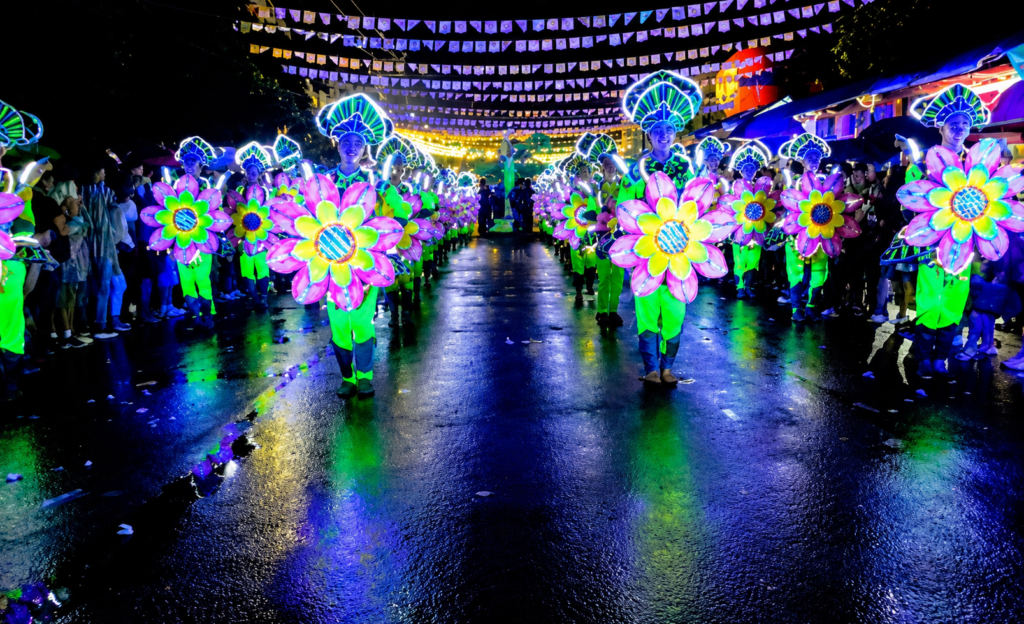
Rain Fails to Dampen Spirit of Sangyaw Festival
The skies over Tacloban City were gray, and rain showers intermittently swept through Magsaysay Boulevard. Yet as the lights flickered on and the parade began to move, it became clear that the weather would not have the final say.
The Sangyaw Festival Parade of Lights proceeded as scheduled, drawing thousands of spectators who lined the streets despite the threat of heavier rains. Armed with umbrellas and unwavering enthusiasm, residents stayed to witness one of the city’s most cherished cultural celebrations.
The scene offered more than colorful displays and illuminated performances. It showcased a community’s resilience and commitment to preserving tradition regardless of circumstance. While many events elsewhere might have been postponed or scaled back, Tacloban chose to move forward.
READ MORE ARTICLES:
- Jia, Alas Core Named to Nagoya Asian Games Volleyball Squad
- King Charles Calls for Unity and Action as He Opens New Session of Scottish Parliament
- Australian Man Arrested in Pattaya After Missing Teen Found Dead Inside Suitcase
- Rare Twin Earthquakes Devastate Venezuela as Scientists Identify Historic Strike-Slip Doublet
That decision carried significance beyond the festivities themselves. Sangyaw has always been more than a festival; it is a celebration of identity, heritage, and the enduring spirit of the people. The willingness of thousands to brave the weather reflected how deeply that tradition is valued.
Tacloban is no stranger to storms. Perhaps that is precisely why moments such as these resonate strongly with its people. The city has repeatedly demonstrated that difficult conditions may slow celebrations, but they rarely stop them.
As the lights of the parade reflected off rain-soaked streets, the evening delivered a fitting image of the city itself tested by adversity, yet refusing to be overshadowed by it.
The weather may have brought clouds over the celebration, but it could not dim the spirit of Sangyaw or the pride of the people who continue to keep its light shining.
More Than a Contest, Sangyaw Is a Celebration of Tacloban’s Spirit
As the lights came alive and the streets filled with anticipation, the continuation of the Sangyaw Parade of Lights and Festival Dance Competition sent a clear message: tradition and community spirit remain stronger than uncertainty.
The event pushed through as scheduled, bringing together powerhouse contingents and dazzling illuminated floats that transformed Tacloban City’s streets into a moving spectacle of color, creativity, and culture. While the PHP 500,000 grand prize undoubtedly raised the stakes of the competition, the true value of Sangyaw has never been measured by prize money alone.
Behind every synchronized movement and every brilliantly lit float are months of preparation, countless hours of practice, and the collective effort of communities determined to showcase the best of their artistry and heritage. The competition serves not only as a battle for supremacy but also as a stage for local identity and pride.
Sangyaw has evolved into more than an annual festival attraction. It has become a symbol of Tacloban’s enduring ability to celebrate, create, and unite. The presence of powerhouse contingents reflects the growing prestige of the event, while the illuminated floats demonstrate the ingenuity and passion of the people behind them.
In an era where festivals increasingly compete for attention and tourism revenues, Sangyaw continues to stand out because it remains deeply rooted in community participation and cultural expression. The spectacle may attract visitors, but it is the people’s pride and dedication that give the festival its lasting significance.
As judges deliberate and winners emerge, the city itself may already be the biggest victor. The successful staging of the parade and dance competition once again proved that Sangyaw is more than a race for a cash prize it is a celebration of resilience, creativity, and the vibrant spirit that defines Tacloban.
For one night, the brightest lights were not merely those mounted on the floats, but those reflected in the determination and pride of the communities that brought the festival to life.
Traffic Delays Are Temporary, Public Safety Is Not
For many motorists and commuters, road closures, traffic rerouting, and one-way traffic schemes can be sources of inconvenience and frustration. Longer travel times, unfamiliar routes, and temporary disruptions often test the patience of the public. Yet during major public gatherings, these measures serve a purpose far greater than convenience they protect lives.
The decision by the Tacloban City Government to implement traffic management measures around the downtown parade route was not merely an administrative exercise but a necessary response to the realities of hosting thousands of festival-goers in Tacloban City.
Large celebrations bring excitement, but they also bring risks. Crowded streets, moving floats, emergency access requirements, and pedestrian safety concerns demand careful planning and disciplined execution. Without traffic controls in place, what begins as a celebration can quickly turn into confusion or even tragedy.
Public safety often requires temporary sacrifices from the community. A few extra minutes spent navigating alternate routes pales in comparison to the consequences of inadequate crowd and traffic management during events that attract massive attendance.
More importantly, the effectiveness of these measures reflects the shared responsibility between authorities and the public. Traffic enforcers can direct vehicles and establish barriers, but the success of any safety plan ultimately depends on public cooperation and understanding.
Festivals are meant to bring communities together, and ensuring that everyone returns home safely should remain the first priority. The lights, music, and festivities may define the celebration, but it is careful preparation behind the scenes that makes such celebrations possible.
In the end, road closures are reopened, rerouted traffic returns to normal, and one-way schemes are lifted. What should remain, however, is the recognition that effective public safety measures are not obstacles to celebration they are what allow celebrations to happen safely in the first place.