Jia de Guzman and the veteran core of Alas Pilipinas have been named to the Philippine women’s volleyball squad for the 2026 Nagoya Asian Games, signaling continuity as the national team aims for a strong campaign under its revamped program.
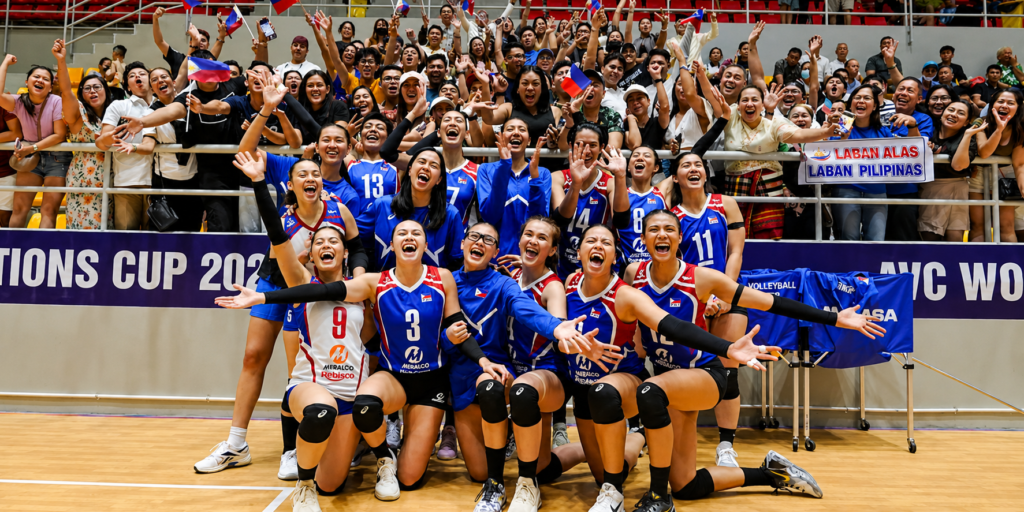
The invitation extended to Jia de Guzman and the veteran core of Alas Pilipinas comes at a crucial moment for Philippine volleyball. Despite the uncertainty surrounding the suspension of the Philippine National Volleyball Federation (PNVF), the decision to keep experienced national team players in the fold reflects a commitment to stability as preparations begin for the 2026 Aichi-Nagoya Asian Games.
Jia de Guzman’s leadership has long been a cornerstone of the national team. Her inclusion in the 22-player pool is expected, not only because of her elite playmaking ability but also because of her experience in guiding the Philippines through challenging international competitions. Veteran leaders become even more valuable during periods of organizational transition, where consistency on the court can help offset instability off it.
- 2026 NBA Draft Ends as Wizards Pick AJ Dybantsa No. 1 Overall
- Portugal Crushes Uzbekistan 5-0 in Group K World Cup Clash
- Christiano Ronaldo Makes History, First Score in Six World Cups as Portugal Crush Uzbekistan 5-0
- Spurs Crush Thunder 111-103 in Game 7: San Antonio Dethrones OKC to Claim West Crown
Equally significant is the reported invitation for De Guzman, Alyssa Valdez, and Jovelyn Gonzaga to join the Athletes’ Commission. This move recognizes that athletes deserve a meaningful voice in shaping the future of Philippine volleyball. Having respected players involved in discussions required by the FIVB ad hoc committee could help restore trust and ensure that decisions are made with the welfare of the athletes in mind.
The appointment of Japanese coach Taka Minowa also represents an opportunity for a fresh start. While adapting to a new coaching philosophy will take time, retaining the team’s experienced core should make that transition smoother. A blend of veteran leadership and new tactical direction could provide the national team with the balance needed to remain competitive on the Asian stage.
Ultimately, Philippine volleyball now faces two equally important battles: achieving success on the court and rebuilding confidence in its governing body. If the athletes, coaches, and stakeholders work together despite the ongoing challenges, this difficult chapter could become the foundation for a stronger, more united future for the sport.
Experience Remains the Greatest Strength of Alas Pilipinas
As the Philippine women’s national volleyball team prepares for another major international campaign, one truth remains undeniable: experience still matters. The continued reliance on Jia de Guzman and the veteran core of Alas Pilipinas Women reflects more than loyalty to familiar faces it is a strategic decision rooted in the realities of international competition.
Jia de Guzman and the team’s seasoned players have become the tactical backbone of the national squad. Years of competing against some of Asia’s strongest volleyball programs have equipped them with the composure, discipline, and decision-making that younger players are still developing. In high-pressure matches, where a single point can determine the outcome, experience often proves just as valuable as athletic ability.
Their importance extends well beyond their individual performances. Veterans set the tempo, stabilize the team during difficult stretches, and provide guidance to emerging talents who are taking their first steps on the international stage. With the current roster featuring several collegiate standouts and rising stars, the presence of accomplished leaders creates an environment where younger players can grow without carrying the full burden of expectations.
This blend of youth and experience has become the identity of Alas Pilipinas. Rather than rushing into a complete rebuild, the coaching staff appears to recognize that sustainable success comes from developing new talent alongside proven veterans. The experienced core serves as the bridge between the country’s present ambitions and its future aspirations.
However, continuity should also come with accountability. Veteran leadership must translate into stronger performances against Asia’s elite teams. The Philippines has shown flashes of brilliance in recent tournaments, but the next challenge is turning competitiveness into consistent victories against higher-ranked opponents.
Ultimately, the continued presence of Jia de Guzman and the veteran nucleus is not about holding on to the past it is about giving the national team its best chance to succeed today while preparing tomorrow’s stars for greater responsibilities. If the experienced core can continue to inspire, mentor, and deliver on the court, Alas Pilipinas will be in a stronger position to establish itself as a legitimate contender in Asian volleyball.
The Reason for the Veteran Core
The decision to keep the veteran core of Alas Pilipinas is not about resisting change it is about recognizing what it takes to compete at the highest level. As the Philippine women’s national volleyball team prepares for the 2026 Aichi-Nagoya Asian Games, retaining experienced players like Jia de Guzman and her long-time teammates reflects a strategy built on stability, leadership, and proven performance.
International volleyball is a different battlefield. It demands more than athleticism and raw talent; it requires composure under pressure, quick decision-making, and the ability to adapt against some of the world’s strongest teams. These are qualities that cannot be developed overnight. They are earned through years of competing on the international stage.
The veteran core provides exactly that. Jia de Guzman, along with the team’s seasoned players, has faced elite opponents across Asia and beyond. Their familiarity with high-stakes competition allows them to guide younger teammates through moments of adversity while maintaining the discipline required to execute a game plan.
This is especially important as Alas Pilipinas continues integrating promising collegiate stars and emerging talents into the national program. Young players bring energy, athleticism, and fresh potential, but they also need mentors who understand the demands of representing the country. Veteran players bridge that gap by setting standards in training, communication, and professionalism.
Critics may argue that relying on veterans slows the development of the next generation. However, successful national teams rarely choose between youth and experience they combine both. The strongest programs in Asia and around the world develop young players while keeping experienced leaders on the court to provide direction when the pressure is greatest.
Ultimately, the reason for keeping the veteran core is simple: winning requires continuity. Chemistry cannot be built in a few training sessions, and leadership cannot be replaced overnight. As the Philippines aims to become a consistent force in Asian volleyball, the experience of its veteran players remains one of its greatest competitive advantages.
The future of Philippine volleyball belongs to its young stars, but the path toward that future is being paved by the veterans who continue to lead by example. Until the next generation is fully prepared to carry the torch, the veteran core remains not only relevant but essential.