China has launched an investigation into senior Science and Technology Ministry official Liu Min over suspected serious violations of Communist Party discipline and national laws, as Beijing intensifies its anti-corruption campaign targeting officials responsible for managing strategic research programmes and public resources.
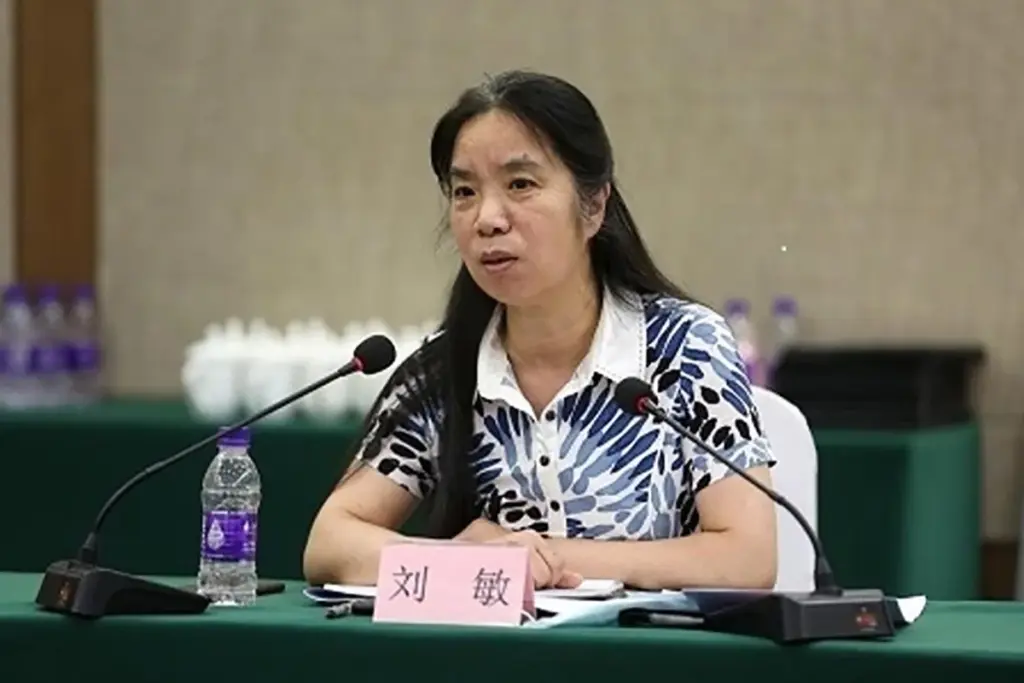
China’s anti-corruption watchdog has opened an investigation into Liu Min, a senior official of the Ministry of Science and Technology, over allegations of serious violations of Communist Party discipline and national laws, as authorities continue to intensify their crackdown on corruption within key government institutions.
The Central Commission for Discipline Inspection (CCDI), the country’s highest anti-corruption agency, announced on Monday that Liu was being investigated by the ministry’s disciplinary inspection team. A separate investigation is also being conducted by the supervisory commission in Yichang, located in Hubei province in central China.
Liu has served in the Ministry of Science and Technology for more than 10 years, occupying several high-ranking positions related to innovation, intellectual property and major national scientific and technological initiatives.
In 2014, she was named deputy director of the ministry’s Department of Innovation and Development. A year later, she assumed the directorship of its Intellectual Property Affairs Centre. In 2020, she was appointed director of the Department of Major Science and Technology Projects.
READ MORE ARTICLES:
- Yemen Army Reports 661 Attacks Against Houthi Positions
- Vietnam Gains Investment Advantage Over Philippines, NUS Professor Says
- Italy Fines Meta €805 Million Over Privacy Violations
- vnadexpress.com Faces Scam Allegations Over Online
The department was responsible for coordinating and developing major national research and development initiatives. Its functions included drafting proposals for significant scientific programmes, monitoring project implementation, establishing relevant policies and conducting performance assessments.
However, the department was dissolved in 2023 following a major institutional restructuring, with its primary functions reassigned to other divisions within the ministry.
The restructuring was part of Beijing’s broader initiative to reinforce Communist Party oversight of strategically important sectors, particularly science and technology, finance and grassroots governance, as competition with the United States over technological leadership continues to intensify.
Chinese authorities have consistently stressed the need to achieve breakthroughs in essential technologies and reduce the country’s reliance on foreign technological resources as part of efforts to establish greater scientific and technological independence.
In line with these objectives, China’s research and development spending has continued to grow. Government statistics indicated that national expenditure on research and development amounted to 3.93 trillion yuan in 2025, marking an 8.2 percent increase compared with the previous year.
The Ministry of Science and Technology remains a major government institution responsible for setting national scientific priorities, coordinating research programmes, monitoring project implementation, assessing results and distributing resources for large-scale technological initiatives.
Liu’s case adds to a series of corruption investigations involving government officials, as Beijing maintains its campaign against misconduct across public institutions and strategically significant industries.
In recent years, several officials associated with the science ministry have also been investigated or prosecuted over alleged disciplinary and corruption-related offenses.
Among them was Zhang Zhaofeng, an official responsible for biotechnology and pharmaceutical affairs, who became the subject of a CCDI investigation in July 2020.
In 2024, Li Yong, former deputy director of the ministry’s Department of Talent and Science Popularisation, received an 11-and-a-half-year prison sentence after being convicted of accepting bribes.
Another ministry official, Wang Chunyang, who worked at its centre for new technologies, was placed under investigation in July 2025.
Meanwhile, the ministry’s disciplinary inspection and supervision team has called for more effective internal monitoring and stricter enforcement of Communist Party regulations.
At an April meeting addressing comprehensive and rigorous Party self-governance, team leader Gao Bo urged officials to draw lessons from previous corruption and disciplinary cases investigated within the ministry.
Gao identified several institutional shortcomings associated with serious violations, including weakened ideological commitment, inadequate understanding of regulations, failure to properly enforce rules and deficiencies in management and supervision.
Chinese President Xi Jinping has repeatedly underscored the Communist Party’s determination to enforce strict internal governance, describing the fight against corruption as a continuing priority for the country’s leadership.
Last month, following the conclusion of the Communist Party’s 20th Central Committee’s fifth plenary session, Xi reaffirmed the leadership’s commitment to maintaining strict party discipline and strengthening governance.
He maintained that comprehensive and rigorous Party self-governance had supported China’s economic and social development rather than hindered its progress.
Xi further stressed that the leadership would remain firm in pursuing its anti-corruption objectives despite potential difficulties, challenges and uncertainties.
In another announcement issued on Monday, the CCDI revealed a separate investigation involving Ma Jin, an official of the National Natural Science Foundation of China, the country’s leading institution responsible for financing basic scientific research.
The investigations involving Liu and Ma demonstrate the continuing scrutiny of government personnel overseeing China’s scientific research institutions and the administration of public funds intended to support national innovation, research and technological development programmes.
- China Investigates Senior Science Ministry Official Liu Min
- Babae mula Naval, Biliran, nasawi sa aksidente sa motorsiklo
- Elon Musk Developing Two Philippine Islands
- PRC: CHELE RESULTS November 2026 Chemical Engineer Licensure Exam Passers
- Mga Bahagi ng Katawan ng Tao, Natagpuan sa Tubuhan sa Ormoc City